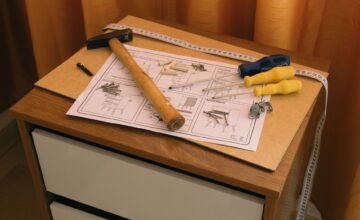
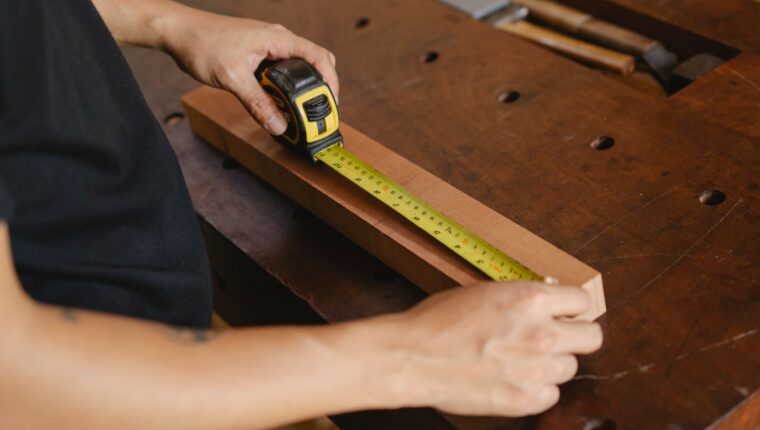
Marking out a shelf involves several tasks: measuring the space, transferring dimensions to the board, drawing a crosscut line and, if there is an obstruction, marking a cut-out. One square cannot replace a tape measure, and owning several squares will not necessarily make the job easier. These five AliExpress tools address different tasks. Buying all five makes sense only if you have a separate use for each.
This article contains affiliate links. TeraNews may earn a commission on purchases made through them, at no additional markup to you.
For simple rectangular pieces, a tape measure and one square are a sensible starting point. A longer square can help with wider boards, a 3D square is intended for marking across adjoining faces, and a contour gauge can transfer an existing profile. These are different buying scenarios, not steps every workshop needs to follow.
Choose a reference edge and a marking method first
Before choosing a tool, decide where measurements will start. WOOD’s guide to measuring and marking accurately recommends taking measurements from one reference edge to reduce the accumulation of errors from repeated transfers. For a shelf, measure each position from the chosen edge rather than from the previous mark.
It is more useful to choose one reference side of the board than to add another measuring tool. Keep the measuring direction consistent when making several marks. If you move the board, find the same reference edge before continuing. This matters when you use a tape measure for the overall dimensions and a square to draw lines.
Also decide whether the mark should be removable. WOOD distinguishes erasable pencil marks from a scored line, which can be useful where the marked area will be cut off or hidden. Pencil is easy to adjust while checking a layout. For a joint line that will be hidden inside the construction, the priority is to reproduce the chosen position consistently.
What to check before ordering and after delivery
The listings below identify the sellers’ stated tool types, but do not establish accuracy. They do not show the quality of the working edges, how easy the scale is to read or how securely an adjustable part locks. Some titles also combine multiple sizes and materials. Check the selected option’s length, graduations and included parts on the order page; a catalogue SKU alone does not settle those details.
- Scale system. Look for a metric scale and inspect a close-up. A general title saying “metric” does not show how easy the relevant side is to read.
- Working length. Choose it for the board you need to mark. The overall body size and the length of the edge available for drawing a line can differ.
- Moving parts. For an adjustable square, check how it clamps and whether the lock is accessible. After delivery, see whether its position shifts during ordinary handling on the board.
- Working surfaces. Inspect the edges and the surfaces that sit against the board. A listing’s accuracy claim does not replace checking the item itself.
After delivery, check a square by turning it over. The method described by WOOD uses a straight reference edge: draw a line, flip the square against the same edge and draw another. The lines should be parallel. This can reveal a discrepancy, but it does not establish a numerical tolerance unsupported by the available information.
The same WOOD guide recommends checking a tape measure against a reference steel rule and inspecting its end hook, since damage can affect readings. If you do not have a verified rule, comparing two unchecked tape measures is not a reliable accuracy check. First establish a dependable reference, then use a consistent set of measuring tools.
Tape measure: measure the space and set overall dimensions
A tape measure is useful at the start: measure the space for the shelf or set the overall length of the board. The seller lists 3, 5, 7 and 10 metre options. Check which length applies to the selected order; the title’s list does not mean all lengths are included.
Choose one when a short ruler is not enough. You will need a separate tool to draw a straight line on the board. The title also claims wear and water resistance, but the supplied information does not include test evidence. Readable graduations, a suitable length and the condition of the end hook are more practical things to check.

Triangle square: for repeated right-angle marking
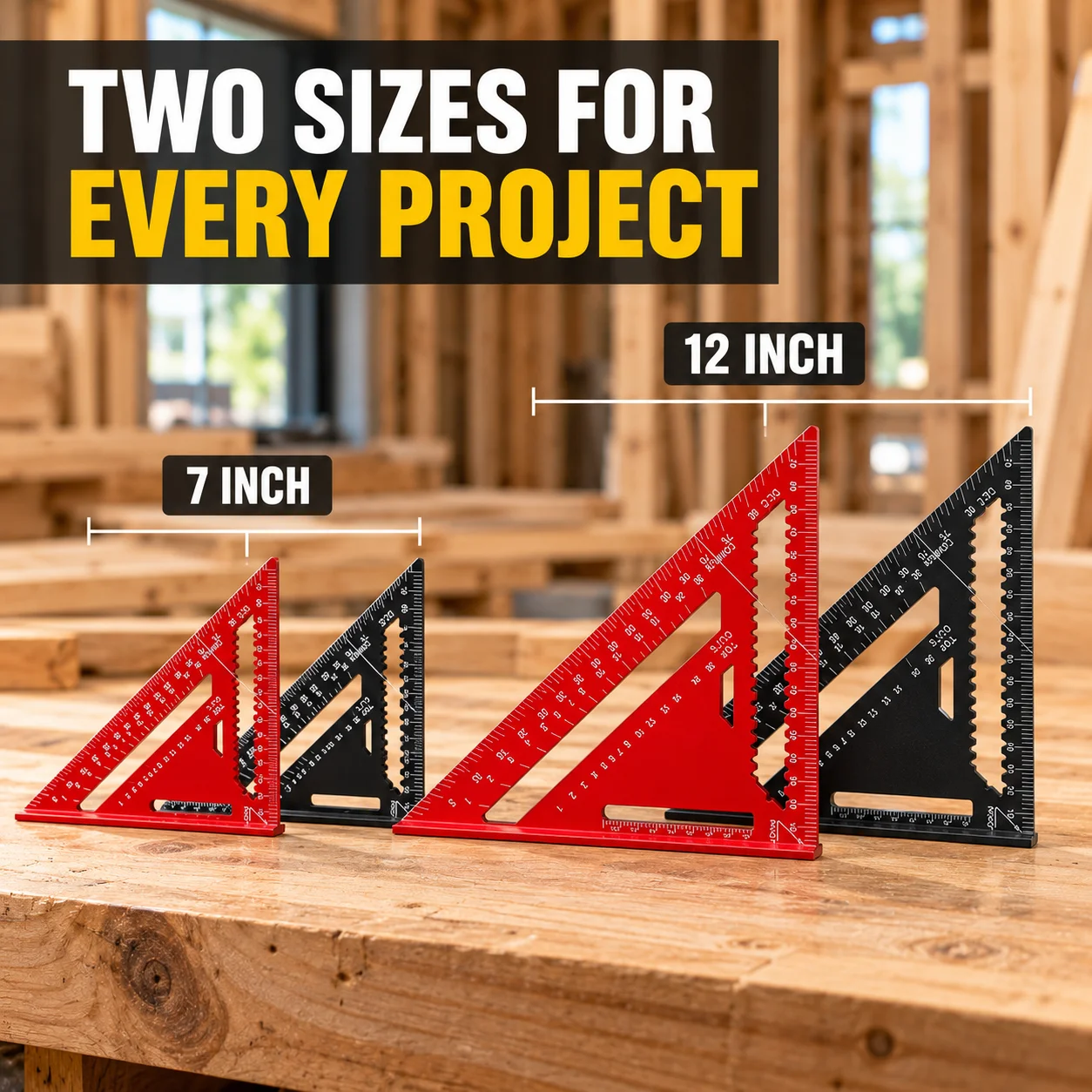
A triangle square is an option if you often mark rectangular pieces and prefer a dedicated tool without repositioning a ruler in a head. The seller describes this model as aluminium and intended for woodworking. Its specific dimensions, graduations and accuracy tolerance are not established by the available information.
Consider it as your main square for this kind of work or as a separate tool for a second workspace. If a different square already covers your tasks, there is little reason to add a triangle square unless its shape meets a clear need. Before ordering, compare its working edge with the width of your boards; after delivery, use the flip test.
Price checked 23.11.2026: 2.69 GBP
Sold: 18212+; Buyer rating: 98.0%
View on AliExpress
3D woodworking square: when adjoining faces matter
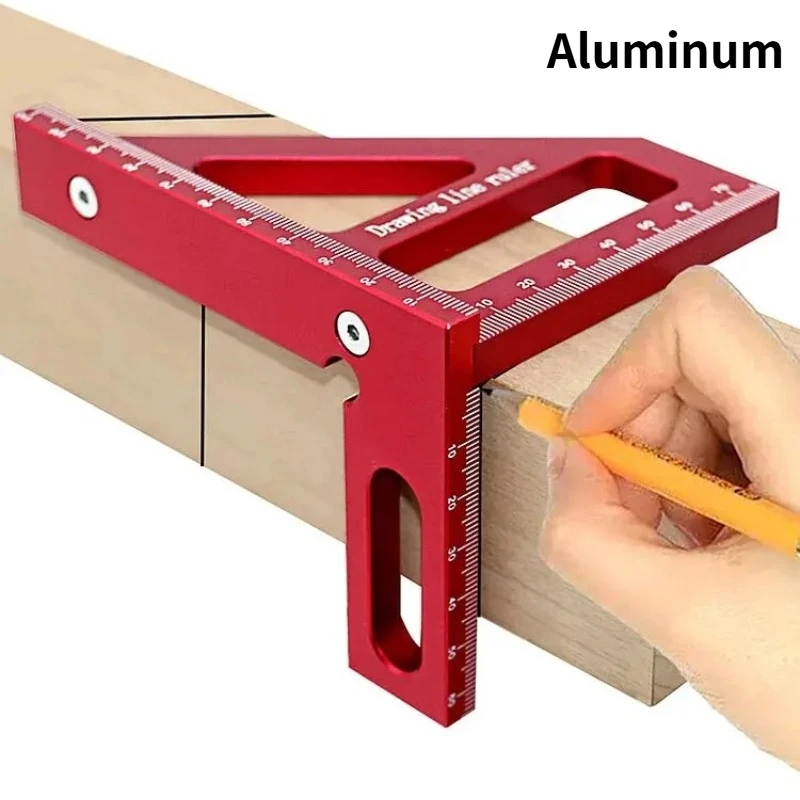
The seller describes this offer as a tool for 3D marking at 45 and 90 degrees. It may suit work where marks need to line up across adjoining faces of a wooden piece. Check the shape of the bearing surfaces and whether they fit your workpieces before ordering.
The title mentions both aluminium and plastic, so confirm the material of the selected option. The available information does not establish its rigidity or accuracy. If you mark only a flat shelf face, the ability to work across several faces does not by itself make this a necessary addition to an ordinary square.
Price checked 23.11.2026: 1.22 GBP
Sold: 16435+; Buyer rating: 98.0%
View on AliExpress
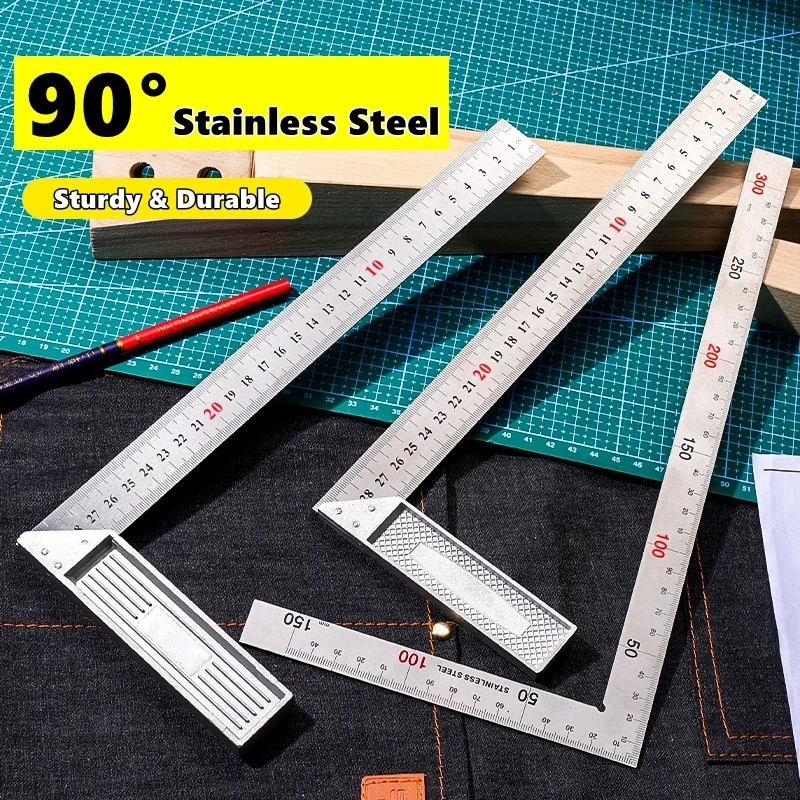
Long square ruler: match it to board width
Moving from small pieces to wider panels changes how long the working edge needs to be. Woodsmith’s guide to layout tools recommends a long, straight, rigid guide for connecting marks across large panels. Choose for the line you need to draw, rather than simply looking for the largest square.
The seller lists a 90-degree square in 300 or 500 mm options. These are stated options, not confirmation of the selected SKU’s length. It may suit cross-marking wider pieces if its working edge reaches far enough. A line across a large panel may still require a separate long straightedge. Check the material too: the title mentions both aluminium alloy and steel.
Price checked 23.11.2026: 2.19 GBP
Sold: 3888+; Buyer rating: 98.0%
View on AliExpress
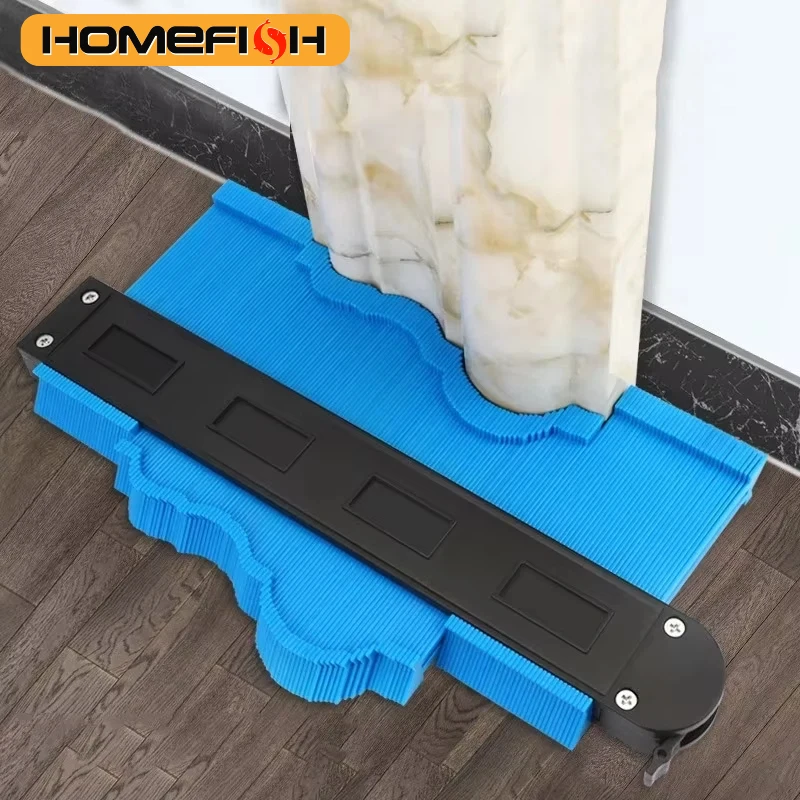
Contour gauge: transfer an existing profile
A contour gauge is for a different task: transferring the outline of an obstruction to a board before fitting it. The seller describes this offer as a profile copier and cutting template. It may be useful when a board edge needs to follow an existing shape and straight lines are not enough to mark the cut.
The available description does not establish the working width, copying depth or whether the pins lock in place. Check those details against the obstruction you need to copy before ordering. If your work is limited to rectangular shelves without shaped cut-outs, you can skip this tool. It transfers a shape; measuring overall length and drawing a right angle remain separate tasks.
How to choose the tools you need
For a first rectangular shelf, measure the space with a tape measure and choose one square to suit your marking method. A triangle square may suit you if its shape and working length fit your work; add a longer tool only after comparing it with the board width. Pay for a 3D square or contour gauge only when you have the corresponding task.
These five tools do not cover every woodworking task. A marking gauge is designed to repeat an offset from an edge. Lee Valley’s guide to marking gauges explains the differences between wheel, knife and pin types: a wheel generally makes a clean line both along and across the grain, while a pin is better suited to moving along the grain. The fence should sit against the full reference edge. This is a separate function that another square will not replace.
Transferring an arbitrary angle calls for a different approach. Woodsmith describes a sliding bevel as having a lockable movable blade, and a compass as a tool for drawing arcs and circles within its working range. If your next project needs that geometry, build your tool list around it. Before marking the main board, try the method on scrap: check that the tool is long enough, the marks are visible and you can keep the same reference edge for each transfer.
This is the AliExpress catalogue price for the selected market when checked. Confirm stock, variant, delivery, taxes and the final total before paying.