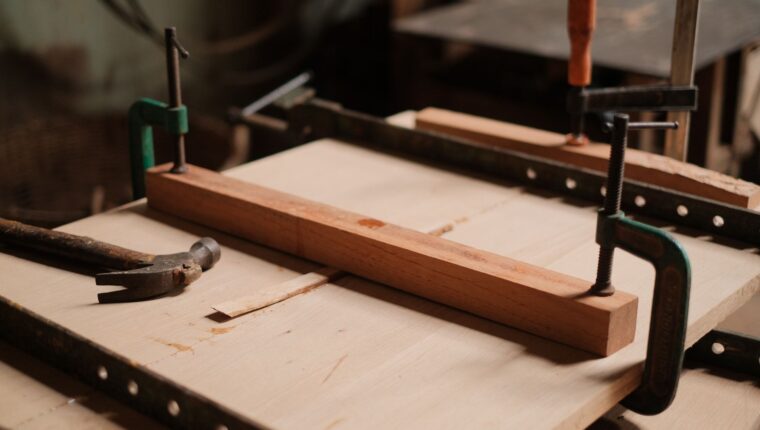
When assembling a drawer, a clamp should let you align the sides and hold them in place. For gluing a wide panel, the question is different: can the jaws reach the point where pressure is needed? That is why choosing by bar length alone is unhelpful. First decide what you need to hold, where pressure must be applied, and whether you need one hand free to adjust the pieces. For small home projects, that is more useful than immediately buying the longest models.
This article contains affiliate links. TeraNews may earn a commission on purchases made through them, at no additional markup to you.
This guide walks through choosing clamps for drawers, small cabinets and glued wood joints. The examples can help match a mechanism to a task, but they do not replace checking the specific option: seller titles may combine sizes and claims of extra strength, neither of which establishes the properties of the selected product.
Measure the opening and the reach from the edge
Opening capacity and jaw depth answer different questions. Opening capacity tells you whether the assembly fits between the clamping surfaces. Jaw depth determines how far from the edge you can apply pressure. This distinction is explained in WOOD’s guide to choosing clamps. A wide opening does not make up for shallow jaws: a clamp may span the part but still fail to reach the point you need.
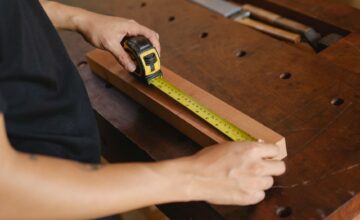
Before buying, take two measurements on the planned assembly. First, measure the distance between the surfaces that will sit between the jaws. Second, measure from an accessible edge to the point where pressure is needed. Include protective pads in the first measurement if you plan to use them. Then look for both working dimensions in the description of the selected version. A number in a title, without an explanation, does not reliably tell you either the opening capacity or the jaw depth.
For drawers and small cabinets, focus on the dimensions of the individual sections you will assemble at one time. You do not need to size every clamp for the largest outside dimension of the finished furniture. Lay out the pieces in assembly order and check where the clamps will actually sit. That makes it easier to judge whether you need long bars and whether there will be room for them on your bench.
Jaw depth also affects how clamps can be arranged. WOOD notes that the deep jaws of parallel-jaw clamps allow them to be positioned across one another. Keep this in mind if the assembly needs pressure from different directions. Check not only whether the jaws can reach the clamping point, but also whether adjacent clamps can fit without getting in each other’s way.
Choose the mechanism for the way you assemble parts
One-handed clamp: when your other hand needs to align the pieces
A one-handed mechanism is especially useful during setup: one hand holds the tool while the other adjusts the parts. WOOD describes this approach as helpful for aligning an assembly. If more force is needed afterwards, the guide recommends adding an F-style or pipe clamp. This division of tasks is useful when choosing: ease of the initial hold and suitability for a demanding glue-up should be assessed separately.
Check how the movable jaw releases as well as how the trigger works. Find out how to slide it along the bar and remove the clamp after use. Terms such as Quick Grip, Quick Release and Ratchet in a seller title only describe the stated mechanism. They do not tell you how comfortable the lever is, how much finger pressure it takes or how a particular product behaves under load.
Spreader mode also needs separate verification. For example, BESSEY says its EZ series can be converted without tools in the M, L and XL versions. That claim applies to the manufacturer’s named versions. If you need this feature, check that the selected product confirms it and explains how to reposition the jaw; a similar-looking mechanism is not enough to establish that.
F-style clamp: for fastening to a bench and small assemblies
WOOD identifies F-style models as useful for fastening parts to a workbench and gluing small boxes. A screw-operated version has a trade-off: turning the handle and pressure pad while tightening can shift the pieces. After the initial setup, check their position again before fully tightening the joint.
If you want an F-style model specifically for screw pressure, confirm that the offer actually uses that mechanism. The letter F describes the shape, while a seller title may also mention quick release. Ask how the clamp works if the description is unclear. Otherwise, the general name may fit even though the tool has a different construction.
Parallel jaws: when geometry and support matter
Consider parallel-jaw clamps when an assembly calls for deep jaws and you are prepared to work with a bulkier tool. WOOD specifically warns that they can be heavy and advises considering your actual needs first. For occasional small drawers, a set may be unnecessary; first work out what your existing clamps cannot do.
However, “parallel” does not mean the tool cannot deform. In WOOD’s comparison of eight models, five kept their jaws strictly parallel, while the outward deviation of the others was no more than 1/16 inch. For most models tested, bar flex was more noticeable than jaw deviation. Assess the whole construction, not just the shape of the clamping surfaces.
All eight tested models provided sufficient force for ordinary assembly work. The testers measured force with the participation of ten woodworkers and a hydraulic device. That finding applies to the models in the test; it does not establish the capability of other clamps. In particular, “Heavy Duty” or “High Strength” in a seller title does not replace measurements or show how an untested product compares with the tested models.
What to check before choosing a specific listing
The listings below identify a tool type and, in some cases, state a size, but they do not provide comparable information on jaw depth, bar flex or clamping force. There is not enough evidence to rank them by how well they hold a furniture assembly. Start with the mechanism and required opening, then verify the specifications of the particular option.
- Working dimensions. Find the maximum opening and jaw depth for the selected version. Do not assume the bar length is the same as the opening.
- What is included. Confirm how many complete clamps are supplied and whether the clamping mechanism and both jaws are included. A title describing a set and an option code do not establish what the selected offer contains.
- Surface protection. Check whether pads are included and can be removed. WOOD’s test found that removable pads can help reduce surface damage and make glue cleanup easier.
- Release and conversion. Find out how the jaw moves, where the release lever is and whether spreader mode is available if you need it.
- Handle. Check its shape and the space available for your hand. WOOD’s testers found differences in handle comfort for large and small hands, as well as in the number of turns needed to reach comparable force.
Before applying glue, do a dry fit with the clamp positions you plan to use. Check whether the jaws reach the intended points, whether the handles are easy to operate and whether you can adjust the pieces after the first hold. This trial checks the geometry of your assembly even when the tool description is sparse.
Four options for different tasks
TOLESA: a small one-handed clamp for initial alignment
The TOLESA seller title states that it has a one-handed mechanism, spreader mode and a light-duty rating. It may suit someone who mainly needs to hold a small assembly while keeping the other hand free. That description alone is not enough to establish suitability for work requiring substantial force.
The title combines 4- and 6-inch labels and mentions two pieces. Confirm the size and quantity for the selected option before ordering; do not assume every listed detail applies to one offer. If an easy initial hold is your main need, start by checking the selected version’s opening and jaw-release mechanism.

Price checked 27.11.2026: 4.46 GBP
Sold: 1350+; Buyer rating: 98.0%
View on AliExpress
One-handed bar clamp: for an assembly that needs a wider opening
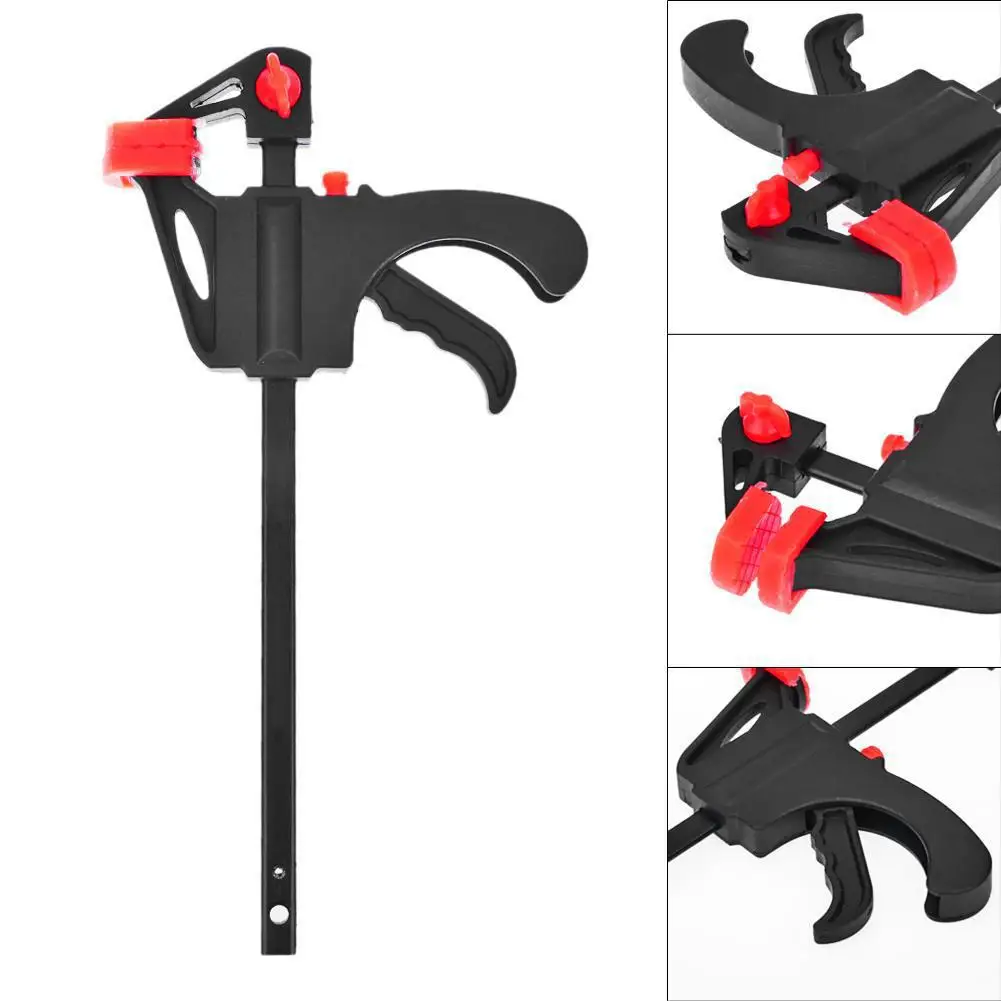
The seller states a 12-inch size and a one-handed trigger mechanism. Consider it if your measurements show that you need a wider opening. Confirm the working opening, though: the size label in the title does not explain the available distance between the jaws.
This is a candidate for a section that does not fit in a smaller clamp you already own. Buying it for the bar length alone is less useful; first check that the jaw depth reaches the point where pressure is needed.
Price checked 27.11.2026: 15.11 GBP
Sold: 854+; Buyer rating: 98.0%
View on AliExpress
Ratchet bar clamp: for a separate small assembly
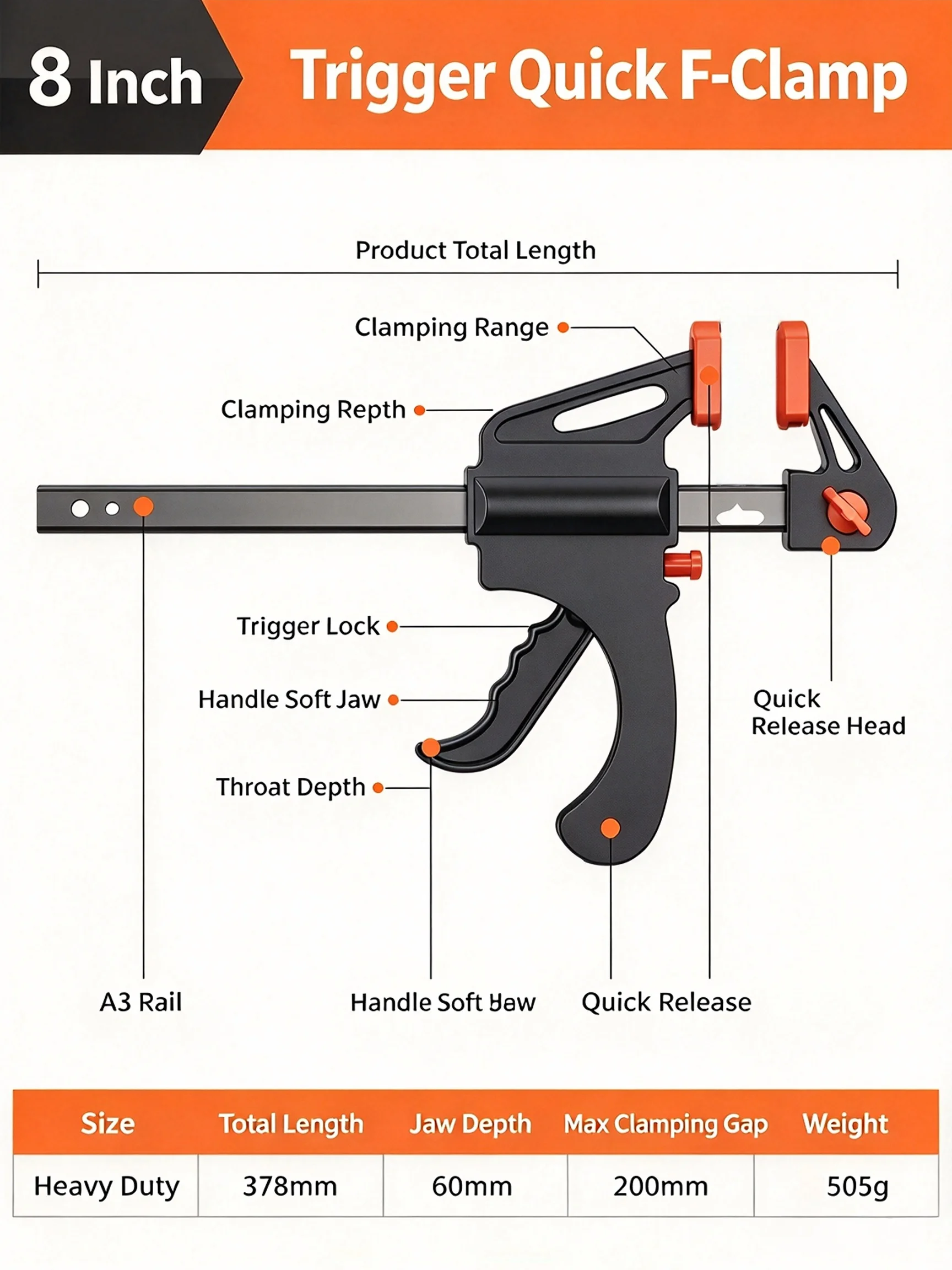
The seller describes this as a one-handed bar clamp with a ratchet mechanism and a 6-inch size label. Consider it for a small part or a separate drawer section if your measurements confirm that its opening is sufficient. The stated mechanism fits a task where your other hand needs to adjust the pieces.
The available information does not establish that it is stronger or more comfortable than the TOLESA. Choose between them based on confirmed working dimensions, what the selected offer contains and how clearly the release mechanism is explained, rather than differences in seller wording.
Price checked 27.11.2026: 7.39 GBP
Sold: 791+; Buyer rating: 98.0%
View on AliExpress
F-style clamp: a candidate for fastening to a workbench
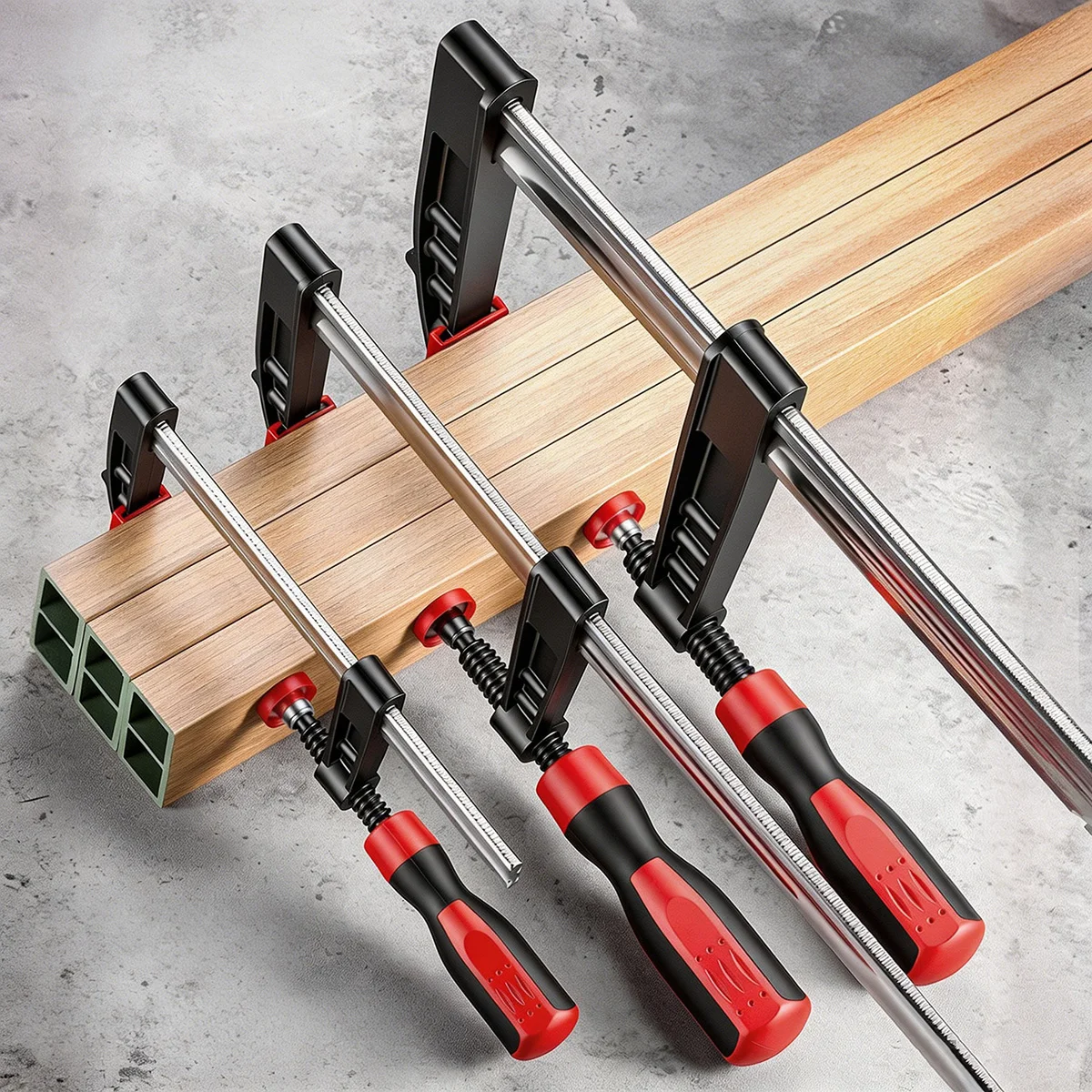
This offer is described as an F-style clamp with quick release. It may be worth considering for fastening a wooden part to a workbench or assembling a small drawer. First confirm how it applies pressure: the title alone does not establish that the selected version is screw-operated.
The seller also calls it “Heavy Duty” and “High Strength”, but the available information gives no confirmed clamping force. If your task requires greater force, ask for data about the selected model. Those words alone are not a reason to treat it as a heavy-duty addition to one-handed clamps.
Price checked 27.11.2026: 5.38 GBP
Sold: 345+; Buyer rating: 95.0%
View on AliExpress
How to choose a set without buying more than you need
Lay out the parts for your next project and mark the clamping points. For each one, note the required opening, the distance from the edge and the clamp’s role: holding the parts initially, allowing alignment or securing them fully. Then check which points need to be clamped at the same time. This gives you a basis for choosing sizes and quantities without assuming that one long clamp can handle every part of the job.
If your main difficulty is holding pieces while you align them, a suitable one-handed model may be a sensible first addition. If you need to fasten workpieces to a bench and assemble small drawers, consider an F-style design with a clearly described pressure mechanism. Revisit parallel jaws when you can identify a specific need for their depth and arrangement; then it will be easier to decide whether their weight and storage space make sense.
This is the AliExpress catalogue price for the selected market when checked. Confirm stock, variant, delivery, taxes and the final total before paying.