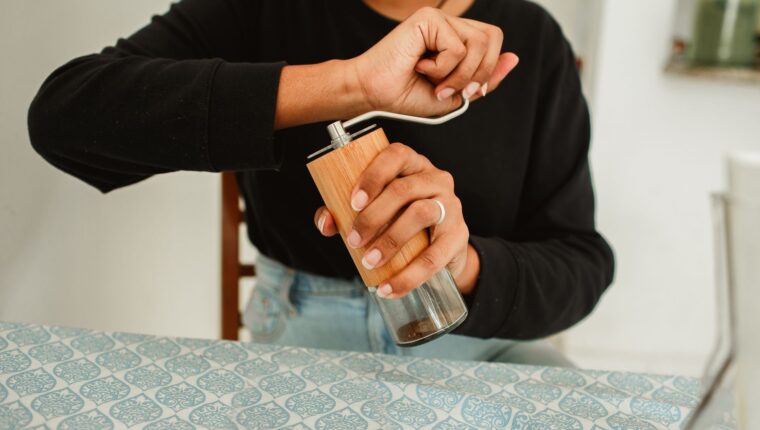
Choose a hand grinder around the dose and brew method you actually use. For pour-over or a French press, look for a suitable capacity and settings that are easy to understand and use. For espresso, check how finely the grind can be adjusted between neighbouring positions. If you make several cups in a row, consider whether grinding each dose by hand fits your routine; an electric grinder may suit it better.
This article contains affiliate links. TeraNews may earn a commission on purchases made through them, at no additional markup to you.
Start with your dose and brew method
Begin with the amount of beans you use at one time, then compare it with the capacity of the exact version on offer. If the dose does not fit, you will need to load and grind in batches. That may be manageable for one cup, but for several cups it becomes part of the choice between a hand and an electric grinder.
Read the specifications for each version within a series carefully. On its TIMEMORE C3 page, the manufacturer lists a 20 g capacity for the C3 S Pro and C3 ESP Pro, and 30 g for the C3 Max and C3 S Max. The series-wide description of “up to 30 g” does not apply to every grinder with C3 in its name. The two TIMEMORE listings below claim 25 g, which differs from the manufacturer’s table. Before ordering, confirm the exact version and its capacity.
For pour-over or French press, start by comparing standard adjustable models: choose a suitable capacity, then check access to the settings and cleaning. If espresso is not part of your plans, the ESP label alone need not decide your purchase. If you need a grinder for an espresso machine, the word “Espresso” in a seller’s title does not tell you how fine the adjustment is between settings.
What clicks tell you, and where the adjustment sits
TIMEMORE distinguishes its standard Classic Dial, with 12 clicks per rotation, from the Espresso Dial, with 30. The manufacturer separately associates the finer adjustment on ESP and ESP Pro versions with espresso. So a standard C3 and an ESP version should not be treated as the same device with different labels. But the number of clicks alone does not establish the quality of the resulting grind; it describes the adjustment mechanism.
Internal and external adjustment mainly differ in how you access the settings. For the C3 series, TIMEMORE specifies internal adjustment. If you expect to switch brewing methods often, ask to see where the adjustment is on the exact version, how to read its scale, and how to keep track of full rotations as well as individual clicks. A photo of the body without a view of the mechanism cannot answer those questions.
For an example of external adjustment, see the KINGrinder K6 page: the manufacturer states that it has 60 clicks per rotation and 16 micrometres of movement per click. That figure describes movement of the mechanism, not the size of the ground coffee particles. These specifications apply to the K6; they cannot be transferred to the P0/P2 listing below.
Nor can you assume one scale is more precise than another just because it has more marks. Different mechanisms can move by different amounts with each click. It matters more to identify the exact model and find its instructions than to compare two large numbers in product titles. If a seller promises “fine adjustment”, ask for details of the mechanism.
Do not rely on a generic instruction such as “turn right for a finer grind”. In its FAQ, 1Zpresso distinguishes internal, top and external adjustment, and explains that the direction for changing grind size depends on the design. A guide for another grinder, including its click count, is useful only after you check the model, starting point and method for counting rotations.
Burrs, body and cleaning: what to check before ordering
Burr material is one specification, not a guarantee of the result in the cup. The sellers below claim steel or ceramic grinding components, but there are no comparative measurements of the grind. Those descriptions cannot establish a particular consistency, grinding speed or flavour. Check whether the burr description applies to the selected version and whether instructions explain how to access the burrs.
Do not treat the body material as a description of the whole grinder. TIMEMORE distinguishes the C3s, with metal components, from the C3, which also uses plastic parts. A similar name does not confirm that every feature of one version carries over to another. For travel, check the handle separately: the manufacturer identifies a folding design as a feature of Pro versions, but the photos and included items should match the version you select.
Find the cleaning and reassembly instructions in advance. 1Zpresso recommends a dry brush and blowing out residue, explicitly states that its grinders must not be washed with water, and describes tool-free disassembly. KINGrinder also describes taking the K6 apart by hand for cleaning. These are manufacturer instructions for those products, not permission to clean every similar-looking grinder the same way.
Check the limits around the zero point too. 1Zpresso warns that turning the handle on the first clicks near zero can damage the burrs. Read the instructions for your model to learn how to find its starting point and which settings are safe to use. Do not copy someone else’s click count until you understand how it was measured.
The listings below have not been independently tested. Seller descriptions do not establish grind quality or product origin, and a shop name or brand label alone does not confirm authenticity. If a title combines several models, confirm which one the selected order option represents and what is included.
Four options for different priorities
TIMEMORE Chestnut C3S PRO: for a folding handle
The listing names the C3S PRO. It may suit someone looking for a folding handle for travel, a feature TIMEMORE associates with Pro versions. The Pro label alone does not mean the grinder has ESP adjustment.
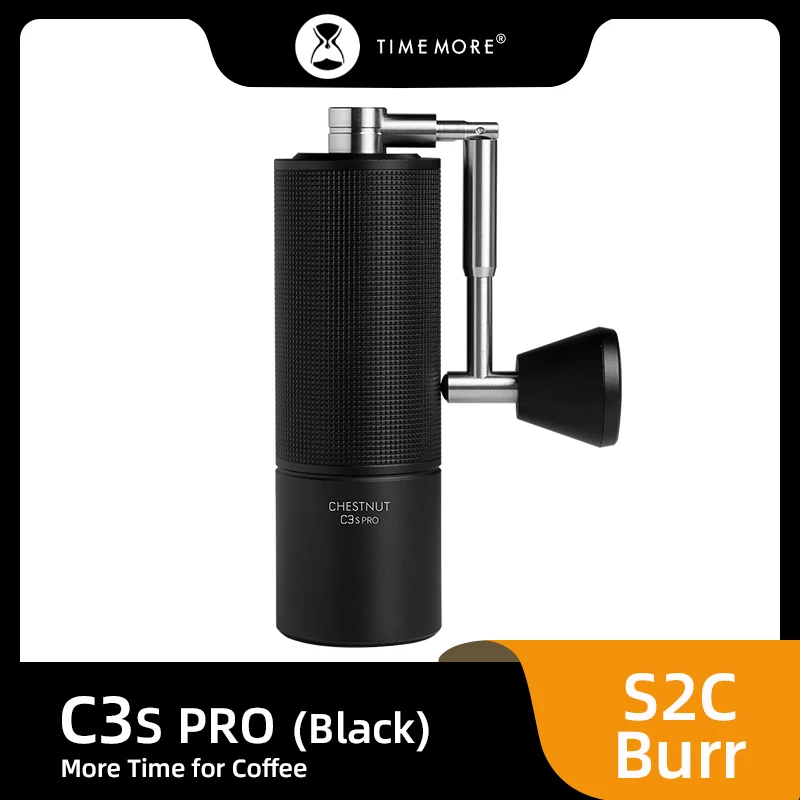
Price checked 25.11.2026: 45.08 GBP
Sold: 1941+; Buyer rating: 98.0%
View on AliExpress
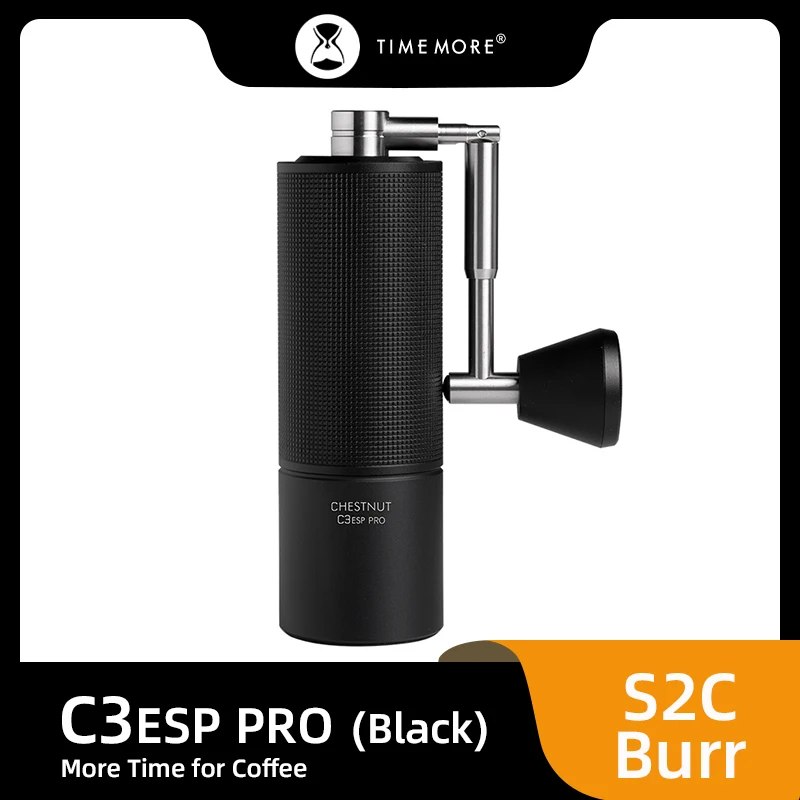
TIMEMORE Chestnut C3ESP PRO: for espresso-focused selection
The listing names the C3ESP PRO, so it may be worth considering if you use an espresso machine: TIMEMORE associates ESP Pro with finer adjustment and a folding handle. That is a reason to consider the model, not a promise about the result in the cup.
Price checked 25.11.2026: 47.88 GBP
Sold: 921+; Buyer rating: 99.1%
View on AliExpress
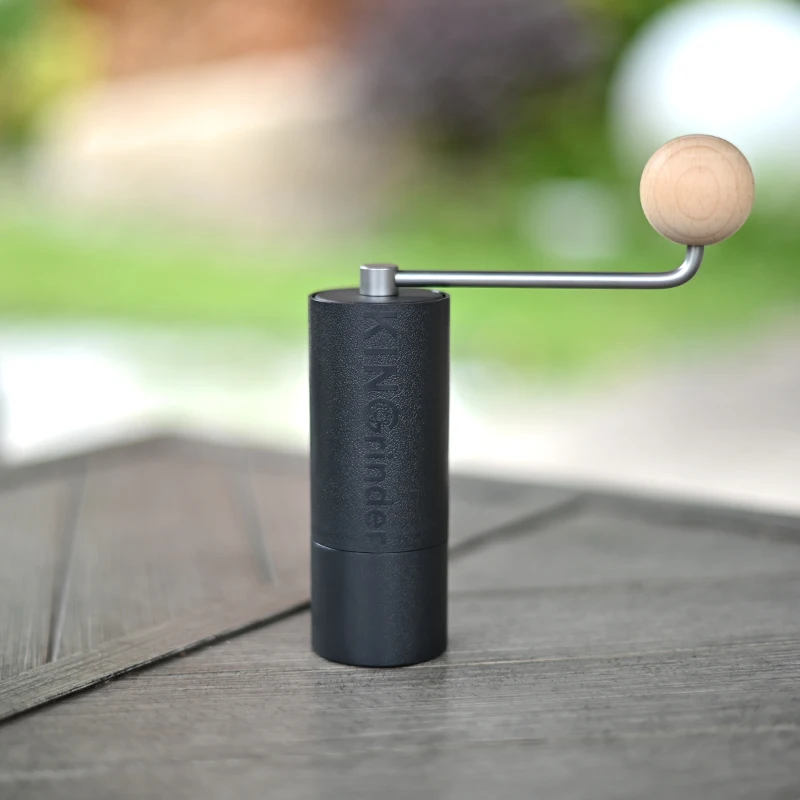
KINGrinder P0/P2: for drip brewing or moka
The seller lists both P0 and P2, and describes the grinder as suitable for drip brewing and moka, with stainless steel burrs. Consider the range only after confirming which model the selected option is. The K6’s external adjustment specifications do not apply to this listing. If the exact version is not identified, the available information is not enough to choose between P0 and P2.
Price checked 25.11.2026: 25.70 GBP
Sold: 1075+; Buyer rating: 98.0%
View on AliExpress
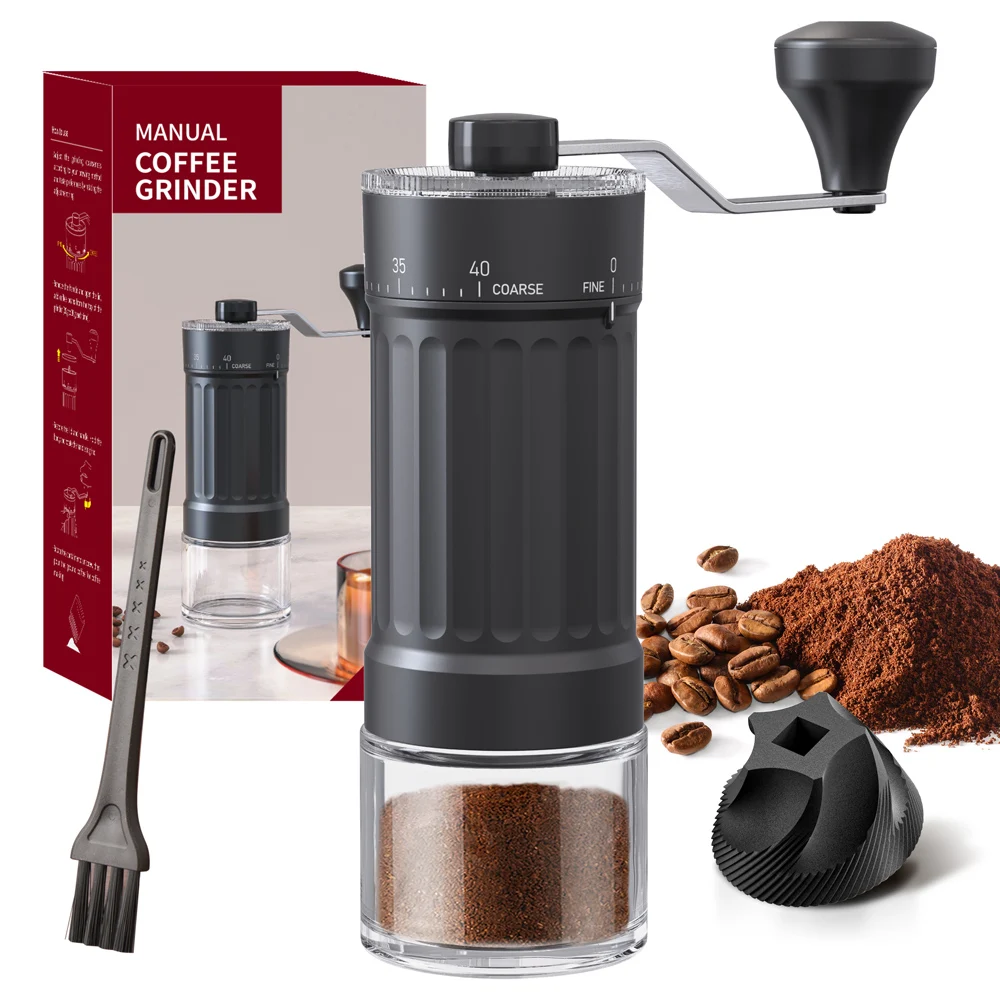
Manual grinder with external scale: when adjustment access matters
The seller claims this grinder has an external scale, 40 adjustment positions and a ceramic grinding core. It may be worth considering if the location of the adjustment is a priority and you can verify it in detailed images. The number of positions does not establish whether it is suitable for espresso. Without documentation on adjustment increments and capacity, assess it by the features you can confirm and whether it fits your dose, rather than the word “Professional” in the title.
Price checked 25.11.2026: 11.42 GBP
Sold: 1151+; Buyer rating: 96.7%
View on AliExpress
This is the AliExpress catalogue price for the selected market when checked. Confirm stock, variant, delivery, taxes and the final total before paying.