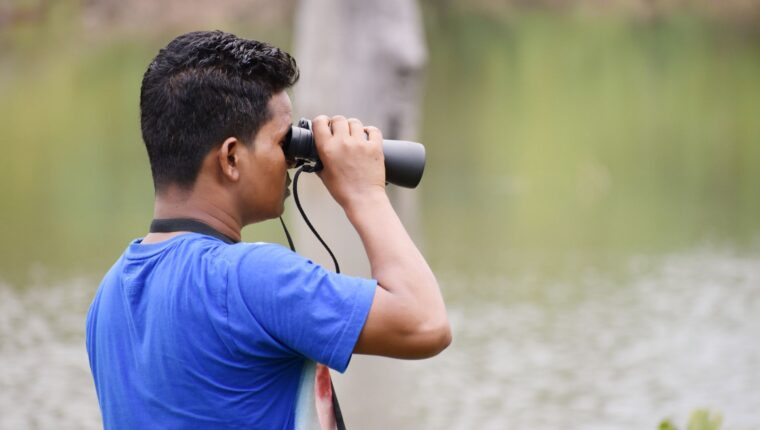
Binoculars for walks should help you find a bird among the branches and keep it in view. Higher magnification alone does not solve that problem: it also makes hand movement more noticeable. Before buying, it is more useful to choose a size you can carry, compare fields of view and check whether you can see the full image while wearing glasses. A short daytime walk and a long spell of watching by the water call for different priorities.
This article contains affiliate links. TeraNews may earn a commission on purchases made through them, at no additional markup to you.
Below are some selection pointers and five listings for handheld binoculars. Details about these particular products come only from seller titles, which can suggest what to look into but cannot confirm optical quality, water resistance or fit. The general selection guidance draws on Nikon and REI material; it does not constitute testing of the listed models.
Start with magnification you can use steadily by hand
In the marking 8×42, the first number means eight-times magnification and the second is the objective lens diameter in millimetres. This is explained in REI’s binoculars guide. These two figures give you basic points of comparison, but they do not describe the whole view: field of view and ease of use can differ even between binoculars with the same format.
For handheld nature observation, Nikon recommends magnification in the 6x to 10x range. At 12x and above, hand movement makes it harder to keep the image steady. So the largest number in a product title is not a good way to choose. For walking binoculars, what matters more is how easily you can find a subject and keep it in view.
Consider 8x first if you often shift your gaze from one bird to another or watch without support. It may be worth comparing 10x if you want a more enlarged view of a distant subject. But higher magnification does not guarantee that you will see more useful detail: hand movement and a narrower field of view can get in the way. Before choosing 10x, it is especially useful to check how steady the image feels in your usual stance.
If you can, try both magnifications on the same subject. Find it with the naked eye, then raise the binoculars. Check whether the subject appears in the view straight away and whether you can watch it comfortably for several seconds. This can help you judge what suits you, though it does not replace checking the specifications and condition of the particular item.
Choose objective lens size for your route and light
REI describes 8×25 and 10×25 as compact formats for routes where weight and pack space matter, and discusses 8×32 and 8×42 for birdwatching. If binoculars are a small addition to your walking kit, a compact format is worth considering. If observation is the main purpose of an outing, compare it with a larger pair too.
In its explanation of binocular specifications, Nikon notes that, at the same magnification, a larger objective lens gathers more light, while also increasing size and weight. Moving from 8×32 to 8×42 is therefore not an automatic upgrade. Weigh the potential benefits of larger optics against carrying them for the whole route and holding them to your eyes while watching.
Another comparison point is exit pupil, calculated by dividing the objective lens diameter by the magnification. The calculation gives about 3.1 mm for 8×25, 4 mm for 8×32, 5.25 mm for 8×42 and 4.2 mm for 10×42. This is arithmetic based on the markings, not a measurement of the listed products. It helps compare formats, but on its own it does not confirm a particular binocular’s brightness, sharpness or coating quality.
For a daytime walk where carrying less matters, start with a compact format and check its limitations. For observation in less favourable light, compare options with larger objective lenses. Do not treat words such as “mini” or “portable” as evidence of actual weight: ask for the weight in grams and the dimensions. Those figures can help you decide whether a pair suits your route.
Field of view, glasses and close focus can change your choice
A wide field of view makes it easier to find a subject, Nikon explains. For a bird moving between branches, that can matter more than extra magnification. REI also points out that field of view can vary considerably even among binoculars with the same magnification and objective lens diameter. The 8×42 marking alone cannot tell you how easy it will be to follow movement.
Compare stated real fields of view at the same magnification. If one seller gives an angle and another gives the width of the visible area at a specified distance, ask for comparable figures first. The word “wide-angle” without a numerical value is not enough to conclude that one model is easier to use than another.
For viewing with glasses, Nikon recommends eye relief of 15 mm or more. This is the distance from the eyepiece at which you can see the full field of view. Do not confuse it with exit pupil diameter: the names are similar, but the two measurements describe different things. Look for eye relief in millimetres before ordering, and, if you can try the binoculars, check whether you can see the image edges without pressing your glasses against the eyepieces.
For butterflies, plants and other nearby subjects, minimum focusing distance matters. Nikon explains that it determines how close a subject can be while still appearing sharp. A pair suited to distant birds may not work as well for an insect beside the path. If close subjects are part of your plans, treat this as a required specification.
What to check in a listing before ordering
The listings below do not provide confirmed figures for weight, field of view, eye relief or minimum focusing distance. Some titles combine several optical options, and a separate SKU does not establish which exact option it represents. The comparisons below therefore cover product families and stated uses, not proven differences in image quality. Missing figures should not be assumed to match across models.
- Exact option. Check the selected option against the markings on the binoculars and the order description. A title listing 8×32, 8×42 and 10×42 does not confirm that all those specifications apply to one offer.
- Focusing method. Fixed magnification and fixed focus are different things. If a title says “Fixed Focus”, find out the usable distance range and any limits on adjustment before buying.
- Fit and weight. Ask for figures, then check the grip and view while wearing glasses if you can. A compact-looking body in a photo does not confirm that it will feel comfortable.
- Water resistance documentation. “IPX7”, “Waterproof” and “Fogproof” in a seller title do not confirm operating conditions. For walks in the rain, look for documented limits for the exact model and option.
- Returns. Before ordering, find out what to do if the full field of view is not visible with your glasses or the item you receive differs from the description.
REI explains that gas purging is intended to prevent fogging on the inner lens surfaces; it does not rule out condensation on the outside. Roof prisms can allow a more compact body, but the prism design alone does not prove image quality. Likewise, treat ED and coating names in a product title as seller claims unless they are confirmed for the specific item.
Five listings for different needs
SVBONY SV10: compact format with an important limitation
The seller title describes the SV10 as 8×25, a format worth considering for daytime walks with a small pack. It also says “Fixed Focus”, indicating fixed focus. Do not assume you can adjust sharpness in the usual way for subjects at different distances without checking first. If you want to watch nearby insects and plants, ask for the usable focusing range; if that information is unavailable, keep looking.
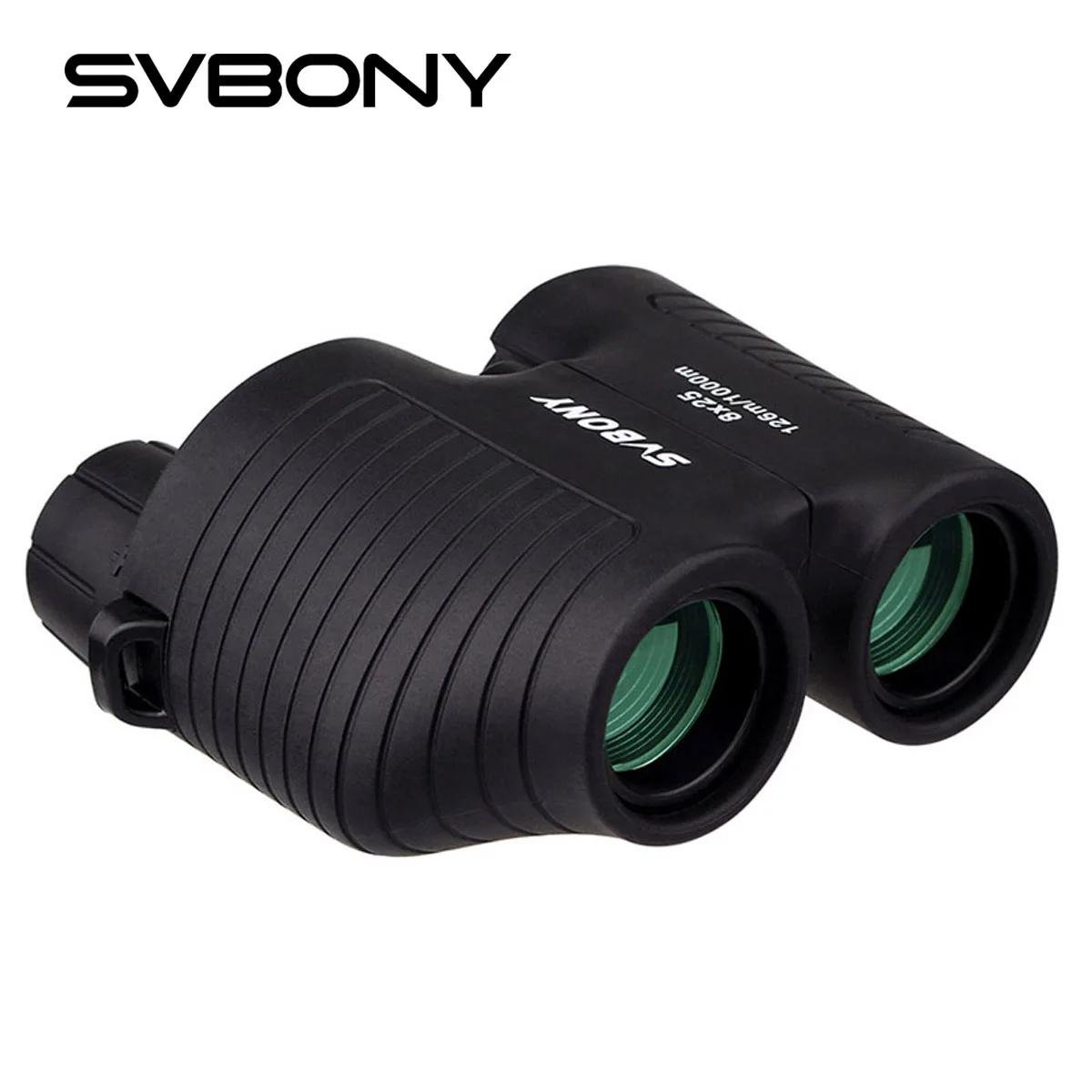
Price checked 25.11.2026: 14.02 GBP
Sold: 507+; Buyer rating: 98.0%
View on AliExpress
SVBONY SV47: a product family with a choice of size and magnification
The SV47 title lists 8×32, 8×42 and 10×42. This family may be worth considering if you are choosing between a more compact daytime format and a larger objective lens. Before ordering, decide which combination you need and make sure it is clearly identified in the selected option. IPX7 appears in the seller title, but the available information does not confirm the conditions of water resistance.

Price checked 25.11.2026: 46.88 GBP
Sold: 1123+; Buyer rating: 98.0%
View on AliExpress
SVBONY SV202: ask for the numerical field of view
The SV202 listing includes 8×32, 8×42 and 10×42, as well as the terms “Wide-angle” and “ED”. For watching moving birds, the field of view is the point to check with a number. Ask for its value for the option you want and compare it with another binocular at the same magnification. “Wide-angle” alone is not enough to conclude that the SV202 makes birds easier to find, and “ED” in the title does not confirm an image advantage.
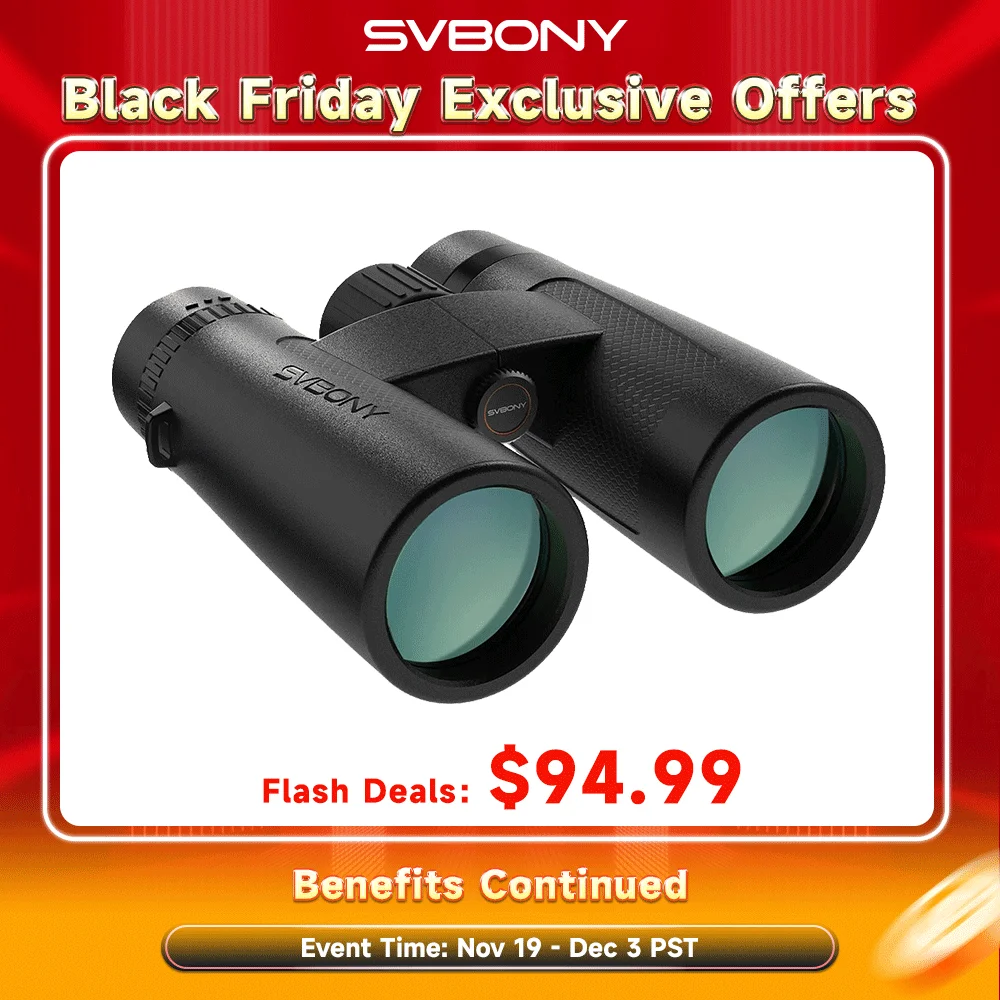
Price checked 25.11.2026: 86.20 GBP
Sold: 720+; Buyer rating: 97.7%
View on AliExpress
SVBONY F9333A/F9333B: identify the option before comparing
The seller combines the F9333A/F9333B designations with 10×42 and 8×32 formats. It may be worth considering if you are choosing between those two combinations of size and magnification. The title alone does not reliably match each format to a particular model suffix. Ask for the exact designation of the selected item before ordering; otherwise, you may be comparing two different possible purchases without knowing which one you will receive.
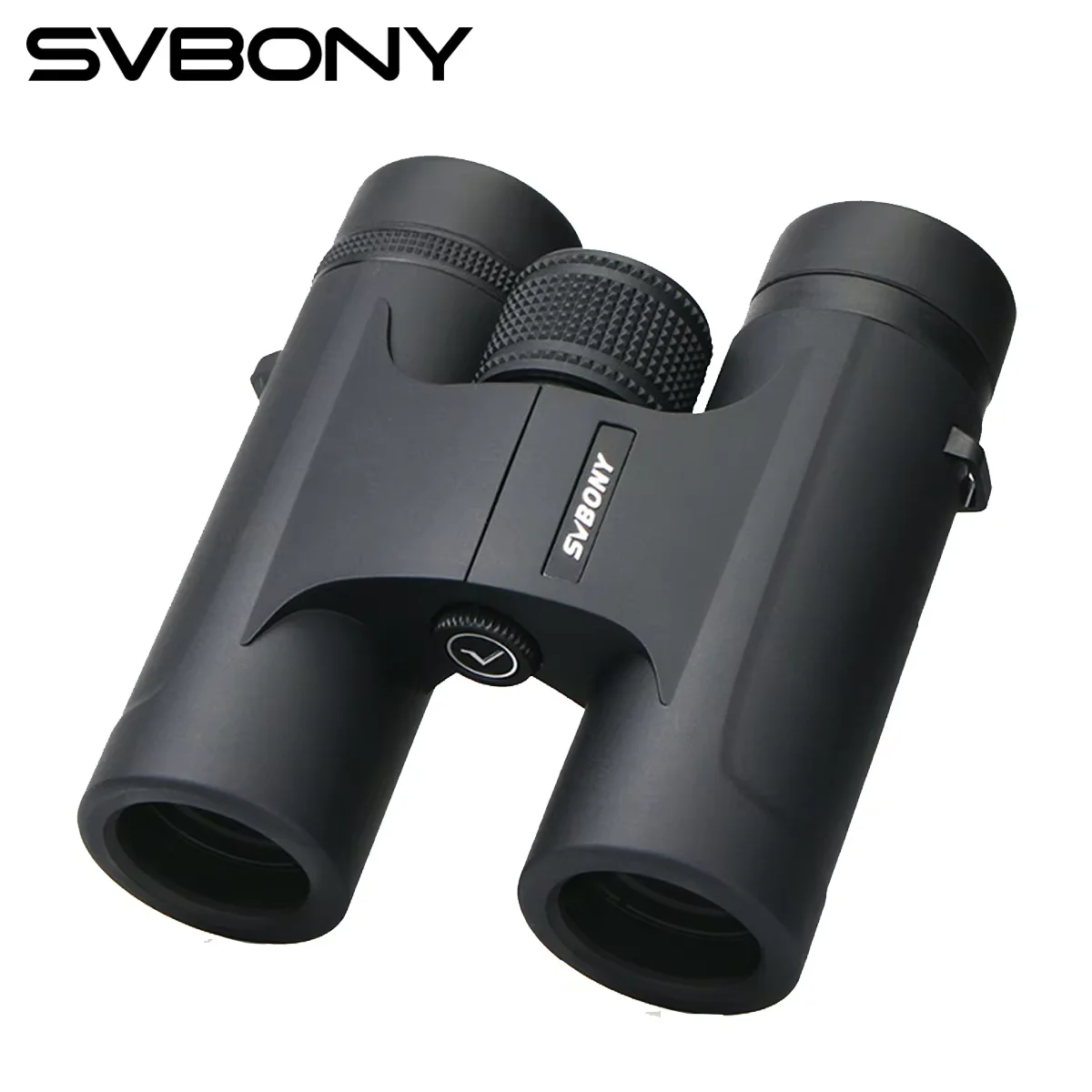
Price checked 25.11.2026: 37.93 GBP
Sold: 339+; Buyer rating: 95.9%
View on AliExpress
SVBONY SA202: an option if you have settled on 10×42
The SA202 title gives one optical format, 10×42, along with a Roof Prism design. Consider it once you have decided that you want ten-times magnification because eight-times is not enough for your intended use. “Roof” describes the prism design; it does not confirm sharpness or low weight. For extended handheld viewing, the actual weight and your ability to keep the image steady still matter.
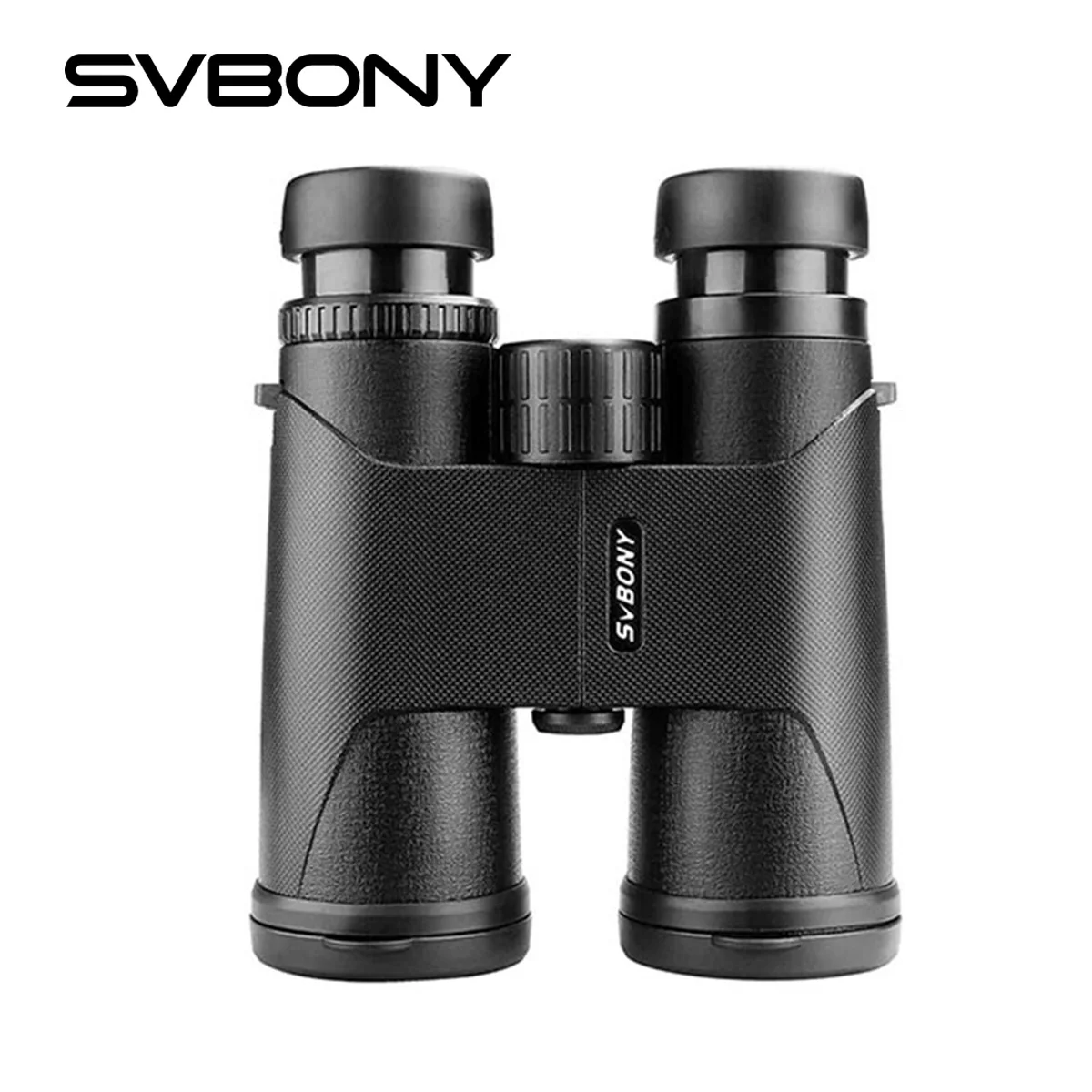
Price checked 25.11.2026: 29.92 GBP
Sold: 330+; Buyer rating: 96.9%
View on AliExpress
How to make your final choice
Write down a short requirement based on your route, such as daytime walks with a small pack, viewing with glasses or finding birds among branches. Then choose magnification and objective lens size, and compare the remaining options by numerical field of view, weight and eye relief. Add minimum focusing distance if you plan to watch nearby subjects. This ties each requirement to a practical use.
If the seller cannot identify the exact option or provide a specification you need, it is not yet possible to assess the listing confidently. Before paying, the most useful check is to match the selected option with the model marking and its documentation. When the binoculars arrive, check that they match the order, that you can focus them and that you can see the full field while wearing your glasses, keeping the agreed return terms in mind.
This is the AliExpress catalogue price for the selected market when checked. Confirm stock, variant, delivery, taxes and the final total before paying.