Braided line has long been the standard for spinning: it barely stretches, transmits bites better and is noticeably thinner than monofilament of the same strength. But AliExpress sells hundreds of braids, and the packaging shows pounds, millimetres and mysterious figures like PE 0.8 and PE 1.5. Here is what to actually look at when choosing, plus five popular options that thousands of anglers buy.
This article contains affiliate links. If you buy something through them, the site earns a small commission from AliExpress, and the price you pay stays the same.
Number of strands: 4 or 8
This is the main parameter that defines a line’s character. Braid is woven from several strands of ultra-high-molecular-weight polyethylene, and the number of strands determines the surface.
Four-strand line is rougher. That is both its strength and its weakness. It handles rubbing against rocks, shells and snags better, and it cuts through weed. It is usually cheaper. But the roughness means it casts less far and makes more noise in the rod guides.
Eight-strand line is rounder and smoother. It casts further, runs quietly through the guides and feels nicer on light spinning rods. But it is less abrasion-resistant, costs more and is more prone to digging into the lower coils on the spool if wound loosely.
A simple rule: for fishing in weed, near rocks and snags, choose 4 strands. For long casts, open water and light lures, choose 8. Lines with 12 and 16 strands exist too, but they are specialist solutions, for example for splicing a knotless leader, and a beginner doesn’t need them.
What PE on the packaging means
The Japanese PE system describes the line’s thickness, not its strength. It is important to understand this: two lines marked PE 1.0 will be roughly the same diameter, but their breaking strain can differ a lot depending on fibre quality. The popular rule “multiply PE by 10 to get pounds” only works very approximately.
Diameter guidelines from reference tables:
- PE 0.6: about 0.128 mm
- PE 0.8: about 0.148 mm
- PE 1.0: about 0.165 mm
- PE 1.5: about 0.205 mm
- PE 2.0: about 0.235 mm
- PE 3.0: about 0.285 mm
- PE 4.0: about 0.330 mm
For comparison, manufacturers like to point out that a 20 lb braid can be thinner than a 6 lb monofilament. That is why more braid fits on the same spool, and the lure casts further and sinks deeper in a current.
What diameter you need for your fishing
It is easiest to start from the fish and the conditions. Approximate ranges for four-strand lines look like this:
- 0.06 to 0.15 mm: ultralight, trout, perch, small fish in clear water.
- 0.15 to 0.25 mm: general freshwater fishing, zander, medium-sized catfish, jigging.
- 0.20 to 0.30 mm: big pike and fishing in snaggy spots.
- 0.30 to 0.45 mm: sea fishing and heavy tackle.
- 0.50 mm and up: trophy sea fishing for large fish.
Consider the water too. In clear, calm water go thinner: less visibility and less drag. In murky, fast or snaggy water you can, and should, go thicker. Thin line transmits bites better but wears through faster.
Length and spool
Don’t buy line by eye. Check the line capacity printed on the reel’s spool: it usually states how many metres of a given diameter fit. For freshwater spinning, 100 to 150 metres is usually enough. If a seller offers 300 or 500 metres, that is not always overpaying: you can split such a bobbin between two spools, or reverse the line when the working end gets frayed.
If the spool is deep and you have little braid, wind some cheap monofilament on first as backing. That stops the braid slipping on a bare spool and avoids wasting it.
Knots and leaders
The knot is the weakest point on braid. An ordinary knot keeps about 65 or 70% of the line’s strength, while a knotless connection keeps almost all of it. So choose knots designed specifically for braid, and always wet them before tightening.
A fluorocarbon or monofilament leader is almost always placed between the braid and the lure. It protects against abrasion, is less visible in the water and absorbs jerks a little. For pike you need a wire or thick fluorocarbon leader, otherwise the braid will be bitten through.
Popular braided lines from AliExpress
We selected the braids with the most sales and a seller rating of at least 97%. Prices are as of 26 October for delivery to the UK, for the cheapest variant; length, number of strands and diameter are chosen on the product listing.
JOF, 4 or 8 strands
One of the best-known budget braid brands on AliExpress. A single listing offers 4 and 8-strand versions, 300, 500 and 1000 metre lengths, and a test from 18 to 88 lb. Handy if you want to compare both weaves from one manufacturer. More than 10,000 sold.
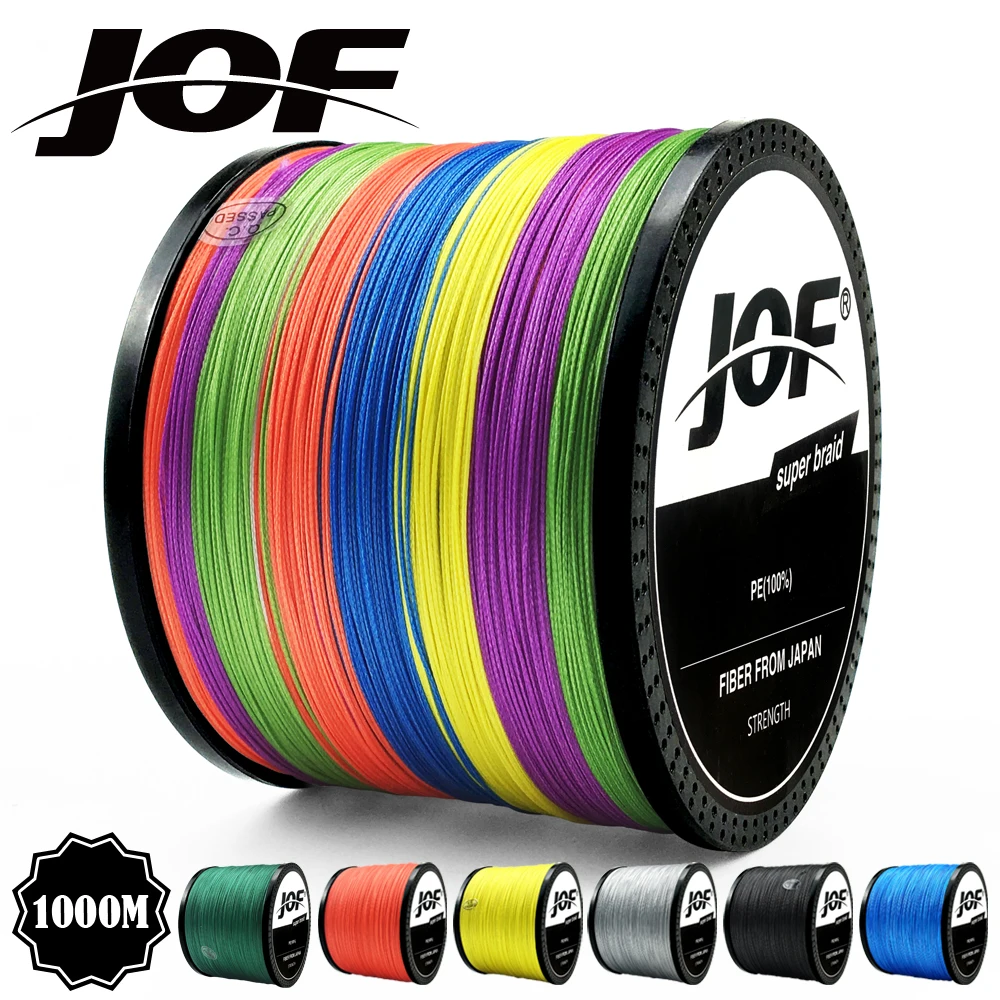
Price on 26 October: £2.64
Sold: 10310+ pcs, positive reviews: 98.0%
View on AliExpress
PE line, 100 to 500 metres
The best-selling line on the list. The seller markets it as a Japanese multifilament line of 100% polyethylene with a test from 8 to 100 lb and lengths from 100 to 500 metres. The 100-metre version suits anyone who wants to try braid on one reel without spending much.
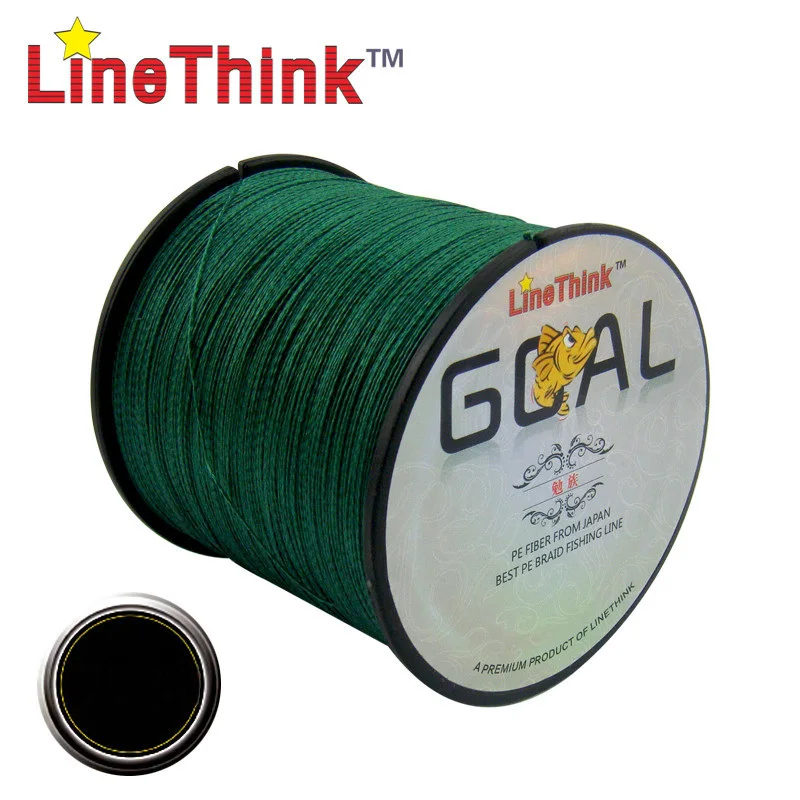
Price on 26 October: £2.41
Sold: 10607+ pcs, positive reviews: 98.0%
View on AliExpress
SeaKnight TriPoseidon, 4 strands
A four-strand series from SeaKnight, a brand well known to anglers on AliExpress. The name promises smoothness, there are several test options from 15 to 30 lb and above, and the length is 300 metres. A good candidate for jigging and fishing over snaggy bottoms. More than 7,000 sold.
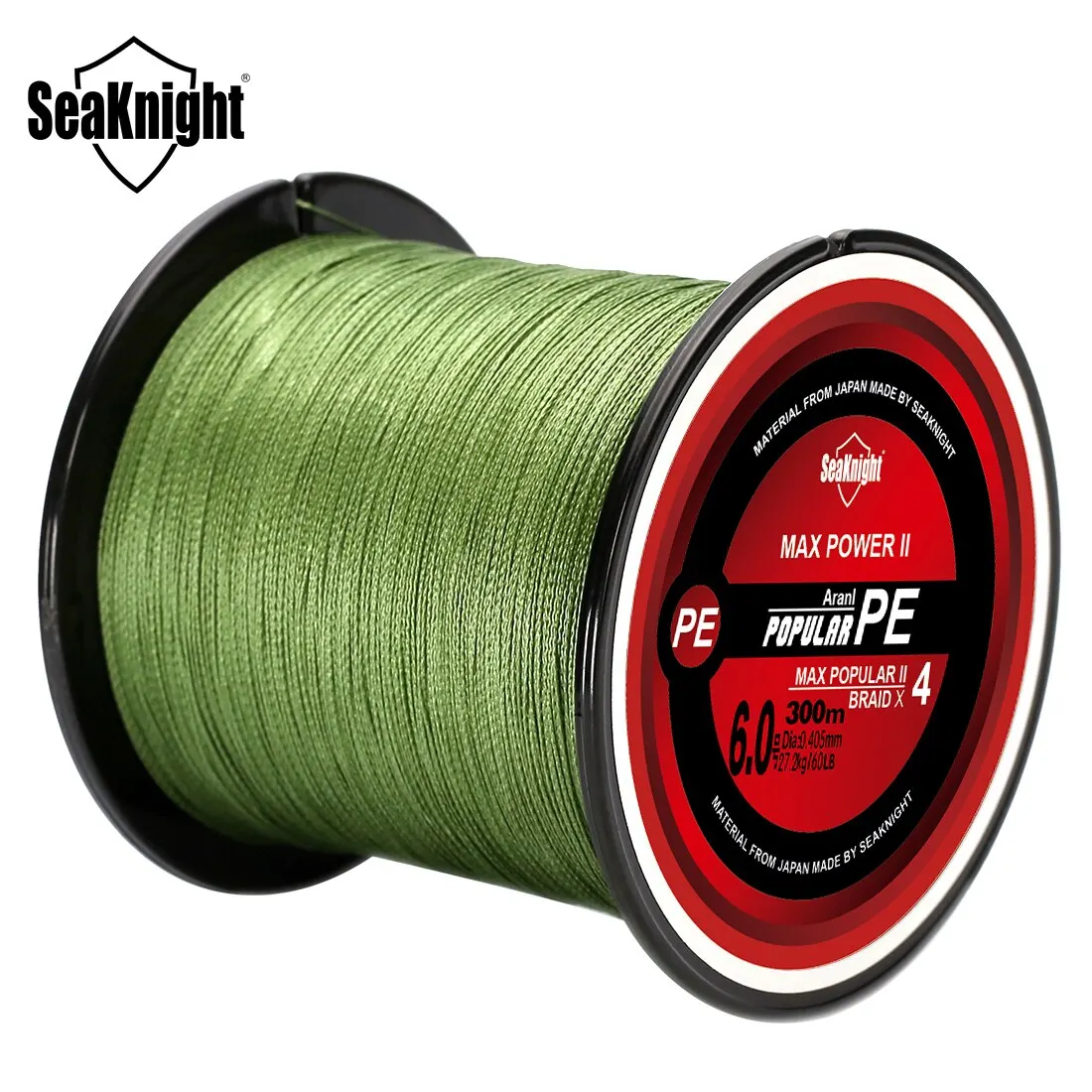
Price on 26 October: £2.60
Sold: 7230+ pcs, positive reviews: 98.0%
View on AliExpress
Seasir RedBull, 8 strands
An eight-strand line of 150 metres with a load of up to 27 kg. The 150-metre length suits a standard freshwater spool, with nothing left over. Good for long casts with twitching lures and spoons. More than 7,000 sold.
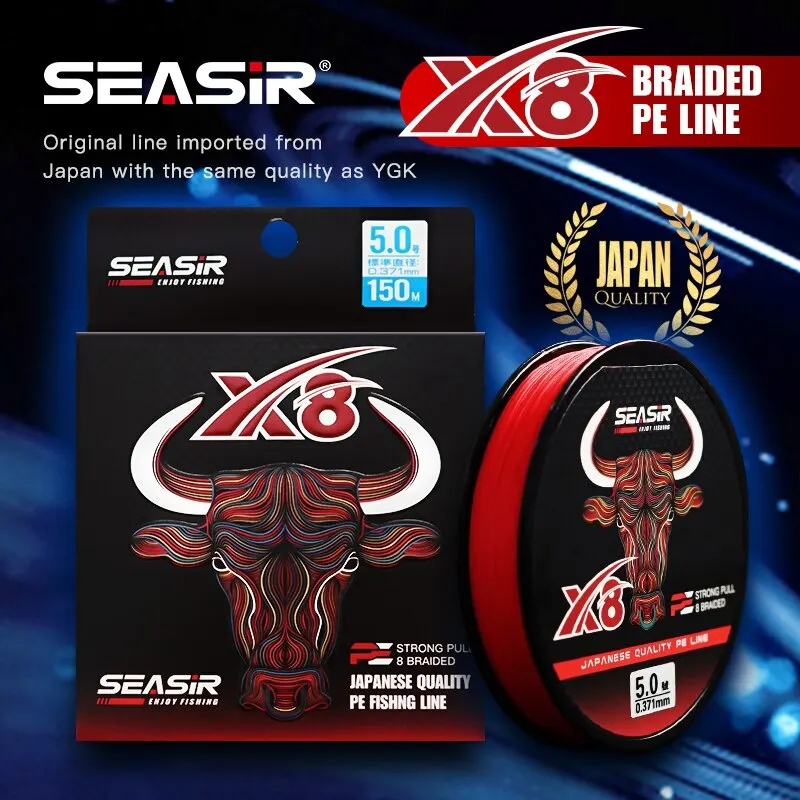
Price on 26 October: £4.69
Sold: 7119+ pcs, positive reviews: 98.0%
View on AliExpress
LEYDUN, 8 strands, 500 metres
An eight-strand braid from the brand’s official store. It comes in 500 metres, and the seller claims a smooth surface and use for sea fishing, carp and spinning. One large bobbin is enough for several reels.

Price on 26 October: £9.31
Sold: 4801+ pcs, positive reviews: 97.7%
View on AliExpress
In short: how to choose braid
- For weed, rocks and snags choose 4 strands; for long casts and open water choose 8.
- Look at the diameter and PE, not only the pounds: strength differs between brands at the same thickness.
- Pick the length to match the spool capacity, and fill a deep spool with backing.
- Tie knots designed for braid and use a fluorocarbon or wire leader.