
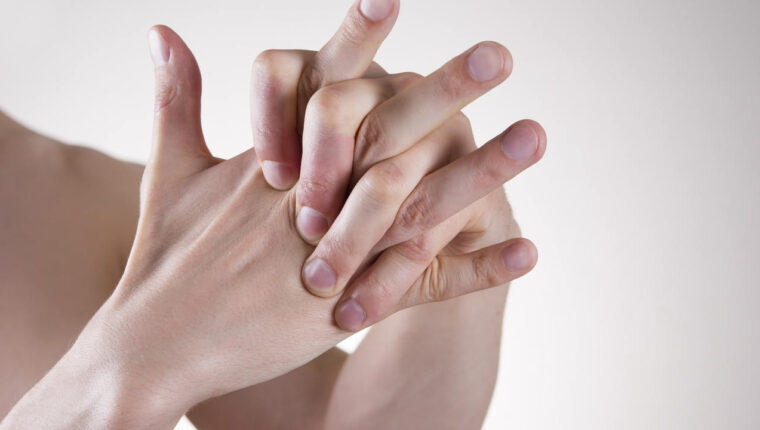
The characteristic cracking sound during passive or active movements always causes fear in people. Cracking in joints involuntarily hints at health problems. The spine, elbows, knees, shoulders, fingers – any part of the body is precious to each person. Naturally, the thought arises to see a doctor for examination. But is it necessary, and what exactly is this crack – let’s briefly explain the issue.
Cracking in Joints: Causes
Doctors have an explanation for this, which even has a specific name – tribonucleation. This occurs when gases form in liquids during a sudden movement of two solid surfaces (located close to each other). In terms of limbs and body parts – this involves bones with joint fluid.
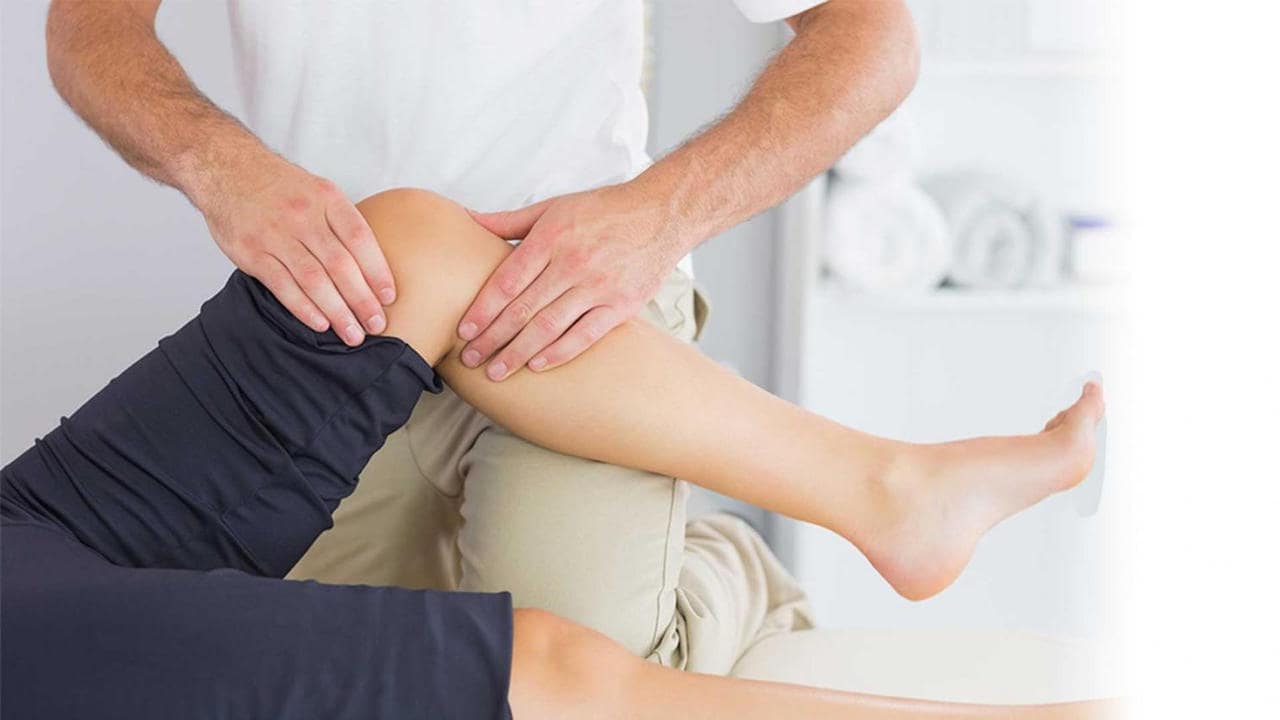
Interestingly, there is still no confirmed scientific research describing the exact mechanism of cracking in joints. However, hundreds of theories exist from scientists to doctors. Most intelligent people tend to believe that gases form naturally in joints. And this cannot be avoided. Some people’s joints crack loudly, while others do so silently.
Is Cracking in Joints Harmful?
How often have you heard from relatives, friends, and acquaintances that cracking fingers in childhood can lead to musculoskeletal diseases, such as osteoarthritis or arthritis? And these theories have been around for about 100 years.

To debunk the myth or confirm the problem with the possibility of disease, American doctor from California, Donald Unger, conducted an experiment on himself and proved that cracking in joints is completely harmless. The doctor cracked his fingers on his left hand daily for 60 years. Periodically, he studied the results of both hands.

As a result, the doctor wrote a dissertation on this topic, proving that joint cracking is absolutely harmless to humans. By the way, the doctor received the Ig Nobel Prize in 2009. It is awarded for silly things that are interesting for educational purposes but do not benefit humanity. On the other hand, it can be concluded that cracking fingers is safe. And you can ignore cracking in elbows, spine, and other parts of the body. If it doesn’t hurt – it’s good.