If you need to freshen one shirt or dress before heading out, a handheld garment steamer may be a useful addition to an iron. But wattage and promises of fast heating should not decide the purchase on their own. First check whether the appliance is comfortable to hold, how steam is controlled and which positions the instructions allow. For several garments in one session, tank capacity matters; for travel, packed size matters; and for steaming clothes on a flat surface, look for explicit permission in the manual.
This article contains affiliate links. TeraNews may earn a commission on purchases made through them, at no additional markup to you.
Below are a selection guide and four listings described by their sellers as handheld garment steamers. The available information is limited to listing titles: exact model identifiers and manuals have not been provided. These examples can help you decide what to ask before buying, but they do not confirm the specifications of a particular configuration or support a recommendation without further checks.
Start with the job you need the steamer to do
A handheld garment steamer is worth considering for quickly treating individual garments. That is the use case highlighted in Which?’s independent guide. If you only need one occasionally and would rather not get out your usual ironing equipment, a compact appliance may be worth a look. If you regularly process a large amount of clothing, first compare the whole process with using an iron: setup, refilling and how long you would need to hold the device.
A claim of versatility does not answer whether a steamer suits your clothes. Which? tests crease removal on silk, linen, cotton and blended T-shirts. That range shows why a broad effectiveness claim is not enough: look for a test of the exact model on the fabric you plan to treat. The sources provided contain no independent test results for the four listings below.
If you mainly want a steamer for a particular dress, jacket or shirt, start with that garment’s care requirements. Then compare them with the steamer manual’s restrictions. A listing that says “for fabrics” does not establish that every material is suitable, and a similar-looking model is no basis for applying another product’s results to it.
Consider tank size alongside how the steamer feels to hold
A larger tank can help you work longer before refilling. In its comparison of steamer designs, Which? identifies this as an advantage of upright models, while handheld models take up less space. Tank capacity alone does not tell you how many garments you can treat: you would also need information about water consumption and the appliance’s operating mode.
Do not turn millilitres in a listing title into a promise of steaming time. Even a verified tank volume cannot support that calculation without steam output data. If a seller gives a continuous-running time, check which mode it applies to and whether it refers to the selected model. For a single garment, easy filling may matter more than maximum capacity.
Think about handling with the tank full. Ask for the appliance’s weight and whether it is stated with or without water; if possible, try the same model in a shop. If someone who will use it finds it difficult to hold a load in one hand for long, a photo of a compact body is not enough. Also consider where the garment will hang and how freely you can move your hand around it.
For a removable tank, check how clearly it can be put back in place. In Philips’ troubleshooting guide for a steamer that produces no steam, incorrect installation of a removable reservoir is listed as one possible cause. That advice concerns the appliances described by the manufacturer; it does not confirm how the tanks in the listings below are designed. You need the selected steamer’s own manual and installation instructions.
Steam delivery matters more than a large wattage figure
Wattage stated by a seller is not a measure of how well an appliance treats fabric. What is more, Which?’s test results showed that a higher steam output did not necessarily mean more effective crease removal. Comparing only wattage or stated steam output can create false precision: neither tells you which appliance will work better on your clothes.
For everyday ease, check how steam is activated. Which? recommends a continuous-steam button for people who find it inconvenient to keep a trigger pressed. Ask for a description of the controls or a page from the manual: does the steam lock on, do you have to keep pressing the button, and how is it switched off? The word “handheld” in a title will not tell you.
Check claims of fast heating against documentation for the exact model too. Philips advises checking the preparation time in the model’s own manual. If a listing only says “fast heat”, treat that as seller wording, not a measured waiting time. For a morning routine, clear setup instructions are more useful than an unqualified promise.
The permitted position of the appliance can change your choice
Being able to steam a garment on a hanger does not mean the same appliance is approved for horizontal use. Philips warns that, for the handheld models covered by its guidance, horizontal use may disrupt the water supply. The manufacturer separately excludes its own 2-in-1 models from this restriction. You cannot apply that limitation automatically to every other steamer, but it shows why you should check the permitted position before buying.
The reverse assumption is also unsafe: a different seller’s “2-in-1” label does not by itself confirm that horizontal steaming is supported. You need the exact model identifier and the relevant section of its manual. If you plan to lay clothes on a surface, lack of confirmation is a good reason to hold off on that particular listing.
One example of a clear document is the Philips StyleTouch GC811/10 specification: the manufacturer explicitly states that it supports vertical and horizontal steaming. The document also states a 230 ml tank, two steam settings and a 3 m cord. Those details apply only to the GC811/10. They show how specifically a product’s capabilities should be documented, but they prove nothing about similar-looking appliances.
What to check before choosing a listing
First connect the name in the listing to the actual appliance: ask for a photo of its label and a manual that shows the same model identifier. Without that, it is hard to tell whether the seller’s answers apply to the version you selected. A shop name, order count and promotional description do not replace documentation or independent testing.
- Power and plug. Compare the voltage on the product label with the mains supply where you will use it, and check the plug type for the selected version. A travel-friendly label does not answer either question.
- Fabrics and appliance position. Find the fabric restrictions and an explicit statement of permitted operating positions. Compare them with the care instructions for your clothes.
- Tank and controls. Check the capacity, how the reservoir is filled and installed, and whether steam can be set to continuous delivery. Confirm that the answers refer to the version you selected.
- Water and maintenance. Read the water requirements and care instructions. For example, Philips permits tap water for the GC811/10 and describes a separate descaling system, but those conditions cannot be transferred to other models.
- Where you will use it. Check the cord length against the position of your socket and the space available for the garment. A short listing may not give this detail at all.
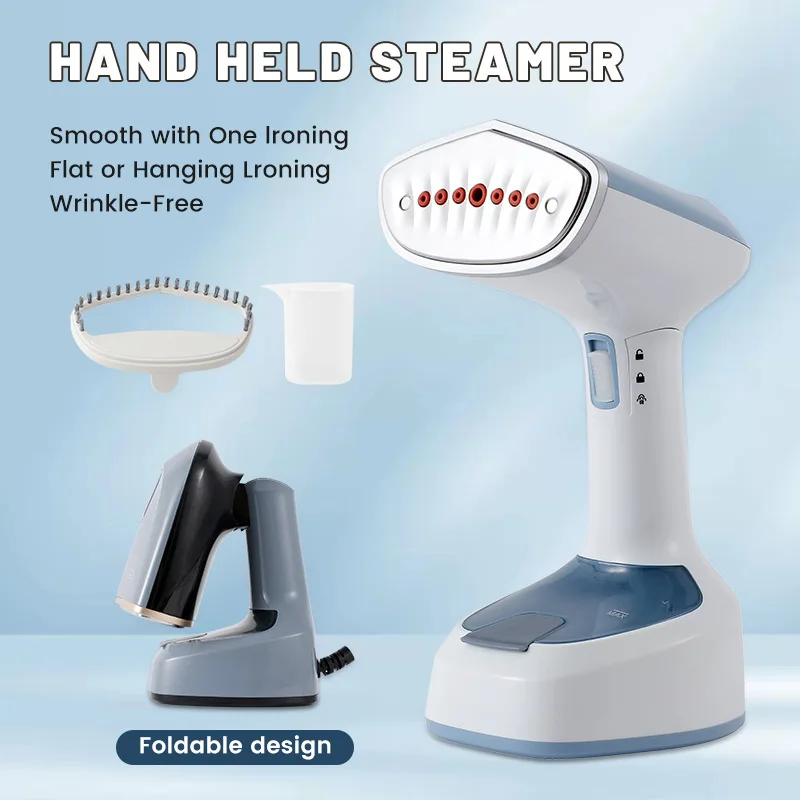
For travel, also check whether the appliance folds. Which? notes that folding handheld models may take up less room in luggage, but “portable” does not mean that a steamer has a folding mechanism. If compact storage is essential, ask for the packed dimensions and a photo of the folded body.
Four listings to consider for different situations
In the examples below, capacity, wattage and “2-in-1” are claims from seller titles only. Exact models, tank design, steam controls and permitted positions have not been confirmed. Until you have the manual, you cannot compare these appliances by steaming performance; use differences in the descriptions as prompts for further checks.
If you want to pause less often to refill
The seller title for this handheld garment steamer claims a 280 ml tank and 1500 W, and describes vertical use. It may be worth considering for several garments in one session if the documentation confirms the capacity of the selected version. The key checks are whether it is comfortable to hold with water in the tank and whether steam can be set to continuous delivery. The figures alone establish neither running time nor results.

Price checked 25.11.2026: 22.68 GBP
Sold: 543+; Buyer rating: 98.0%
View on AliExpress
If you mainly need to treat one garment
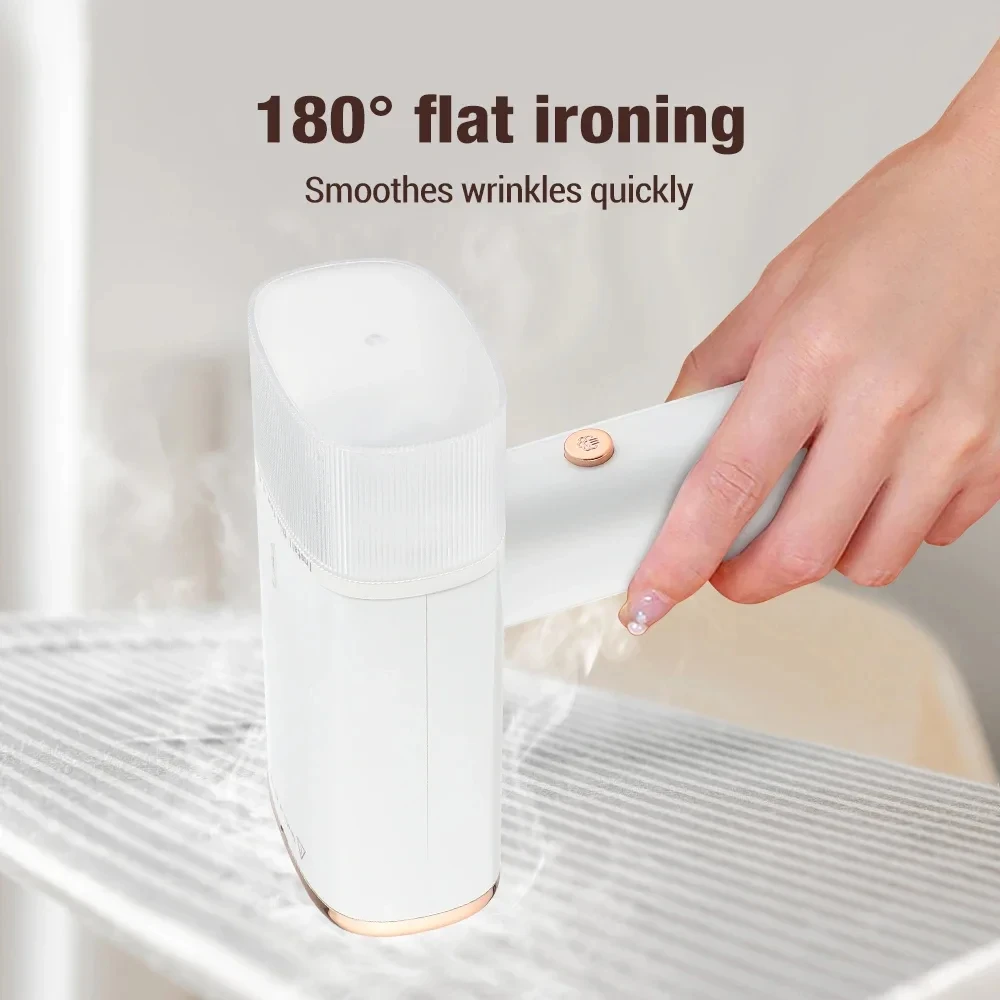
The seller states 130 ml and 1000 W for this listing. That may make it worth considering for a short session on one garment when a large water reserve is not a priority. A smaller stated tank does not prove that the appliance is lighter or has a more comfortable handle, so ask for its dimensions and weight before choosing.
Price checked 25.11.2026: 17.99 GBP
Sold: 415+; Buyer rating: 98.0%
View on AliExpress
If you need an appliance for travel
The seller describes this as a mini “2-in-1” travel appliance combining a steamer and an iron. It may be worth considering if compact storage is a priority, but first check its actual dimensions and power requirements. If you need horizontal use, ask for explicit confirmation in the manual; the promotional label is not enough.
Price checked 25.11.2026: 20.16 GBP
Sold: 1719+; Buyer rating: 98.0%
View on AliExpress
If you want a straightforward steamer for hanging clothes
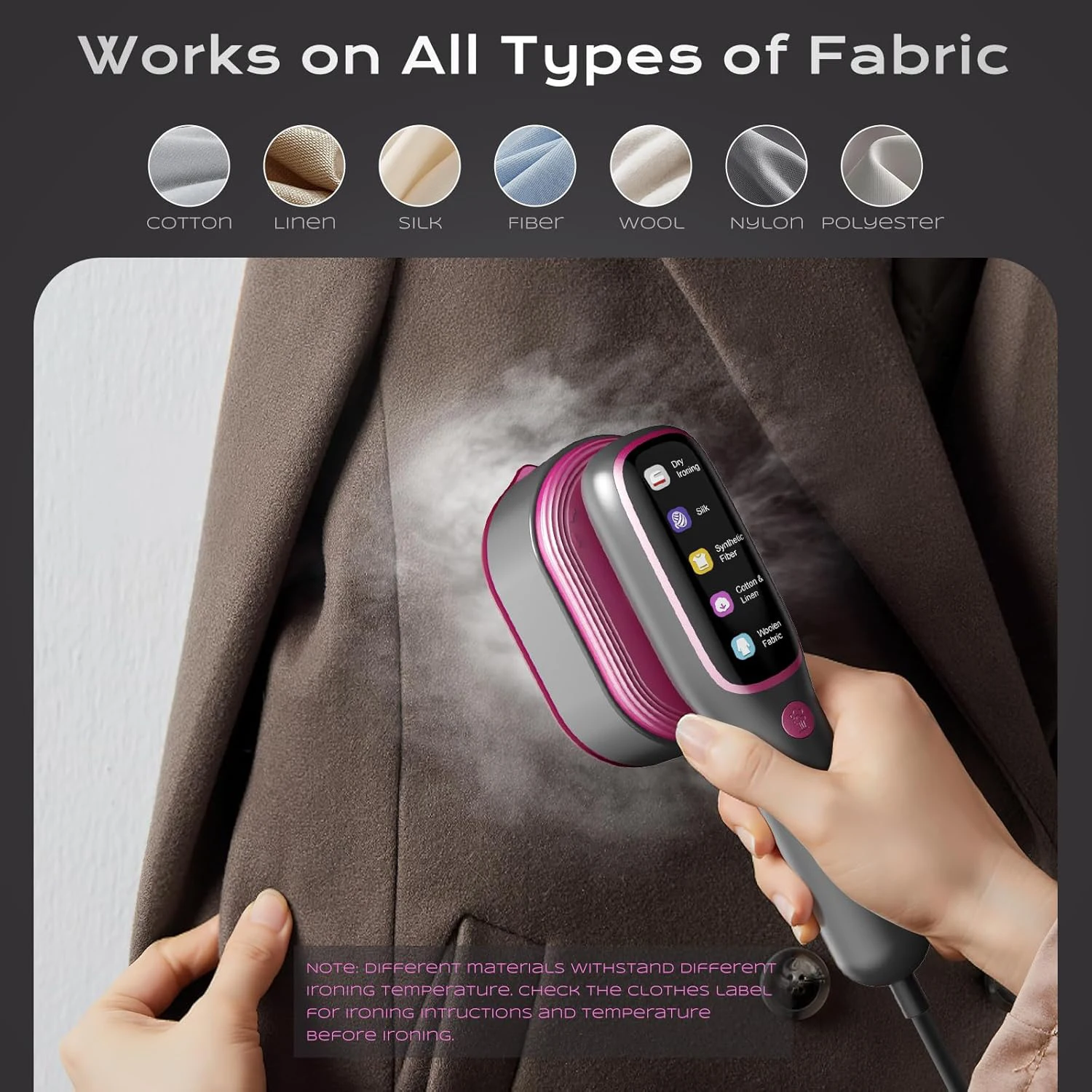
The seller title states 1200 W and describes handheld treatment of hanging clothes. It may be worth comparing for this use case if you do not need horizontal steaming. The available description does not state the tank capacity, so check it before buying, especially if you expect to treat more than one garment.
Price checked 25.11.2026: 47.09 GBP
Sold: 388+; Buyer rating: 98.0%
View on AliExpress
How to make your final decision
Write down the job you need the appliance to do: one garment before heading out, several items in a row or travel. For one garment, check the setup steps and ease of control; for several items, check capacity, water use and how the appliance feels to hold when full; for travel, check storage dimensions and power compatibility. This will keep your questions to the seller tied to your actual needs.
Then check the key documentation requirement: do the product label, manual and selected version match? If the seller cannot provide the exact model and its limitations, there is not enough information for an informed purchase. If your main need is to process large amounts of clothing regularly, compare the task with using an iron or an upright garment steamer. A handheld device’s compact size alone does not make it suitable for that workload.
This is the AliExpress catalogue price for the selected market when checked. Confirm stock, variant, delivery, taxes and the final total before paying.