
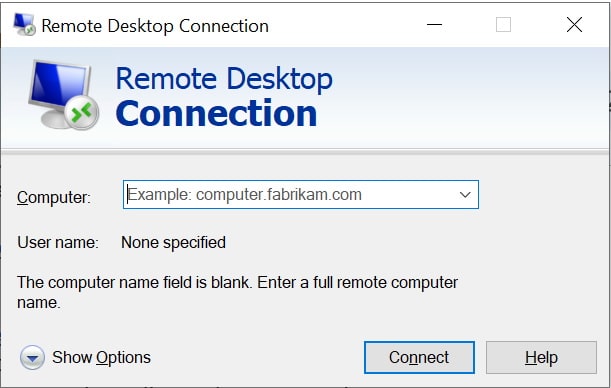
In the world of information technology, terminal servers play an important role by providing efficient management and maintenance of enterprise networks. These devices are a key component of infrastructure that facilitates centralized resource management and enhances workstation productivity. Let’s take a look at what a terminal server is used for and the benefits it brings to modern corporate networks.
Centralized resource management:
- Application deployment on the server: Terminal servers allow applications to be installed on a central server rather than on each computer in the network. This simplifies application management, as administrators can update or modify software only on the server, avoiding the need to do so on each individual device.
- Access via remote sessions: Users access applications and data through remote sessions on the terminal server. This enables them to work with programs without installing them directly on their computers, increasing security and simplifying the process of updating applications.
Resource savings:
- Centralized computing power: Terminal servers perform computational tasks on their side, reducing the load on client devices. Thin clients or low-powered terminals can be used to access the server, saving resources on end-user computers.
- Efficient use of hardware resources: Since all calculations occur on the server, hardware resources can be allocated and used more efficiently. This is especially important in large organizations with many workstations.
Centralized security control:
- Access rights management: Administrators have the ability to centrally manage user access rights to data and applications. This prevents unauthorized access and increases the security level of the corporate network.
- User activity monitoring: Terminal servers provide tools for tracking user activity. Administrators can monitor logins, logouts, and resource usage, ensuring more effective security control.
Maintenance convenience:
- Centralized updates and patches: Administrators can perform updates and make changes on the terminal server, simplifying maintenance. This reduces the need to manually update or fix each computer in the network.
- Less technical maintenance on client devices: Since most of the computational work occurs on the server, client devices can be less powerful, reducing the risk of technical issues.
Increased mobility:
- Access from anywhere: Terminal servers provide the ability to access desktops and applications from any location connected to the network. This is especially useful for remote workers or those using mobile devices during their activities.
Conclusion:
Terminal servers are a powerful tool for managing modern corporate networks. They provide centralized control, improve security, save resources, and facilitate maintenance efficiency. In today’s business environment, where information technology plays a key role, terminal servers become an integral part of successful infrastructure.
![[Exclusive] Noise Master Series: Review of flagship headphones](https://teranews.net/wp-content/uploads/2025/09/frame_19522-360x220.webp "[Exclusive] Noise Master Series: Review of flagship headphones")