

Oura, maker of the best-known smart ring, had two pieces of news in a single week. On 20 October the company added two features for people who train: Cardio Effort, a weekly estimate of how hard your workouts hit your heart, and an automatic VO2 Max calculation that needs no special test. Then on 22 October Oura announced that its paying subscribers had passed 6 million, with roughly a million of them joining since the end of June.
This article contains affiliate links. If you buy something through them, the site earns a small commission from AliExpress, and the price you pay does not change.
What is Cardio Effort
Cardio Effort shows how much a workout loaded your cardiovascular system. The score takes both intensity and duration into account, so a short, hard session can earn roughly the same score as a long, easy one. It is based on the TRIMP (training impulse) method: the ring compares your heart rate during the session with your long-term resting heart rate. It does not estimate your maximum heart rate, and it never asks you how hard the session felt.
The feature has two levels. Workout Cardio Effort covers a single session, while Weekly Cardio Effort adds up the whole week. The weekly total lands in one of five ranges: Light, Fair, Maintaining, Building or Reaching. The thresholds are personal and built from your recent activity, not taken from one table for everybody.
Oura frames the goal as moving from “how many minutes did I move” to “am I maintaining fitness, building it or overreaching”. For someone who runs or cycles without a coach, that is a useful nudge: it helps you avoid wrecking yourself after a sudden jump in volume, and avoid standing still for weeks.
VO2 Max, no six-minute walk required
VO2 Max, or maximal oxygen uptake, shows how efficiently your heart, lungs and muscles deliver and use oxygen under load. It is normally measured in a lab. Since 2024 Oura has offered a Cardio Capacity estimate, but it required a six-minute walking test. The new version works passively, from GPS-tracked workouts.
The ring produces a first estimate after five suitable sessions: walks, runs or hikes. The ring has no GPS of its own, so location data comes from your phone. After that the figure updates as you log new workouts. In the My Health Heart Hub section you can see the value in ml/kg/min, your fitness category (Low, Fair, High or Peak), the trend and the date of the last update.
There is a catch: VO2 Max launches in Oura Labs, the app’s section for experimental features. Both additions work on Oura Gen3 rings and newer. The company has not given regional timings.
6 million subscribers, and what Oura costs
Oura wrote about the 6 million paying members milestone on its blog on 22 October, and The Wall Street Journal reported it the same day. The Oura Ring 5 came out this year: it is 40% smaller than the Ring 4 and costs $399, or $499 in a premium finish. Most features also require a subscription at $5.99 a month. Worth recalling that on 29 September Oura postponed its Nasdaq listing, citing market conditions, and has not named a new date.
What this means for buyers
First, smart rings are finally ceasing to be just sleep trackers. Oura is adding metrics that used to live in sports watches, and rivals such as RingConn and Ultrahuman will have to respond. Expect similar features to reach cheaper models within the next year.
Second, money. A ring plus subscription adds up over two years to a sum comparable with a good sports watch. If you want load estimates and VO2 Max, there are cheaper routes: a ring with no subscription for sleep and heart rate, or a chest strap that sends accurate heart rate to Strava, Garmin Connect or Zwift.
Third, for heart-rate-based calculations, sensor accuracy is everything. An optical sensor on the finger or wrist works well at rest and under steady effort, but on intervals and strength work a chest strap is usually more reliable. That is why many athletes wear a ring or band day and night, then add a strap for the workout itself.
What to use instead of, or alongside, Oura
Below are four popular devices from AliExpress. Prices are as of 24 October and may change, especially closer to the 11.11 sale.
R10 smart ring with charging case
The easiest way to try the ring format without spending much. According to the seller, the R10 tracks sleep and heart rate, has IP68 protection and several sport modes, and charges in its case. Do not expect Oura’s accuracy or advanced analytics, but it will tell you whether you are comfortable wearing a ring around the clock.

Price on 24 October: £9.39
Sold: 2000+ pcs, positive reviews: 98.0%
View on AliExpress
Amazfit Helio Ring
The closest alternative to Oura from a well-known brand, and sold by the official Amazfit store. The listing mentions a 2.6 mm body thickness and freediving support to a depth of 30 m.

Price on 24 October: £76.39
Sold: 900+ pcs, positive reviews: 95.1%
View on AliExpress
Magene H303 chest heart rate monitor
One of the best-selling heart rate monitors on AliExpress. It works over Bluetooth and ANT+ at the same time, so it connects to a phone, a bike computer and a watch alike. If you want to measure load from heart rate honestly, start with a strap like this: it is inexpensive and noticeably more accurate than optics on intervals.
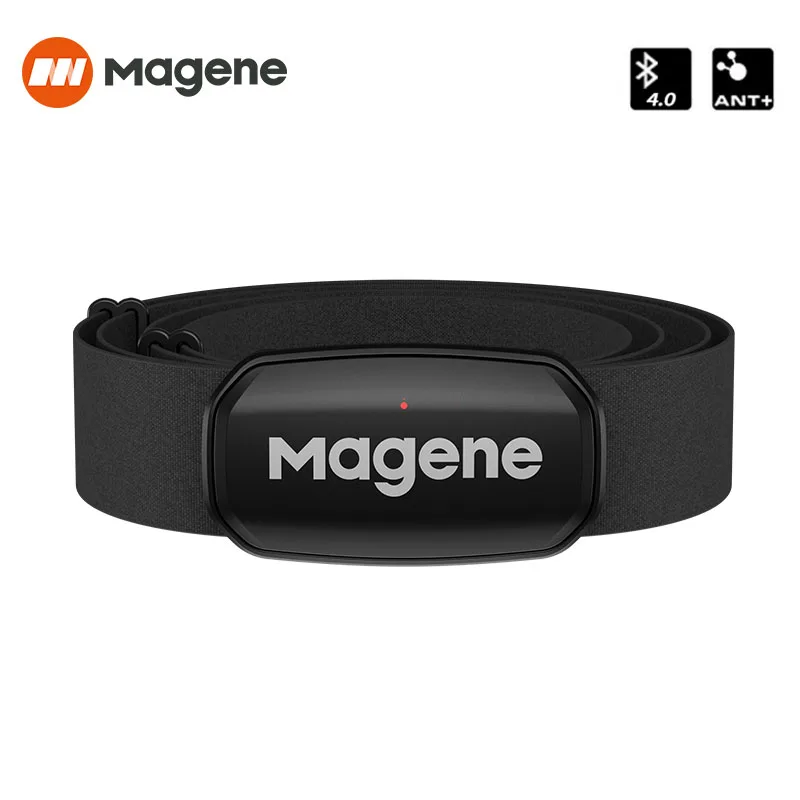
Price on 24 October: £15.90
Sold: 5400+ pcs, positive reviews: 96.9%
View on AliExpress
COOSPO HW9 armband heart rate monitor
An option for anyone who finds a chest strap uncomfortable. The HW9 is worn on the arm and transmits over Bluetooth 5.0 and ANT+, and the listing claims compatibility with Peloton, Zwift and Wahoo. A good compromise between the comfort of a band and the accuracy of an external sensor.

Price on 24 October: £23.55
Sold: 4700+ pcs, positive reviews: 96.9%
View on AliExpress
If you already use an Oura Gen3 or newer, the update will arrive on its own: just update the app. For everyone else, the news mostly shows where the market is heading, since the next cheap rings and bands will almost certainly learn to estimate load in the same way.