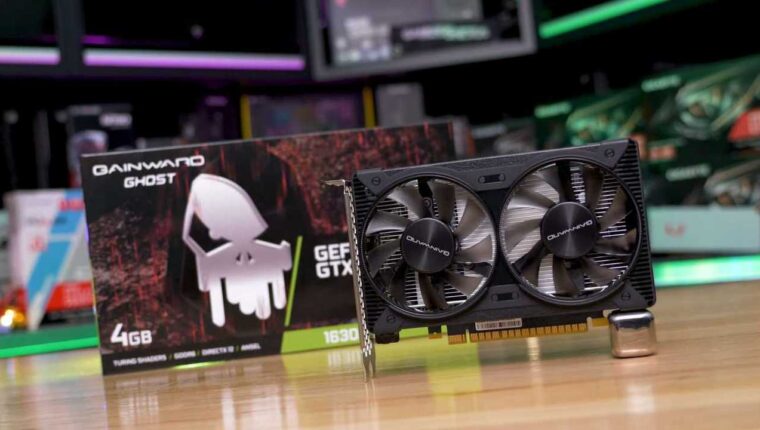
The graphics card manufacturer, Palit Group (owner of the Gainward brand), introduced a very interesting graphics accelerator to the market. Its feature is a very low price for a device at the entry-level gaming segment. The Gainward GeForce GTX 1630 Ghost graphics card costs only 150 US dollars. One might overlook it. But this is Gainward! Any gamer who has ever owned a product from this brand will confidently say that this is – a real THING.
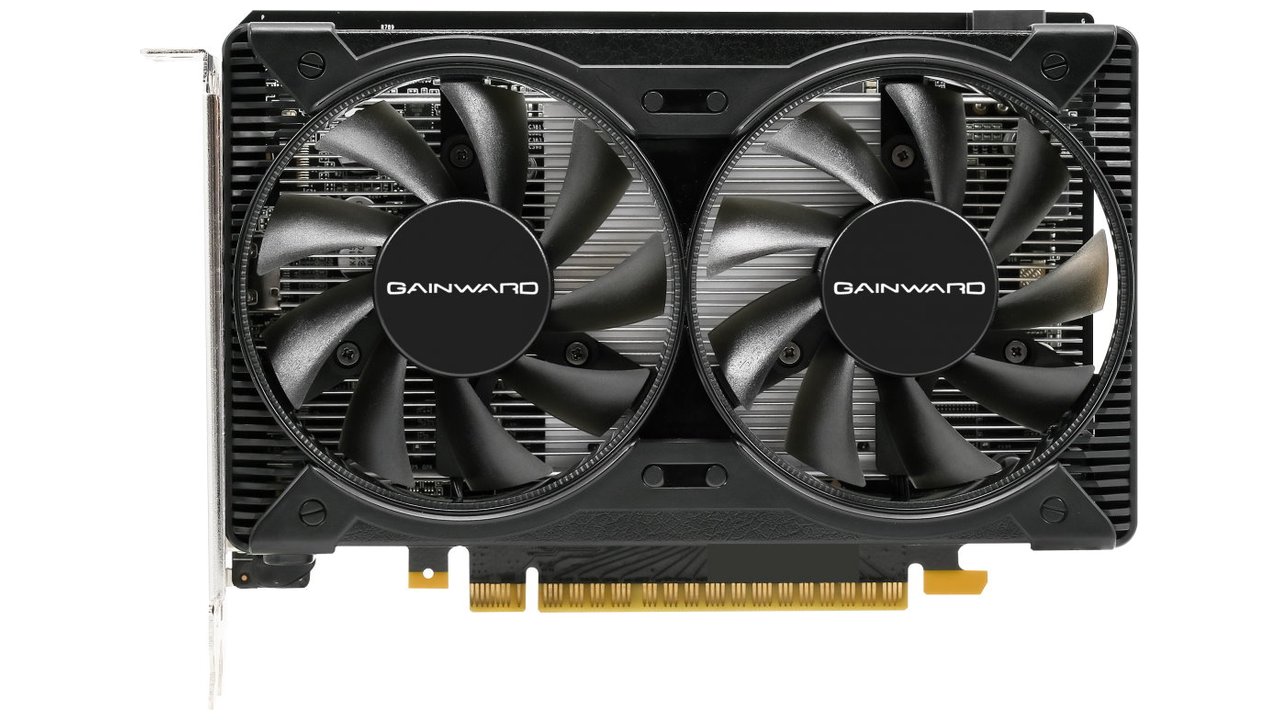
The feature of the Gainward brand is a proper approach to the cooling system. Even when overclocked, memory modules and the graphics core do not overheat. The graphics card becomes outdated morally, but it always remains operational. Yes, in performance tests, Gainward has never ranked in the TOP. But reliability, durability, and fault resistance are at the top.
Gainward GeForce GTX 1630 Ghost – technical specifications
| Manufacturing process | 12 nm, Turing architecture (TU117) |
| CUDA cores | 512 |
| Number of ROPs | 16 |
| Core clock frequency (normal and Boost mode) | 1740/1785 MHz |
| Video memory size | 4 GB |
| Memory frequency | 1500 MHz |
| Bus | PCI-Express 3.0 x16, GDDR6, 64-bit |
| Power supply | 6-pin PCIe, power consumption 75 W |
| Video outputs | 2x DisplayPort 1.4, 1x HDMI 2.0b |
| SLI support | No |
| Ray tracing support | No |
| 4K output | Yes |
| Price | $150 |
The closest competitors for the Gainward GeForce GTX 1630 Ghost are AMD Radeon RX 6400 and Intel Arc A380. As expected. In the nVidia lineup, a vacuum has formed between the GT1030 and GT1650, which needed to be filled. And the Gainward product came in handy.

Gamers will inevitably suggest an alternative in the form of AMD RX570 from the secondary market, which can be purchased in the same price range. But this is not the best choice, as RX cards have been in use for over 5 years. Plus, they may have been used for mining farms. It’s better to buy a new graphics card rather than a “cat in the bag”.
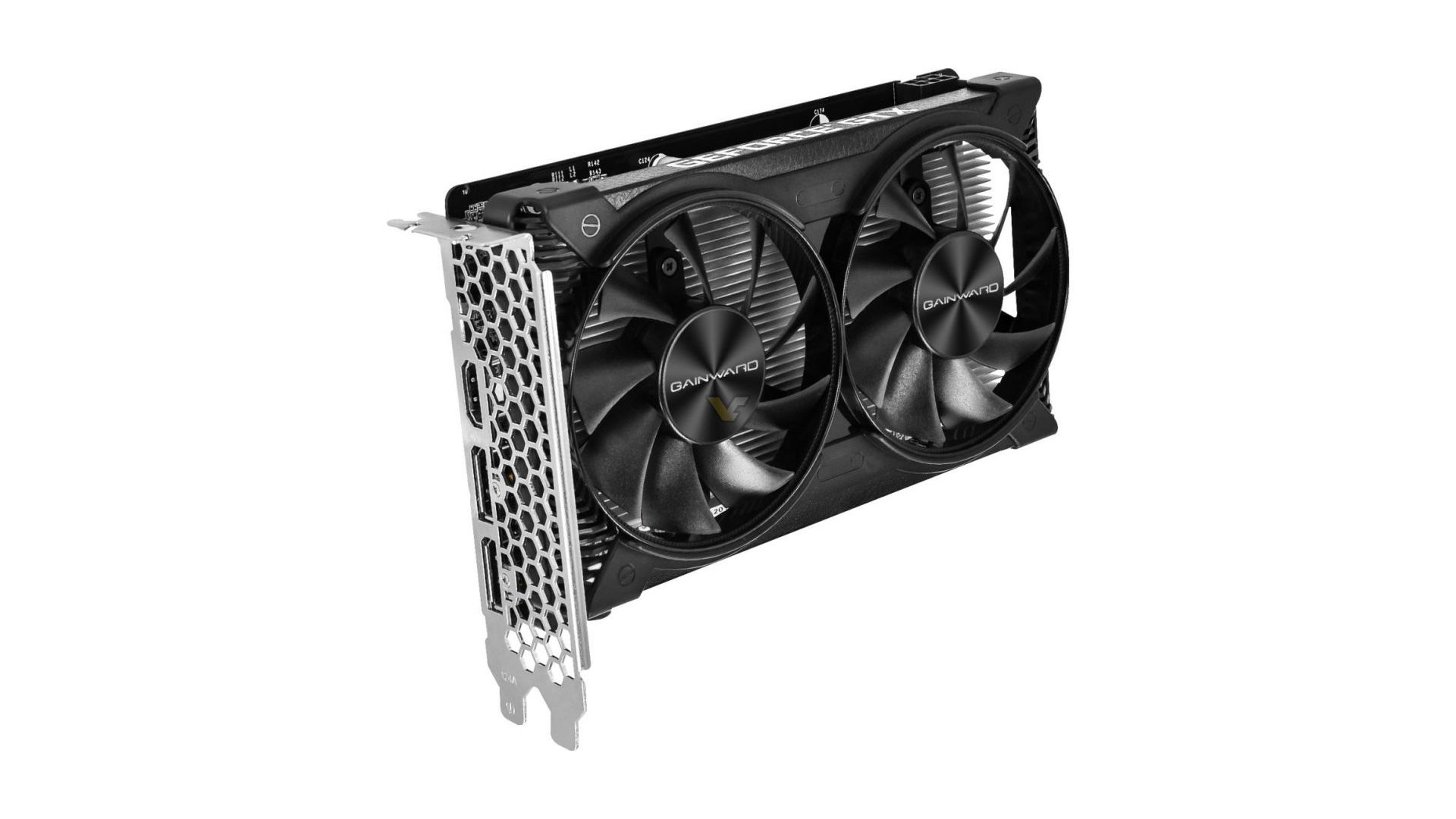
The weak point of the Gainward graphics card is the lack of support for new gaming features promoted by nVidia. The chip simply cannot handle all visual effects. Additionally, a bug has been noticed in the form of a memory overclocking restriction. However, the accelerator works very quietly and does not consume much electricity under load.