
The profession of a programmer imposes certain specific restrictions and requirements both on the characteristics of the system unit and installed software, as well as on the monitor parameters. Buying some flagship model is, of course, easy, but not in this case. Firstly, why overpay for features you won’t use? Secondly, a coder needs a monitor that will be as comfortable as possible specifically for working with programming systems, i.e., the requirements are highly specialized. We will consider which ones in this article.
Type of Matrix
It’s not necessary to choose a monitor with an OLED or QLED matrix. They indeed have excellent characteristics. But, say, ultra-fast response time is not critical for a programmer, although it is very important for gamers. An ideal choice can be considered a model with an IPS matrix, which has wide viewing angles and sufficiently accurate color reproduction. You can find out how much a monitor of this type costs on the Allo website.
Screen Size and Resolution
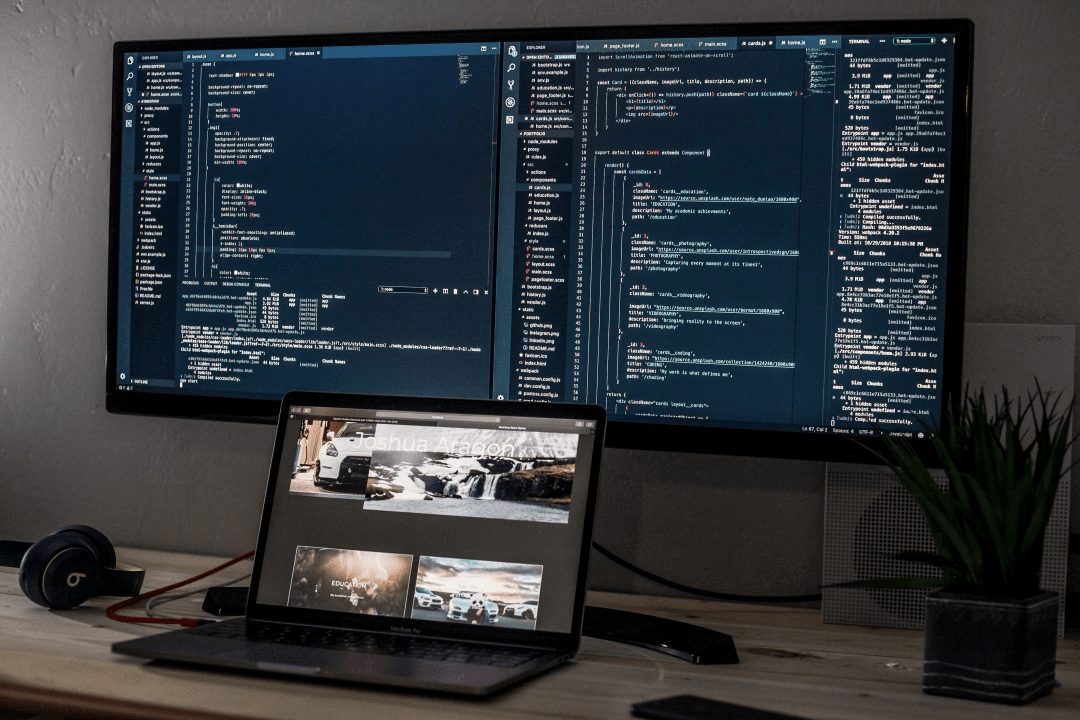
Both characteristics are important: the higher they are, the more information will be available for viewing without the need to scroll sideways. Since code lines can be both short and long, this is very important. Vertically, more such lines will fit, helping the programmer to cover larger fragments of code at a glance. The optimal option is supporting 4K and a diagonal size within the budget. Regarding aspect ratio, instead of the standard 16:9, it’s better to choose 16:10 or even 21:9 for the same reason (longer line length).
Ergonomics
A programmer spends quite a lot of time at the computer, mostly in a tense posture. Therefore, the monitor should promote less fatigue: have adjustable height, tilt angles. It is desirable to be able to rotate it into a vertical position at 90° depending on current needs.
Color Reproduction
An important parameter for web developers and programmers working on graphic software. A monitor with color calibration function allows adjustments of gamma according to personal needs.
Refresh Rate
Ultra-high specifications are unlikely to be needed, but 60 Hz, considering the long hours of work at the computer, is insufficient to prevent eye fatigue. The optimal indicator is at least 75 Hz, and better around 120–133 Hz.
Other Characteristics
A glossy screen provides greater clarity, but glare can interfere with perceiving code lines. However, most modern models with a glossy surface have an anti-glare coating. A matte surface will definitely not reflect, but the text clarity will be worse. A big plus is the presence of screen backlight technology (e.g., Flicker-Free), which helps reduce eye strain during long work sessions. Response time of the matrix is not a critical parameter, nor is the presence of built-in speakers.