GPON internet is a data transmission technology that allows subscribers to connect to the internet with high speed and reliability. In this article, we will explain what GPON internet is, how it works, its advantages, and how to connect it.
What is GPON Internet?
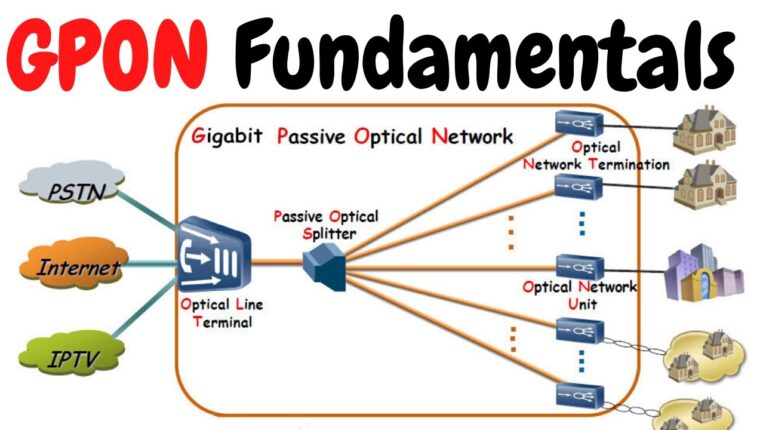
GPON (Gigabit Passive Optical Network) is a passive optical network that uses optical fibers to transmit data between the central station (OLT) and subscriber devices (ONT). GPON internet adheres to the ITU-T G.984 standard, which defines the parameters and characteristics of such a network.
GPON internet provides high data transfer speeds — up to 2.5 Gbps from OLT to ONT and up to 1.25 Gbps in the reverse direction. Additionally, GPON internet supports various types of traffic, such as internet, telephony, television, video surveillance, and others.
How does GPON internet work?
GPON internet operates on the principle of time division multiplexing (TDM) and wavelength division multiplexing (WDM). TDM means that data from different subscribers is transmitted over the same optical fiber at different times, while WDM means that different types of traffic are transmitted over different wavelengths.
GPON internet consists of three main components:
- OLT (Optical Line Terminal) — the central device that connects to the internet provider and manages data transmission between optical fibers and subscriber devices.
- ONT (Optical Network Terminal) — the subscriber device that connects to the optical fiber and converts optical signals into electrical signals, providing ports for connecting various devices such as computers, phones, TVs, and others.
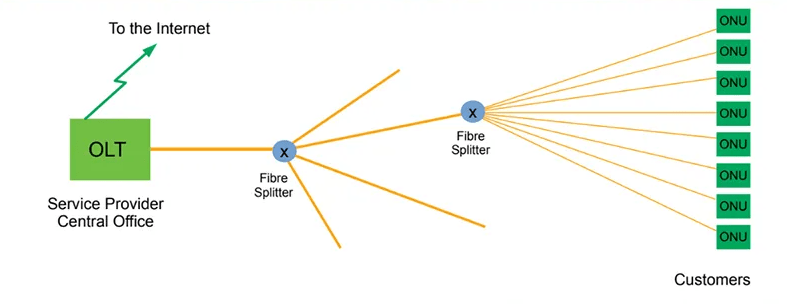
- ODN (Optical Distribution Network) — the network of optical fibers connecting the OLT and ONT. ODN may include various passive optical components such as splitters, connectors, adapters, and others.
The schematic representation of GPON internet can be shown as:
Advantages of GPON
Connecting to the internet via GPON offers several advantages over other technologies such as ADSL, VDSL, Ethernet, or DOCSIS. Some of them include:
- High speed. GPON allows internet speeds up to 2.5 Gbps, significantly exceeding other technologies. This means you can watch high-resolution videos, play online games, download large files, and use other internet resources without delays or interruptions.
- Reliability. GPON uses optical cables that are immune to electromagnetic interference, corrosion, overheating, or mechanical damage. Moreover, the passive optical network has no active components that can fail or require replacement. This ensures stable and high-quality connection under any conditions.
- Cost-effectiveness. GPON reduces connection and maintenance costs because it does not require additional equipment, electricity, or personnel. Additionally, GPON allows multiple services over a single cable, reducing the number of wires and sockets in the apartment.
- Versatility. GPON supports various protocols and data transmission standards such as IP, ATM, Ethernet, TDM, and others. This enables connecting any devices and using any communication services like internet, television, telephony, video surveillance, intercom, and others.
Disadvantages of GPON
- Limited bandwidth. Although GPON provides high internet speeds, they are not guaranteed and depend on the number of subscribers connected to a single optical splitter. If many subscribers are connected, the network bandwidth will be divided among them, potentially reducing internet speed. Therefore, it is important to choose a provider that monitors the number of subscribers per splitter and ensures sufficient bandwidth for each.
- Low security. GPON uses a single optical cable for data transmission from the provider to subscribers connected to the same splitter. This means all subscribers receive the same signal, which could be intercepted or altered by malicious actors. It is essential to select a provider that employs encryption and authentication methods to protect your data from unauthorized access.
- High cost. GPON requires the installation of specialized equipment that is quite expensive. This includes both the OLT at the provider’s location and the ONT in the subscriber’s apartment. Additionally, the cost of optical cable is higher than that of copper cable. As a result, connection tariffs for GPON may be higher than for other technologies.
How to connect GPON internet?
To connect GPON internet, you need to follow these steps:
- Contact an internet provider that offers GPON internet services in your region and sign a connection agreement. (For example, Briz)
- Select a tariff plan that suits your needs and budget. Usually, tariffs depend on speed, data volume, traffic type, and additional services such as telephony, television, and others.
- Receive an ONT subscriber device from the internet provider, which needs to be connected to the optical fiber laid by the provider to your home or apartment. The ONT can be internal or external, depending on the type of optical fiber and installation location.
- Connect various devices you want to use for internet access to the ONT, such as a computer, phone, TV, and others. For this, you will need Ethernet cables, telephone lines, coaxial cables, or wireless connections.
- Configure the settings
Conclusion
GPON is a modern internet connection technology that provides high speed, reliability, cost-effectiveness, and versatility. It allows receiving internet, television, and telephony over a single optical cable that is directly laid into the subscriber’s apartment. To connect to GPON, you need to choose a suitable provider, order installation, wait for the ONT setup, and connect your devices. However, GPON also has some disadvantages, such as limited bandwidth, low security, and high cost. You may consider alternative options like Ethernet, DOCSIS, or Wi-Fi, which also offer fast and quality internet.