In the company of Przewalski’s horses, which are recorded daily by trail cameras in the exclusion zone, biologists noticed a domestic horse with a foal. Such a union is not recognized by humans, but nature has its own laws. Moreover, the appearance of a domestic horse in a radiation-contaminated area indicates the restoration of the Chernobyl ecosystem and surrounding territories.
Chernobyl. Exclusion Zone: Fauna Recovery
As of early 2018, scientists recorded 48 Przewalski’s horses. It is possible that the population of wild animals is 2-3 times larger. According to Denis Vishnevsky, head of the Chernobyl Reserve, the horses appear healthy, with no signs of radioactive disease. Considering that Przewalski’s horses disappeared from their natural habitat, there are no mysteries in the appearance of animals in the exclusion zone. The horses were brought to Chernobyl from the Askania-Nova Reserve in 1998.
 Despite the absence of humans and radiation, the ecological system of the exclusion zone is recovering. Unique species of animals and birds, which were listed in the Red Book in the 20th century, are appearing. Moose, deer, wolves, and foxes are overflowing the wild forests of Chernobyl and Pripyat. Notably, the number of wolves in the exclusion zone is an order of magnitude higher than in neighboring regions.
Paradise for wildlife
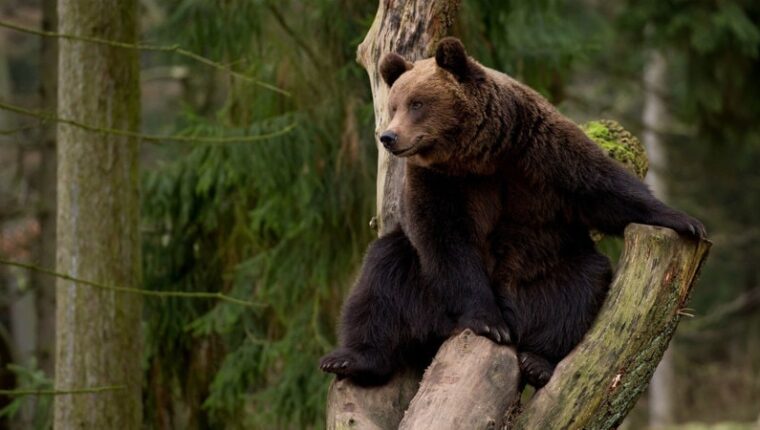
 One of the sensational achievements Chernobyl (the exclusion zone) is proud of is the brown bear. The shaggy predator surprised scientists who had not seen a bear since the late 1980s. The conditions for bears are ideal. Fish inhabit the waters, and the forest is full of birds. The absence of hunters in the exclusion zone is another advantage for wild animals.