Pool covers are protective structures designed to safeguard water from debris and dust. The abundance of construction materials on the market expands the product range. Covers can be:
- Rigid and soft.
- Stationary and mobile.
- Solid and sliding.
- Standard sizes or custom-made.
- Summer, winter, and all-season.
Covers are a whole branch in pool arrangement, affecting criteria such as quality, price, color, ease of use, and durability. There is no perfect solution. The buyer decides what is most important and finds a compromise.
Pool pavilions – the best solution
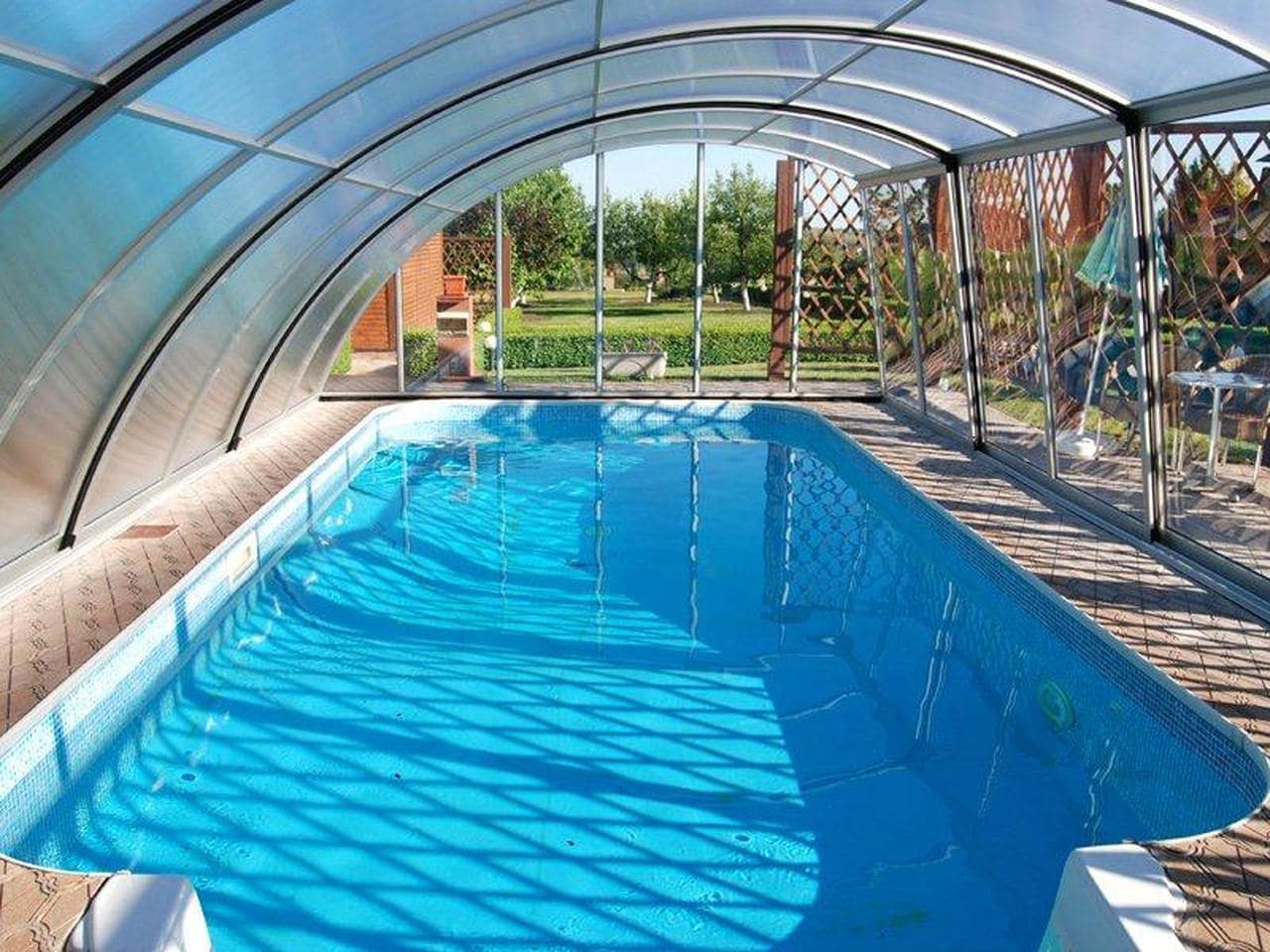
A pavilion is a stationary rigid structure installed over the pool, encompassing part of the beach area. The feature of this type of cover is functionality. Thanks to the pavilion, the pool can be used year-round. Usually, pavilions are equipped with a sliding mechanism. All segments of the structure can be moved aside to fully open the basin. Special rails (guides) are installed for ease of movement.
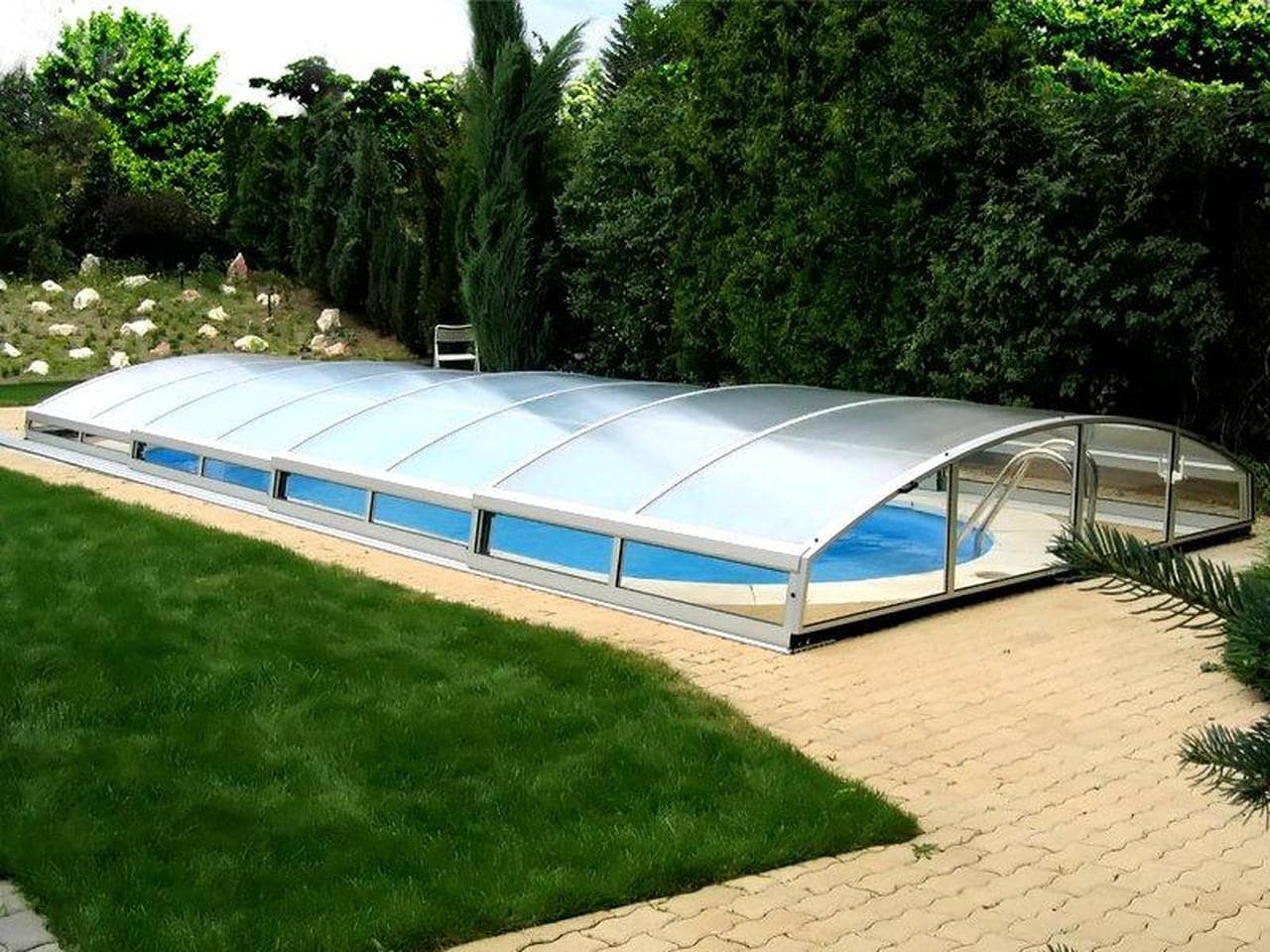
Pavilions differ in height and the type of construction material used. The most durable option is anodized aluminum (load-bearing part) and polycarbonate (transparent windows). Other materials include plastic, stainless steel, galvanized steel, glass, and transparent polymers.
In all aspects, pavilion covers are effective. They better protect the pool water from dirt and debris. They block access to children and pets. They retain heat in the pool for a longer time. They prevent water evaporation in dry weather. They allow swimming in winter (water heating needed). They can last for several decades.
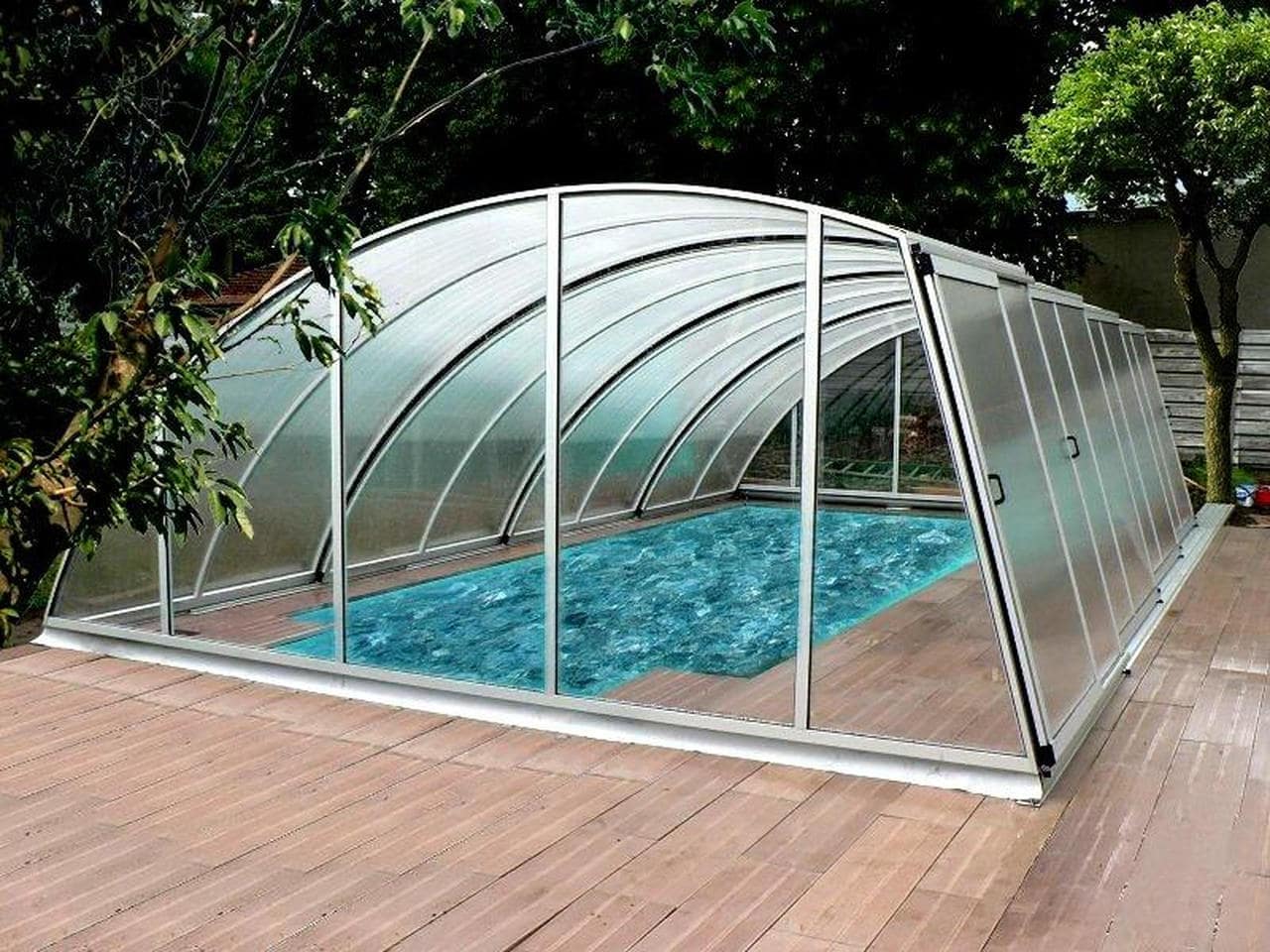
The only factor that might deter a buyer is the price of the pavilion. The structure can cost half or a third of the pool itself. Additionally, installing a protective structure requires free space around the pool.
Sliding roller covers – affordable and convenient
It’s simple – these are the same roller covers used to close shop windows or garage doors. They are supplied in rolls with a winding mechanism (manual or automated). Pool covers are simplified for ease of use. They do not take up much space, and they quickly cover and uncover the pool.
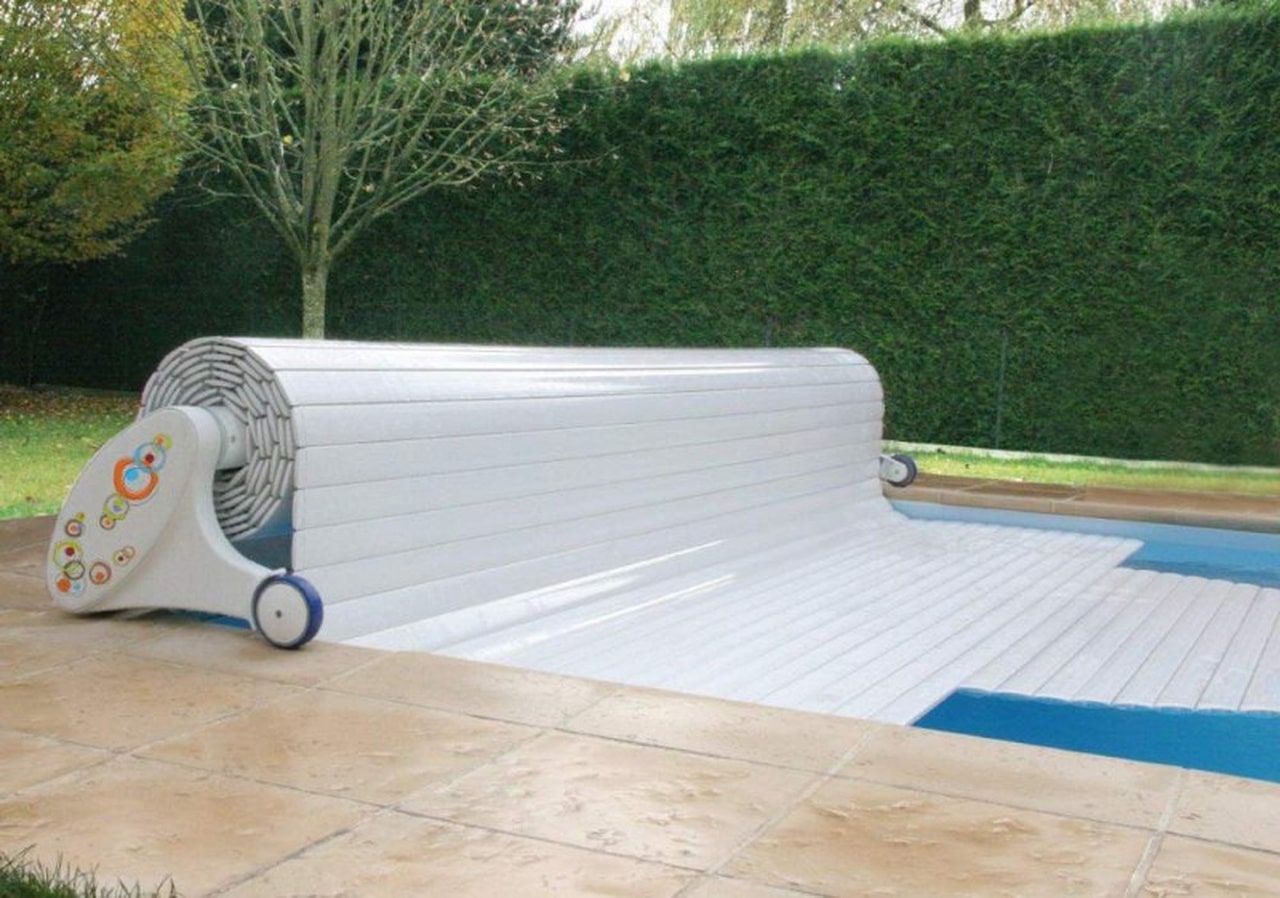
The main drawback of roller covers is limited usability. Suitable for pools with parallel side edges. If the pool has an irregular shape, this option is not feasible. The price of roller covers is affordable, and their durability is good. They perform all protective functions. Adults can walk on the cover. This is a practical solution for careful buyers.
Solar film and polyethylene covers
In the budget segment, soft film covers are always available. The simplest option is regular polyethylene film used in gardening. A more advanced option is solar film (bubble wrap material used to wrap fragile goods during shipping). The second option has lower thermal conductivity, making it more convenient.
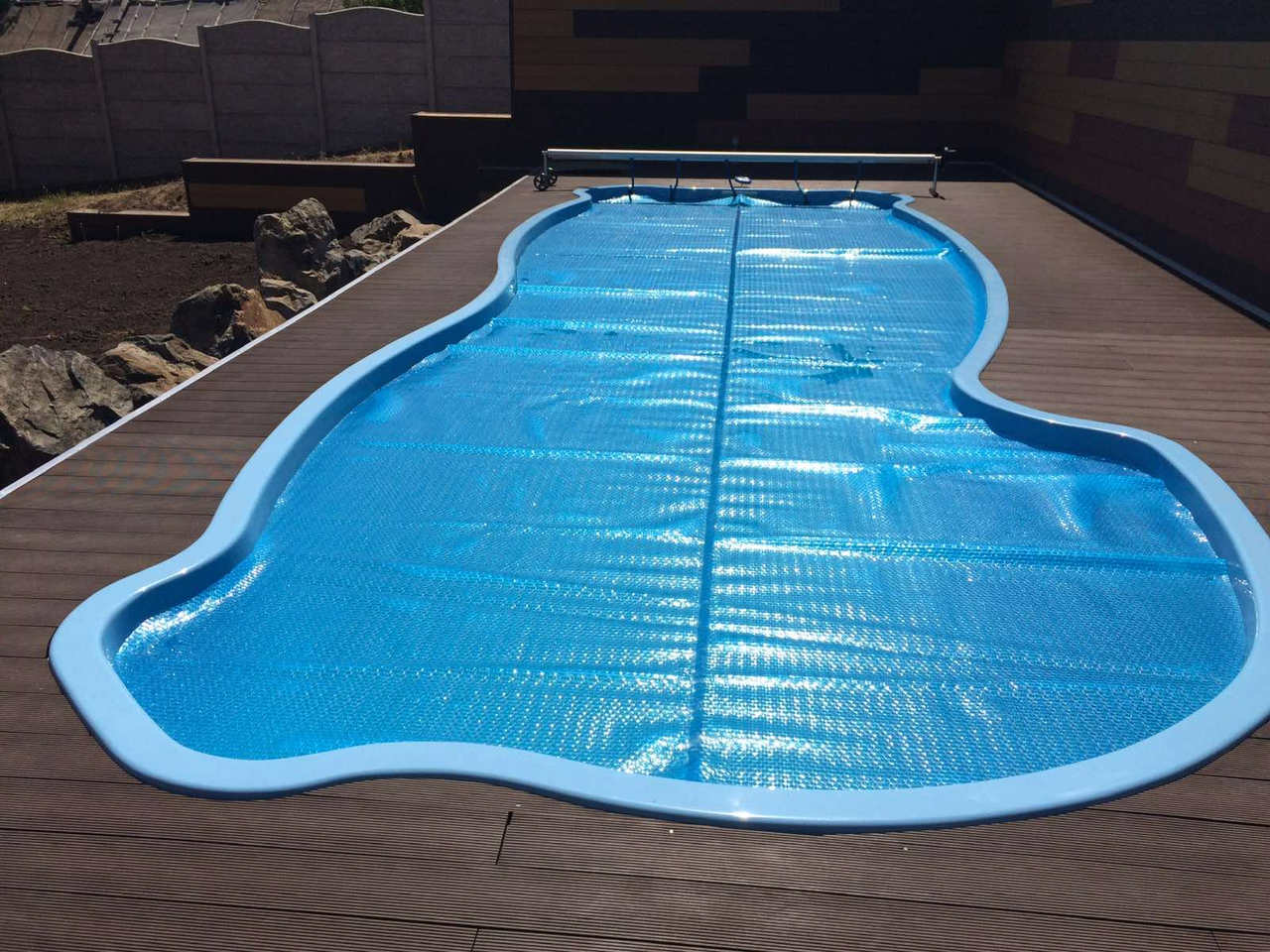
Along with low cost, solar film and polyethylene are completely lacking in durability and ease of use. The film tends to break and deteriorate from frequent covering and uncovering. After a year or two, a new protective cover must be purchased. Covering also requires two people to stretch the film over the basin.
Trampoline cover – a compromise between price, durability, and quality
A trampoline is a soft cover made from polymer and fabric materials of special strength. Reinforced straps run along the entire perimeter of the trampoline cover. It looks like tarpaulin but is denser and stronger. The feature of the trampoline tent is that, when installed over the pool, it creates a free space above. The structure is strong enough to withstand a car, pickup, or SUV.
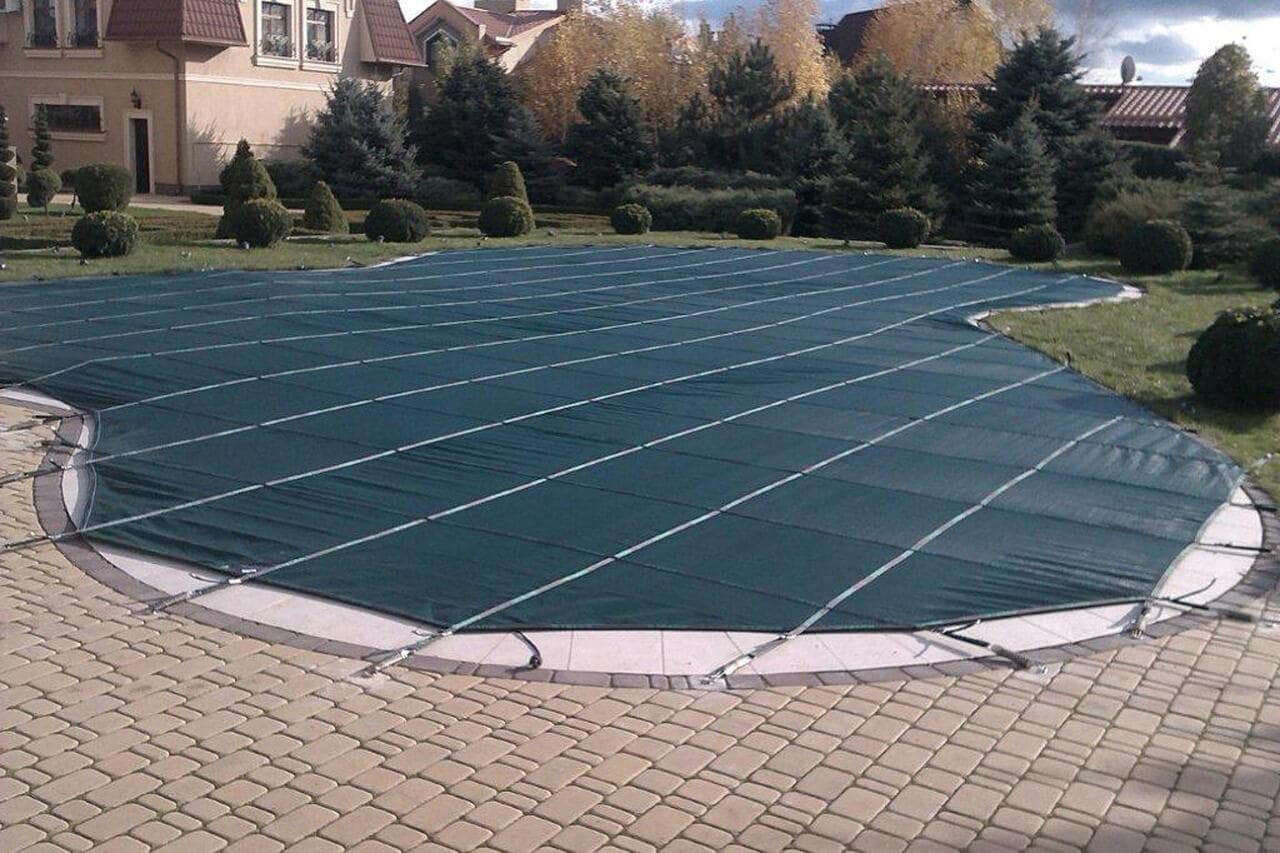
A trampoline cover is an ideal choice for buyers who only use the pool in summer. After the season ends, the water is drained, the tent is stretched, and it waits for the next season. In resort areas, the surface of the trampoline cover is used to store umbrellas, tables, chairs, and other furniture. The disadvantage of trampoline covers is the complexity of installation. It’s not just about stretching the tent over the basin but also properly fixing dozens of straps on anchor bolts around the beach area.
Vinyl covers – standard and sliding
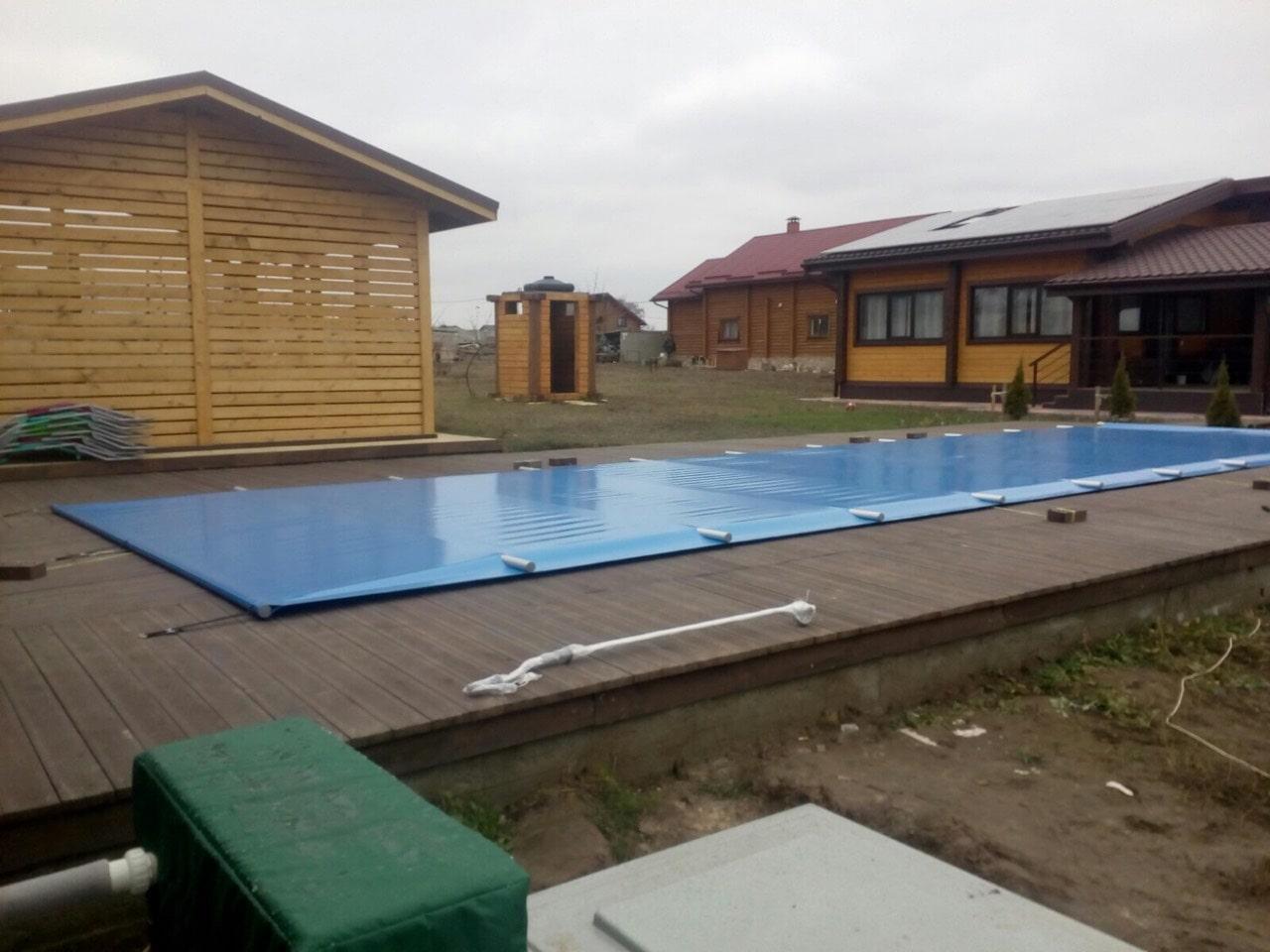
Another budget option is polyvinyl (PVC). Pool covers made from this material are affordable and quite durable. However, installing a PVC tent requires some effort from the owner. The base is not very stiff. Manufacturers have found interesting solutions, namely two, which increased the appeal of vinyl covers:

- Metal rods are installed along the perimeter (across the side edges). This increases the rigidity of the structure. These rods rest against the beach zone, making the tent more durable. As a result, several adults can move on the cover.
- The cover is equipped with a winding drum mechanism. It’s easier to cover the pool and, by winding the drum, open it for use. This simple solution greatly simplifies the entire operation process.
Which pool cover is best
If you ignore the price, the best choice is definitely a pavilion. It is a multifunctional structure designed for long-term use. The pool can be used in cold weather. Savings on chemicals, water, and heating. Nothing better than a pavilion.
In terms of minimum cost, it’s better to choose a PVC cover with a winding mechanism and ribs for rigidity. Ease of operation, reliability, excellent protection – pool covers of this type are the most popular among buyers.
For seasonal use, a trampoline cover can be chosen. Imagine covering the pool and having plenty of free space – very convenient for business. Disposable films are not recommended as they wear out quickly and are difficult to lay in strong winds. Roller covers are good, but it’s important to find a reliable manufacturer using quality materials.