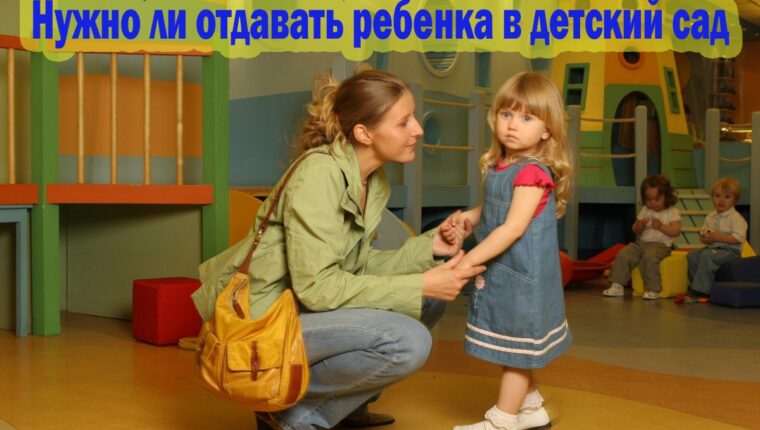
“Should You Send Your Child to Kindergarten” – an актуальный question for young parents. After all, kindergarten is not cheap, and often even problematic. Kids are constantly getting sick, bringing home new “words,” and in the morning, they are not eager to leave the comfort of home.
Moreover, there is an alternative, such as grandparents or a nanny. Interestingly, the latter option is quite convenient for parents. A nanny, besides caring for the child, will also take care of order and cleanliness in the house or apartment.
Should You Send Your Child to Kindergarten: History
It is noteworthy that the institution of “kindergarten” itself belongs to the Soviet education system. Abroad, parents raise their children at home independently or hire domestic helpers.

Kindergarten in the USSR did not arise by chance. The country was actively recovering in the post-war years. All sectors of industry required young specialists. Therefore, the government found a simple solution for parents – a preschool institution for young children.
Disadvantages of Kindergarten
Problem:
Disruption of the child’s psyche. Waking the baby early in the morning, dressing, and taking him to kindergarten is a headache for moms and dads. The child has to be persuaded and promised gifts and sweets.
Solution:
According to statistics, the reluctance of a child to go to kindergarten disappears within 2-3 days after visiting the institution. A kind caregiver, a good and interesting team, engaging games, and meals make the child adapt to the changes. If the child continues to resist, it is necessary to understand the problem and find the reason. Often, it is hidden in upbringing, when parents cannot properly explain to the child why he must go to kindergarten. As an option, visit the kindergarten in the middle of the day to ensure that no one is bullying the child, including caregivers.

Problem:
The child has started using obscene words.
Solution:
This is the fault of caregivers who do not reprimand or allow such phenomena. The issue is addressed at a parent and kindergarten director meeting. A proposal to replace the caregiver is made.
Problem:
The child often gets sick. During a short period (for example, one month), he can bring home an infectious disease, flu, or pneumonia.
Solution:
It is impossible to completely eliminate the problem. Only a comprehensive approach can reduce the frequency of illnesses. Vaccinations, full treatment courses, and increased recovery time are necessary. As an option, parents purchase quartz lamps for the kindergarten and require the caregiver to conduct daily air purification in free spaces.

Advantages of Kindergarten
The benefits of a child being in an educational institution are significantly greater. Moreover, all the listed advantages influence the child’s future life.
- Illnesses. A child in childhood develops immunity by contracting infectious diseases. Yes, problems with the flu of various modifications are unavoidable even for adults, but a person will better tolerate hypothermia outdoors if he has a strong immune system.
- Socialization. Kids raised at home and in kindergarten are easy to distinguish in school. Children who know how to communicate with peers easily integrate into the team. Kids kept at home find it difficult to sit in lessons and absorb information from teachers.
- Independence. The school of life called “kindergarten” instills self-awareness and the ability to communicate with adults. Kids from 6-7 years old freely communicate with shopkeepers, bus drivers, and do not fall for provocations from strangers.
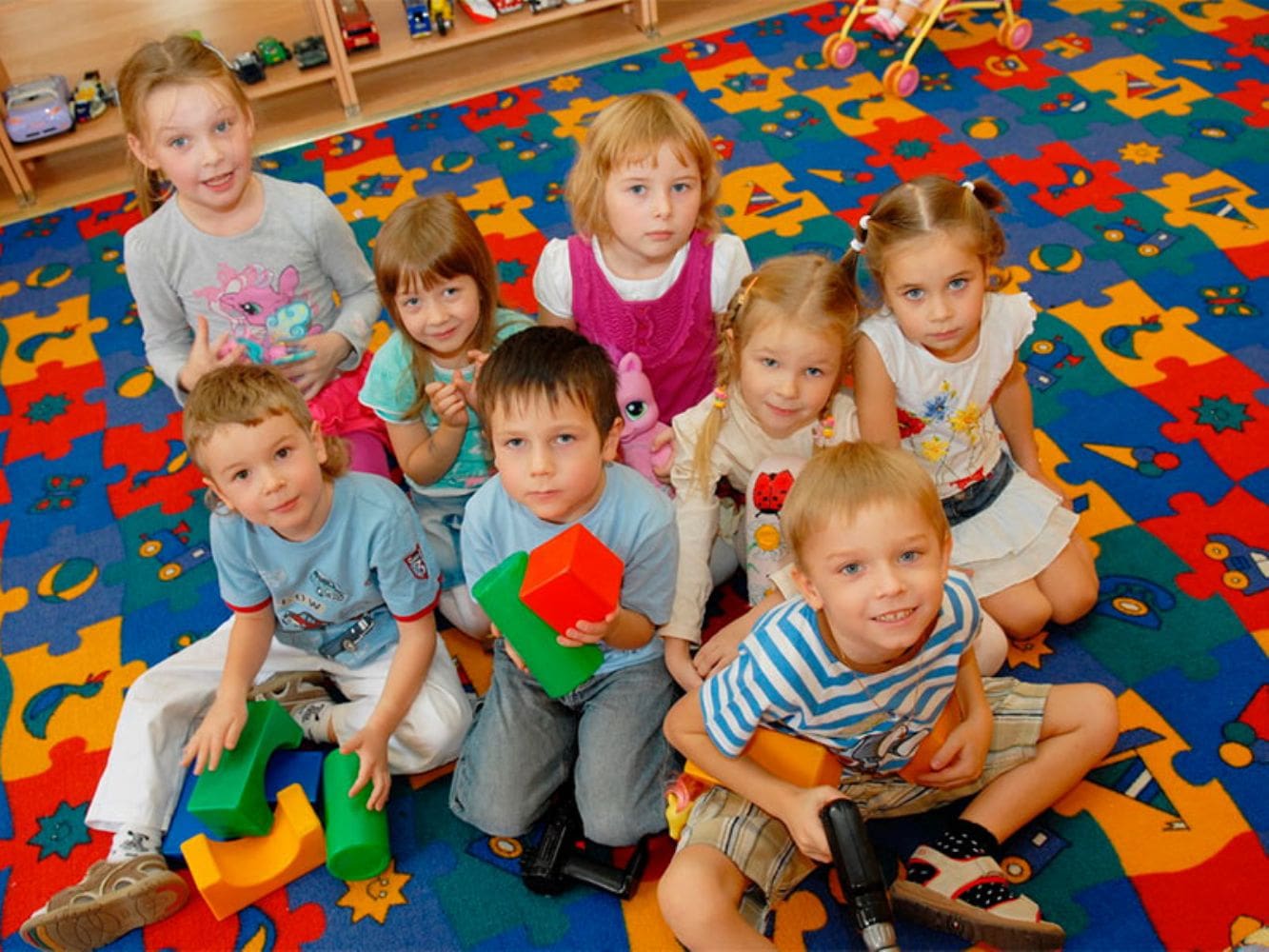
If parents are wondering whether to send their child to kindergarten, the answer is definitely yes. It is excellent preparation for school. The first grade is the first stage of personality development. Improper behavior in society can affect the adult’s future.
Regarding the child’s age, it does not matter when the little one enters kindergarten—at three, four, or five years old. The main thing is that the child goes through this life stage to secure a good place in the social structure in the future.