The Chinese company Topping is one of the main players in the accessible Hi-Fi equipment market for everyday consumers. The price, for example, for a stationary DAC of this brand starts from $110. And the quality is supported by numerous reviews and feedback.
What is the Topping E30
A standalone DAC (digital-to-analog converter) is not unusual. Such a device, designed to convert digital signals into analog, has become affordable for any audiophile after the emergence of competitive Chinese brands. And those who want to join them or simply try something new.
Previously, external DACs occupied a specific niche, but now they are more versatile devices due to the presence of a USB interface. This allows them to be connected both to a computer and to a smartphone or tablet. Essentially, you replace the internal sound card with a higher-quality analog. And your computer/smartphone acts as the source (often also the storage) of musical content.
One of the most successful models in terms of price/quality ratio is the Topping E30. The model can quite possibly serve as an alternative to the well-known mid-range Topping D50s in a more budget-friendly segment. The DAC represents a new line of the company, which also includes the Topping L30 headphone amplifier. The cost is $150.
Topping E30 DAC: Technical specifications
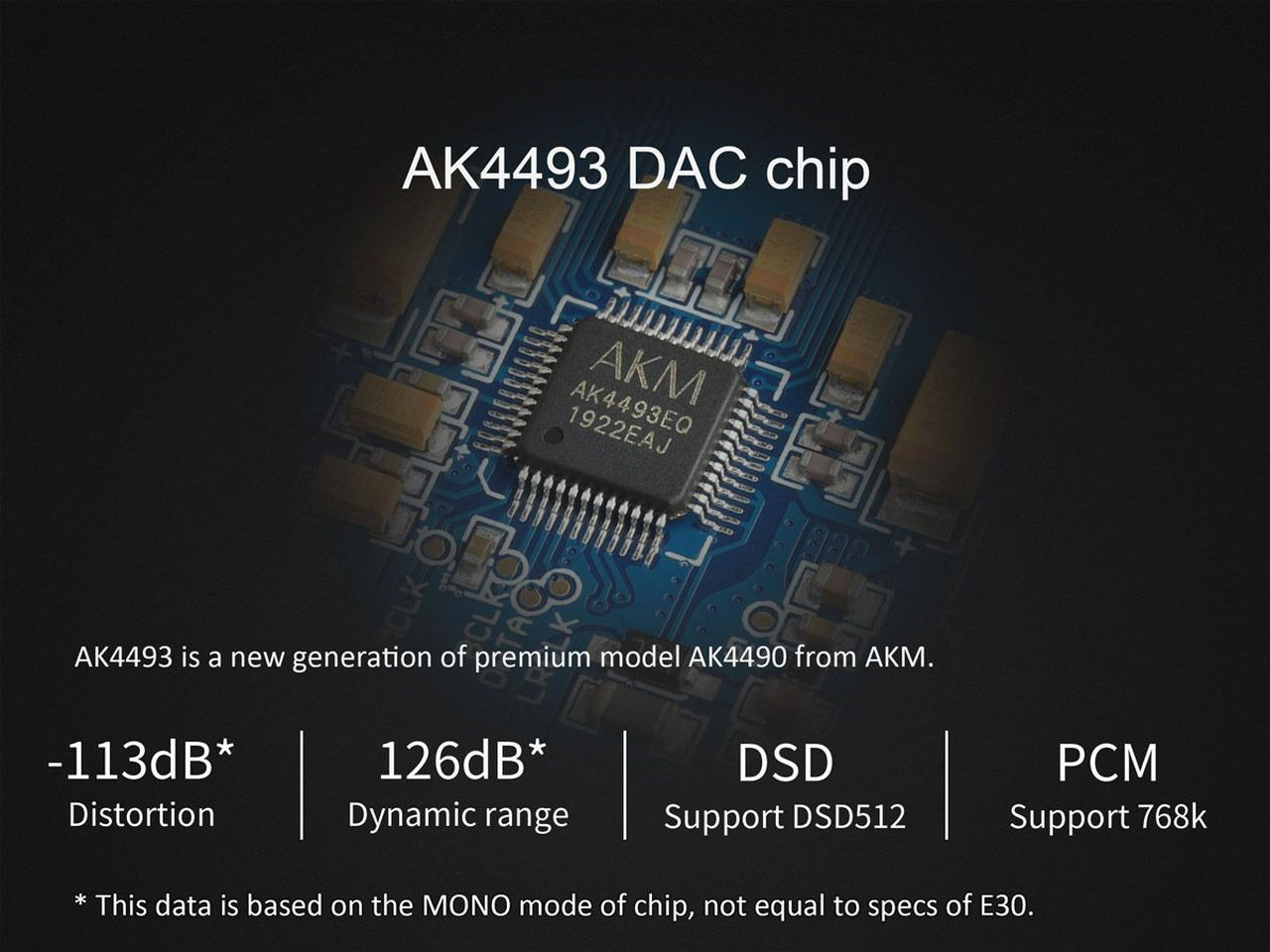
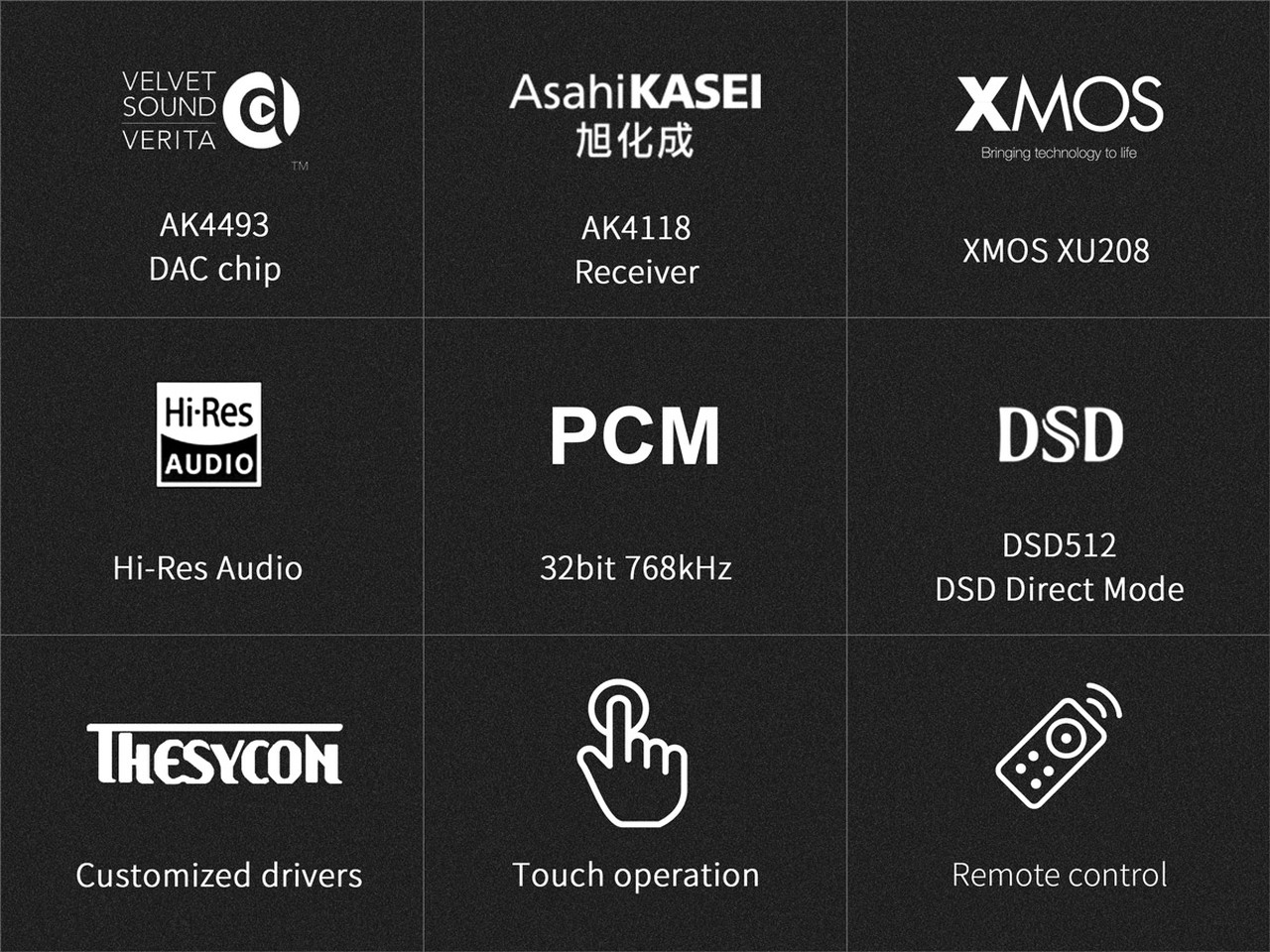
| DAC Chip | AK4493 |
| S/PDIF receiver | AK4118/CS8416 |
| USB controller | XMOS XU208 |
| PCM support | 32bit 768kHz |
| DSD support | DSD512 (Direct) |
| Built-in preamplifier | Yes |
| Remote control support | Yes (remote, included) |
Review of Topping E30 DAC
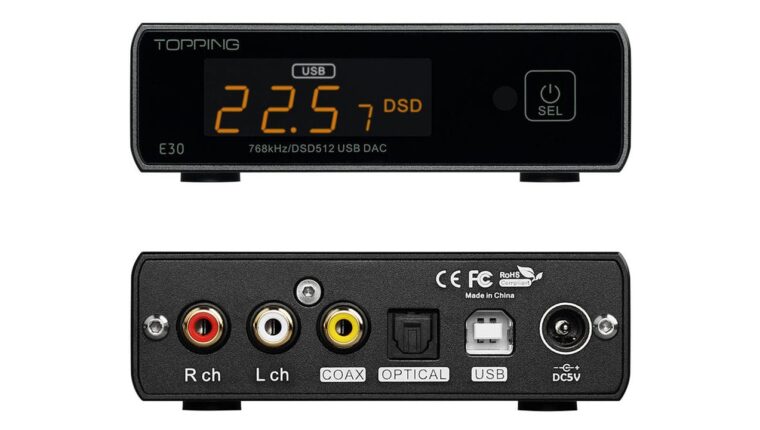
The Topping E30 is a neat, compact metal “box” measuring only 100x32x125mm (WHD) available in gray, black, red, or blue.
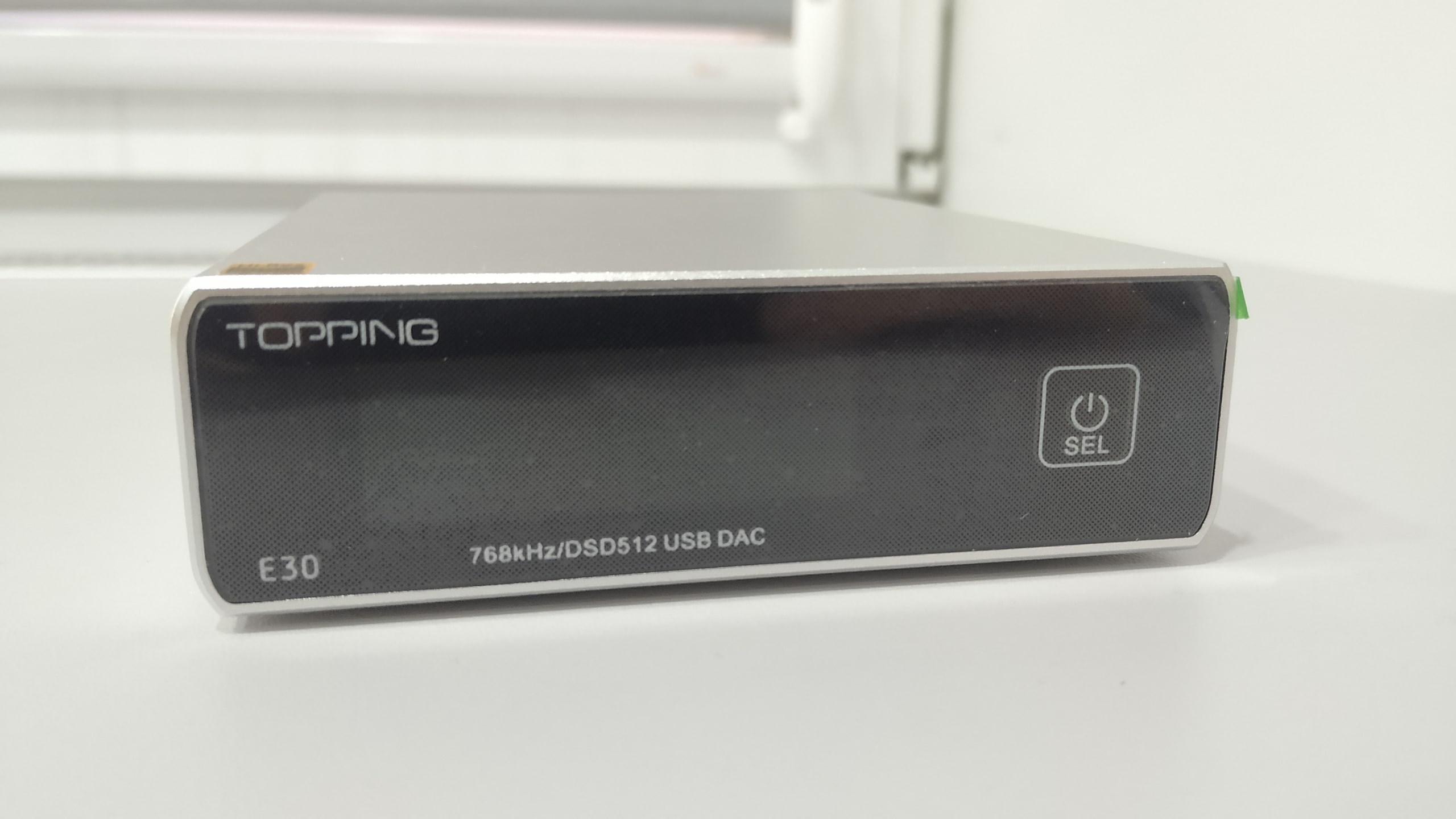
On the front, there is a touch selector button (for switching inputs), which also functions as a standby button when held. Additionally, there is a display showing the selected input and the current audio frequency. This can be useful for verifying the correctness of the transmitted signal and your source settings.
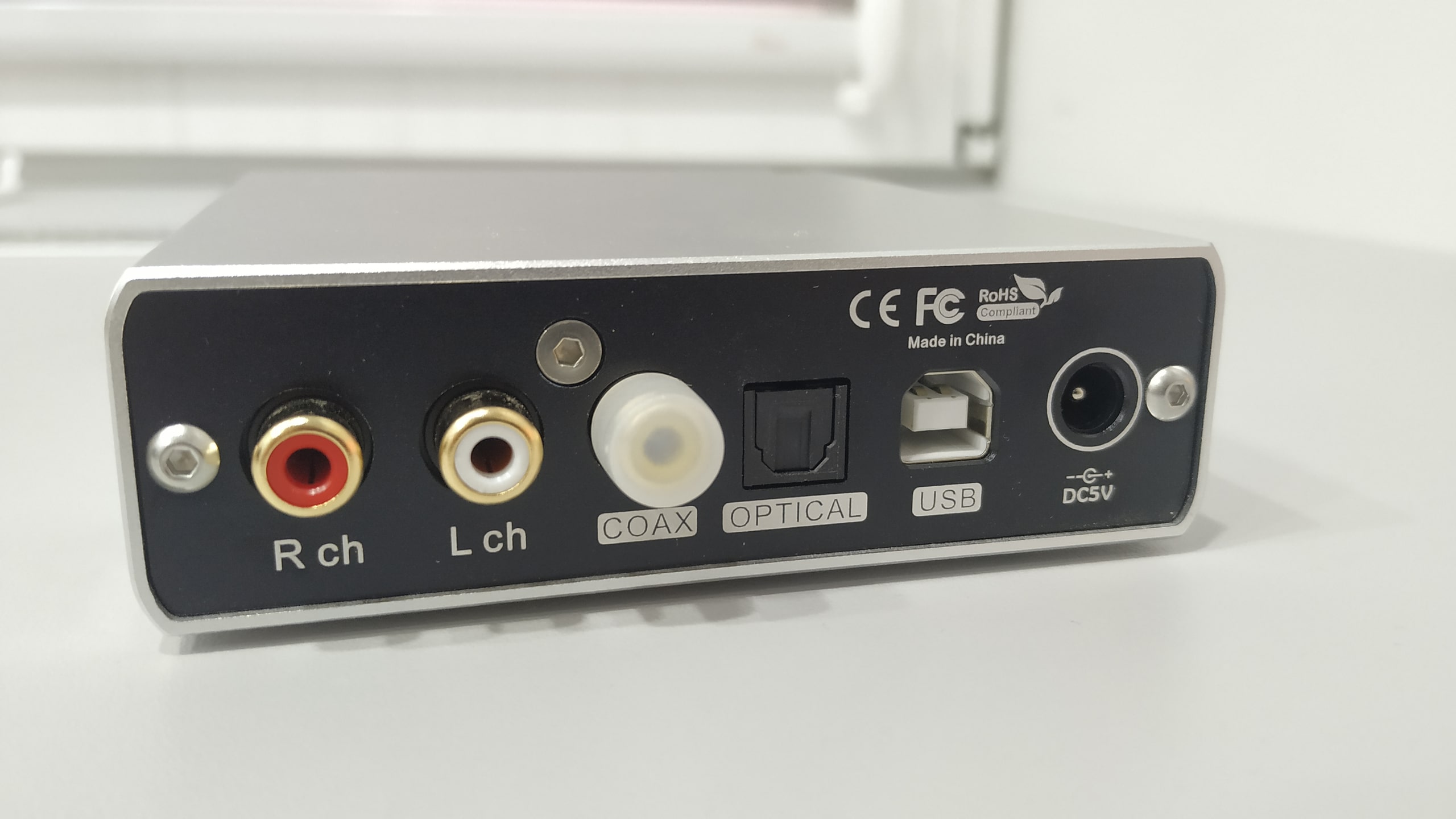
At the back, there are RCA outputs (“tulips”) for the amplifier, digital coaxial and optical S/PDIF inputs, a USB Type B port, and a power connector.
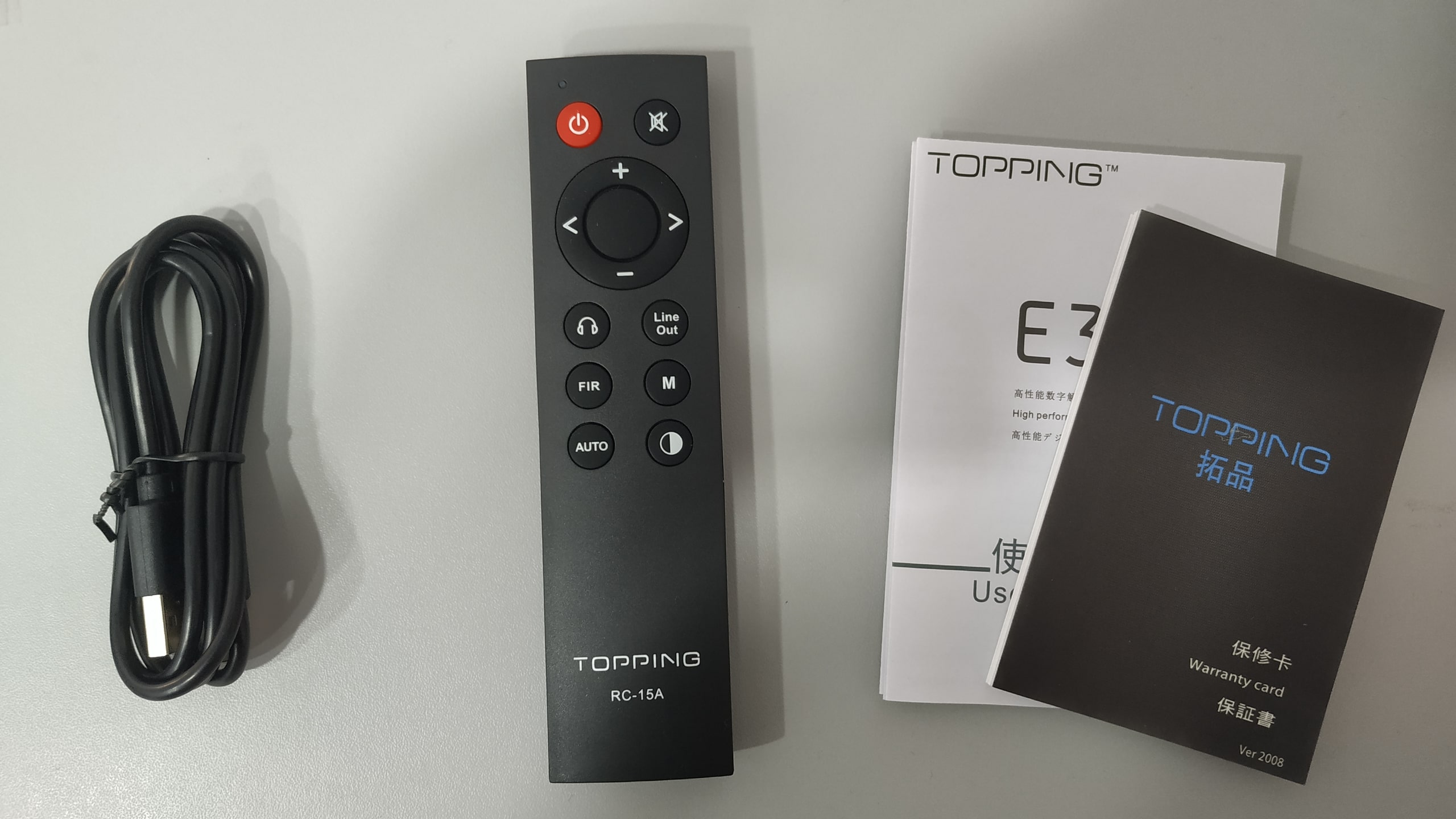
The package already includes a sturdy USB-B cable for connecting the device to the signal source. There is also a remote control, warranty card, user manual, and power cable.
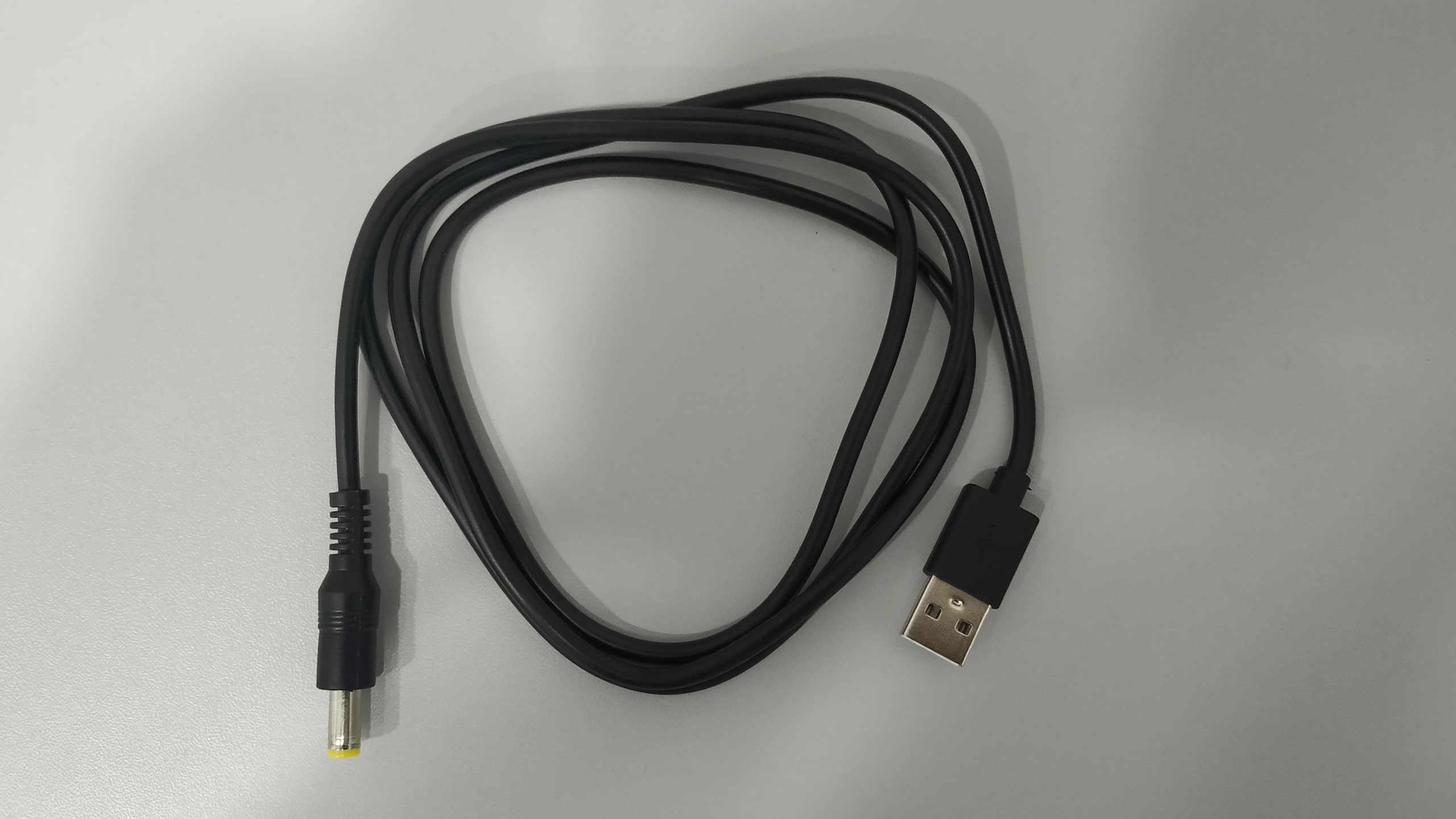
Power supply via DC/USB-A allows using a computer/laptop or external devices as a power source. Ranging from a smartphone charger and PowerBank to a linear power supply.
The internal components include:
- AK4493 DAC chip from Asahi Kasei. A new version of the premium AK4490 supporting PCM formats 32bit 768kHz and DSD
- AK4118 receiver for processing signals from S/PDIF inputs. In later versions, it was replaced with CS8416 from Cirrus Logic, likely due to chip shortages from Asahi Kasei.
- XMOS XU208 USB controller.
Testing Topping E30 on various resources
Topping is known for publishing measurement results of each device on its website. These are performed using the Audio Precision APx555 audio analyzer. These data can also be found in a booklet included with the device.
This primarily indicates that we can look at the actual specifications of the device without relying solely on manufacturer promises or falling for tricks and tricks. Moreover, Topping devices are often reviewed on the well-known resource ASR (Audio Science Review), where measurements are also performed using the Audio Precision APx555.
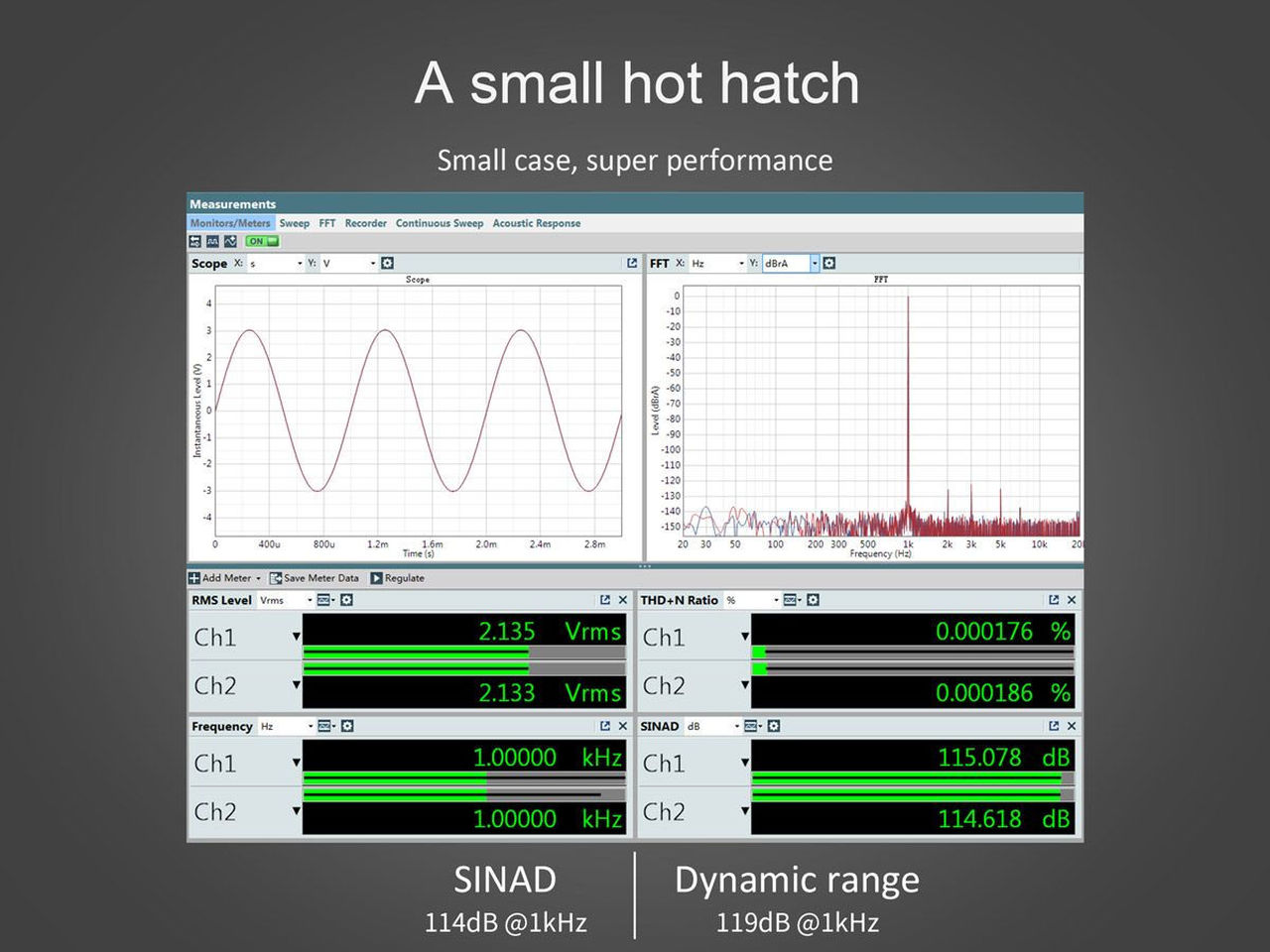
Based on the measurement results from both the manufacturer and ASR, the following conclusions can be made:
| Signal frequency for measurements, kHz | 1 |
| Output power, Vrms | > 2 |
| Total harmonic distortion + noise (THD+N), % | < 0.0003 |
| Signal-to-noise ratio (SINAD), dB (according to ASR) | ~114 |
| Signal-to-noise ratio (SNR), dB (according to manufacturer) | 121 |
| Dynamic range, dB | ~118 |
| Intermodulation distortion range (multitone), bits | 20-22 |
| Jitter, dB | < -135 |
Jitter when connected via S/PDIF interface is slightly higher. However, peaks are at the level of -120 dB, which is not critical.
Features of the Topping E30 DAC
The main feature of the Topping E30 is the presence of digital S/PDIF inputs on standard “consumer” interfaces. COAX (RCA, coaxial) and TOSLINK (optical), allowing connection to any device with a digital output. From a TV and media player to an old CD player from the 80s.
Another feature is the built-in preamplifier, which allows connecting the DAC directly to a power amplifier. Although, most often, this feature is used for volume control via remote control. If the full amplifier does not have a remote, which is common among audiophiles.
This feature has its drawbacks, namely, the loss of resolution of the output signal. However, this does not necessarily mean a deterioration in sound quality. It will depend on the specific situation and the settings of your audio system.
The AK4493 chip has onboard 6 PCM filters and 2 for DSD, which help slightly alter the sound details.
Unfortunately, these functions are only accessible via the remote control. This may seem inconvenient for those whose DAC is located near a computer or laptop.
Analogues of the Topping E30 DAC
The main difference between the Topping E30 and cheaper devices is the presence of S/PDIF inputs on a “classic” DAC. For example, in the Topping D10s, digital interfaces serve as outputs. This device can be used as a USB converter, processing the signal in S/PDIF for input to another DAC. However, it is doubtful that an average user would need this. The Topping D10s is considered purely a USB DAC, like many devices at a lower price. So, if S/PDIF inputs are critical, it is advantageous to choose the E30 model.

According to a selection from shenzhenaudio.com (devices under $150), the XDUOO MU-601 DAC uses the mobile chip ES9018K2M but lacks digital inputs (only coaxial output). The FX Audio D01 uses a newer chip ES9038Q2M, has a Bluetooth receiver supporting LDAC codec, and a built-in headphone amplifier. Here, we have a full “combo”.
When considering other manufacturers’ DACs, it’s worth paying attention to different components, circuit designs, and performance indicators. Especially since a combo device at the same price is unlikely to deliver such sound quality, as it serves a different purpose.
An interesting alternative is the Sanskrit 10th MKII from another well-known Chinese brand SMSL. It is built on the same AK4493 chip but lags (according to ASR) significantly in multitone and jitter performance, especially over S/PDIF. The handling of the S/PDIF signal remains a mystery, as the manufacturer did not specify it. However, it is worth noting that this device also has a remote control, a preamp mode, and built-in sound filters. The design is unconventional, for enthusiasts, with a more modest display.

Conclusions on the Topping E30
In conclusion, it can be confidently said that excellent sound characteristics, broad format support, and a successful design make the Topping E30 one of the best stationary DACs in its price category.
If you want to buy the Topping E30 from a trusted seller, visit AliExpress through this link. At the same time, you can read reviews about the product and seller.
![[Exclusive] Noise Master Series: Review of flagship headphones](https://teranews.net/wp-content/uploads/2025/09/frame_19522-360x220.webp "[Exclusive] Noise Master Series: Review of flagship headphones")