Thousands of cardio exercise machines on the market, represented by dozens of brands, do not allow the buyer to decide which orbitrek is better to buy for home. Each manufacturer offers budget and professional solutions, which differ in size, functionality, and price. Additionally, advertising in mass media or social networks can be misleading. TeraNews does not sell anything. We only provide truthful and verified information. Let’s get started.
Choosing a brand – the wrong approach
Sports equipment and gear cannot be compared to household appliances, smartphones, or other items. This narrow market segment does not have specific features in terms of product quality. All products on the market are identical and differ only in price and the manufacturer’s logo. Orbitreks from China, the USA, Germany, Russia, and other countries are the same. By the way, all electronics on the exercise machine are manufactured in China.
So, when choosing an orbitrek for home use, there is no need to focus on the brand. Unless the buyer is loyal to a particular manufacturer they trust as much as themselves. The more market share a company has, the more expensive its products are. You can buy the same functional orbitrek but much cheaper.
Types of orbitreks and their features
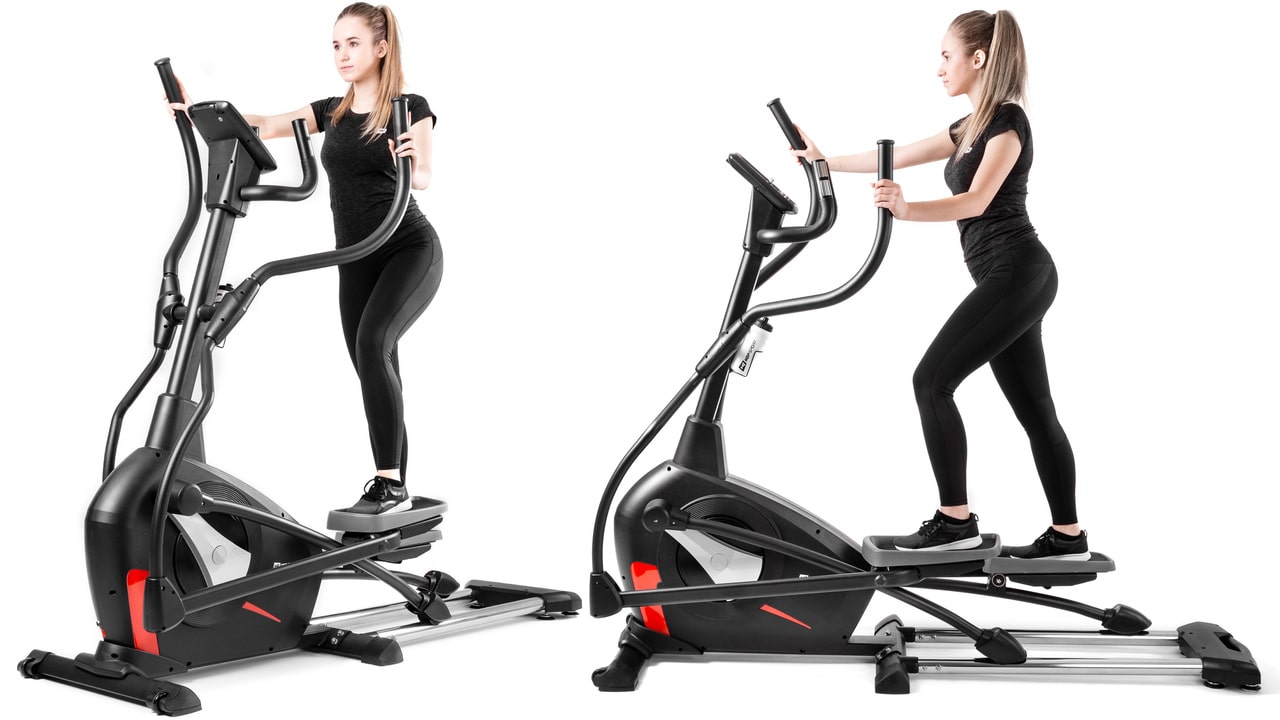
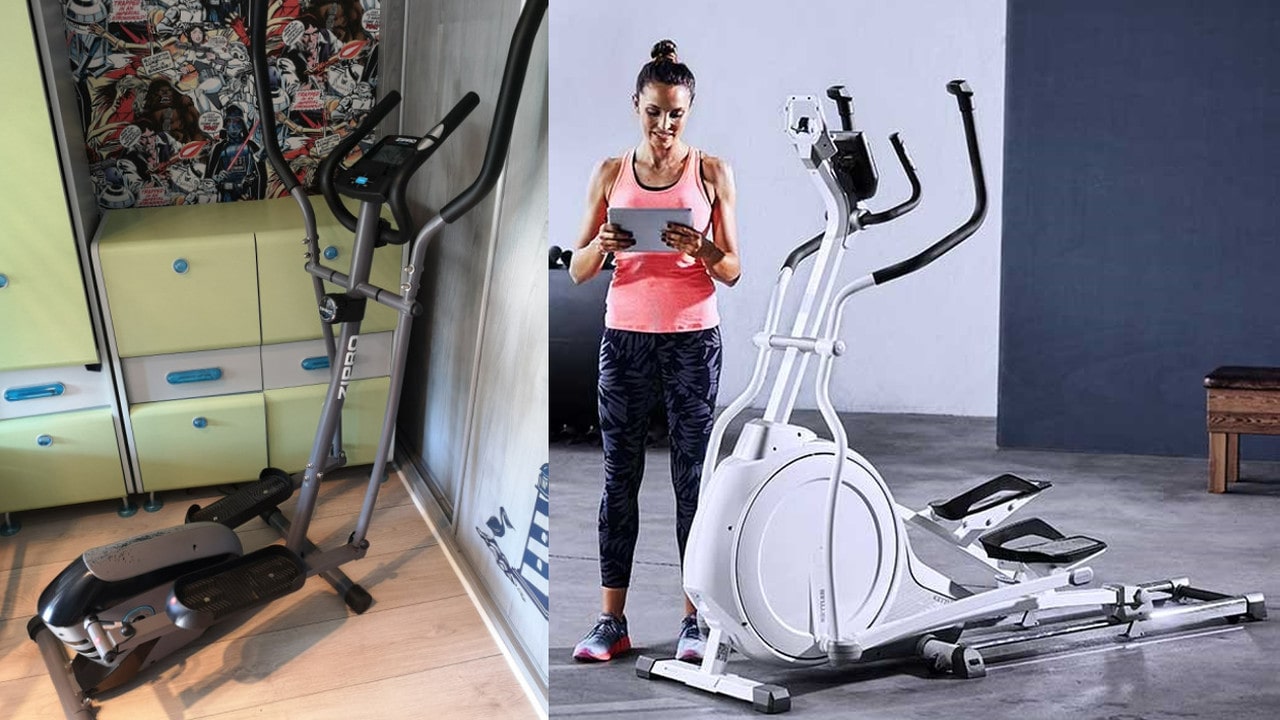
There are three types of elliptical trainers on the market: with rear, front, and central flywheel placement. In their category, all orbitreks offer similar functionality for athletes. The only difference is in the drive placement.
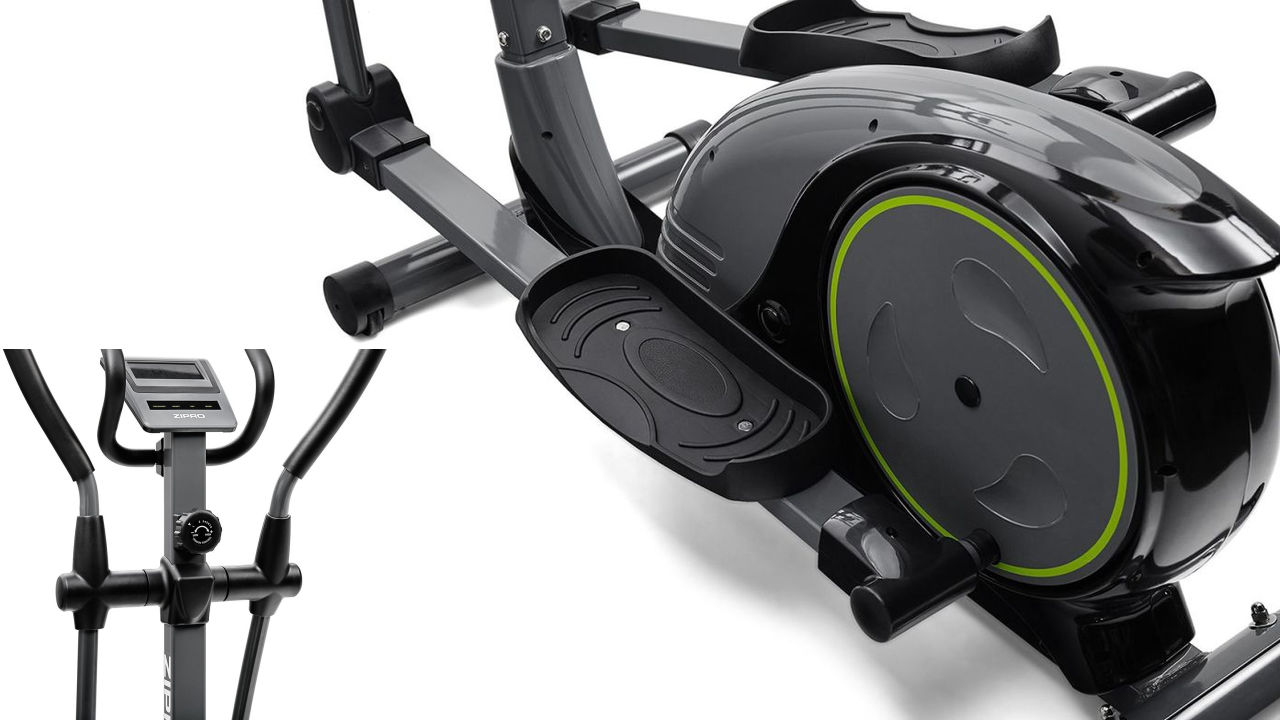
The trainer with a rear drive is considered classic and dominates the market. Since there is a patent on the rear flywheel position (owned by Precor), all manufacturers are obliged to pay a royalty to the owner. Naturally, some brands refused to pay. As a result, trainers with front drive and central flywheel placement appeared.
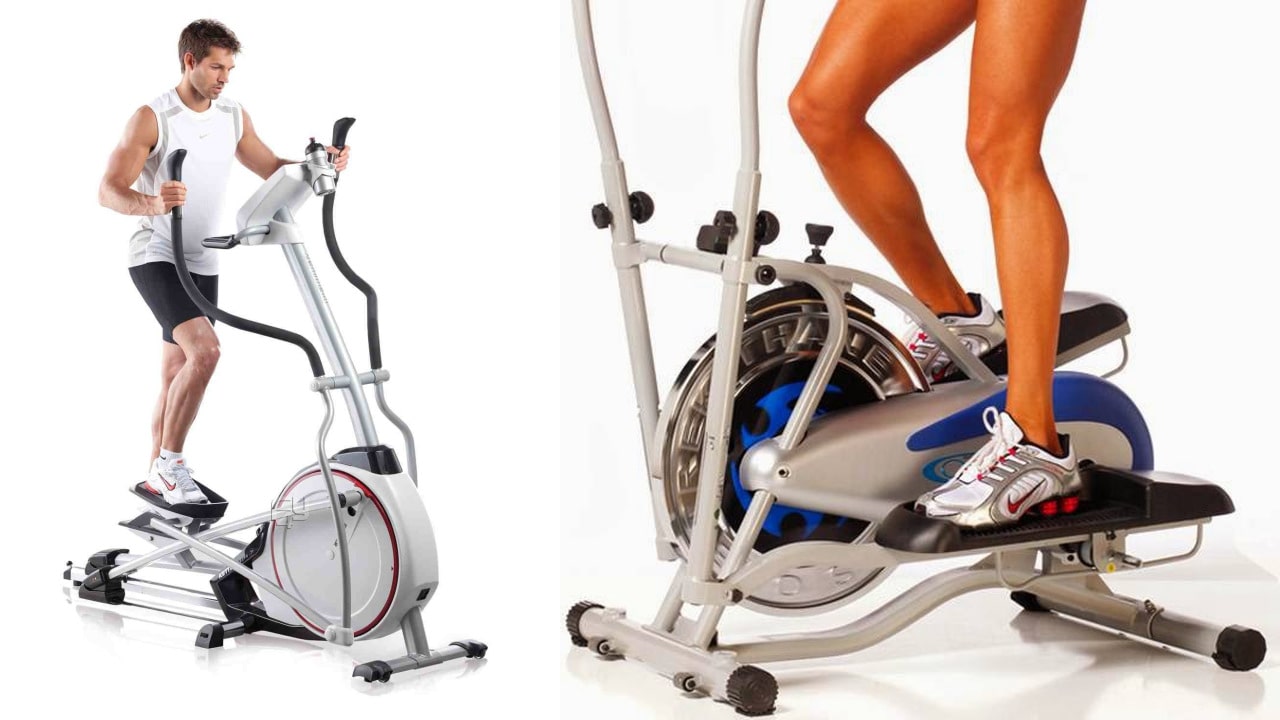
There are no differences in functionality, comfort, or other features among all types of orbitreks. Despite what manufacturers claim on their websites. Instability, large size, or rapid wear are all marketing tricks. In a competitive world, there are rules.
Orbitrek resistance systems
When looking for answers on which orbitrek to buy for home, start with the resistance system. This parameter directly affects the price of the trainer. Orbitreks come in four types:
- With mechanical resistance. The cheapest type of cardio trainer. Price ranges from $100 to $300. The difference lies in functionality and manufacturer. The mechanical orbitrek operates with a flywheel pressed by brake pads, similar to a car or bicycle braking system. The drawback is high noise during operation due to constant friction, which produces unpleasant sounds audible even through headphones when listening to music.
- With magnetic resistance. An equivalent budget option that is less noisy. The trainer is more durable than mechanical models. However, even high-end models from reputable brands often have difficulty setting the required load precisely. The movement smoothness is better, though.
- With electromagnetic resistance. The most popular mid-range trainer. It features inertia in movement and pedals that can be spun in both directions, engaging different muscle groups. High resistance durability, easy load adjustment, and absolute silence during operation make it the best choice for home use.
- With a generator. A professional-grade trainer designed for continuous operation in gyms. Extremely resistant to wear, with perfect load regulation. The only drawback is its large size, but this is not critical for professional use.
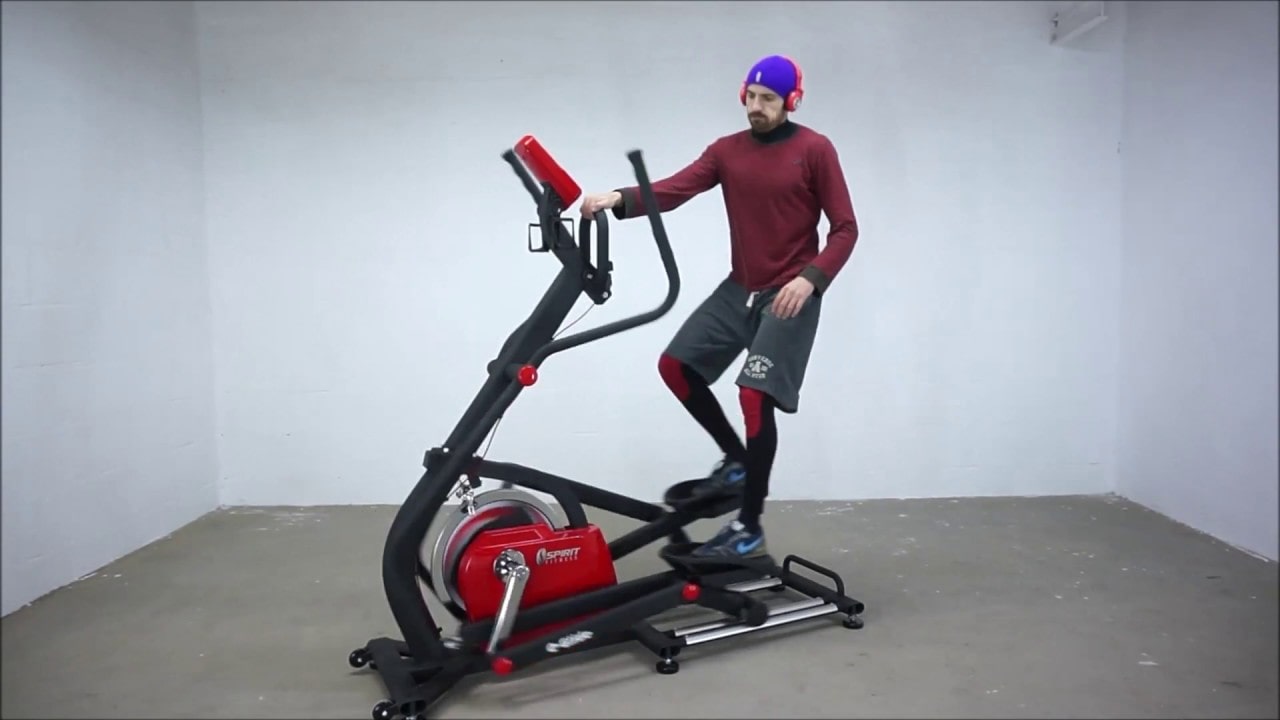
Which orbitrek is better to buy for home
Now we move on to the criteria for choosing a trainer. The availability of workout programs, load levels, display, and multimedia can be left for last. The main parameter for choosing an orbitrek is the stride length. This directly correlates with the athlete’s height. The stride length affects walking comfort and load focus.
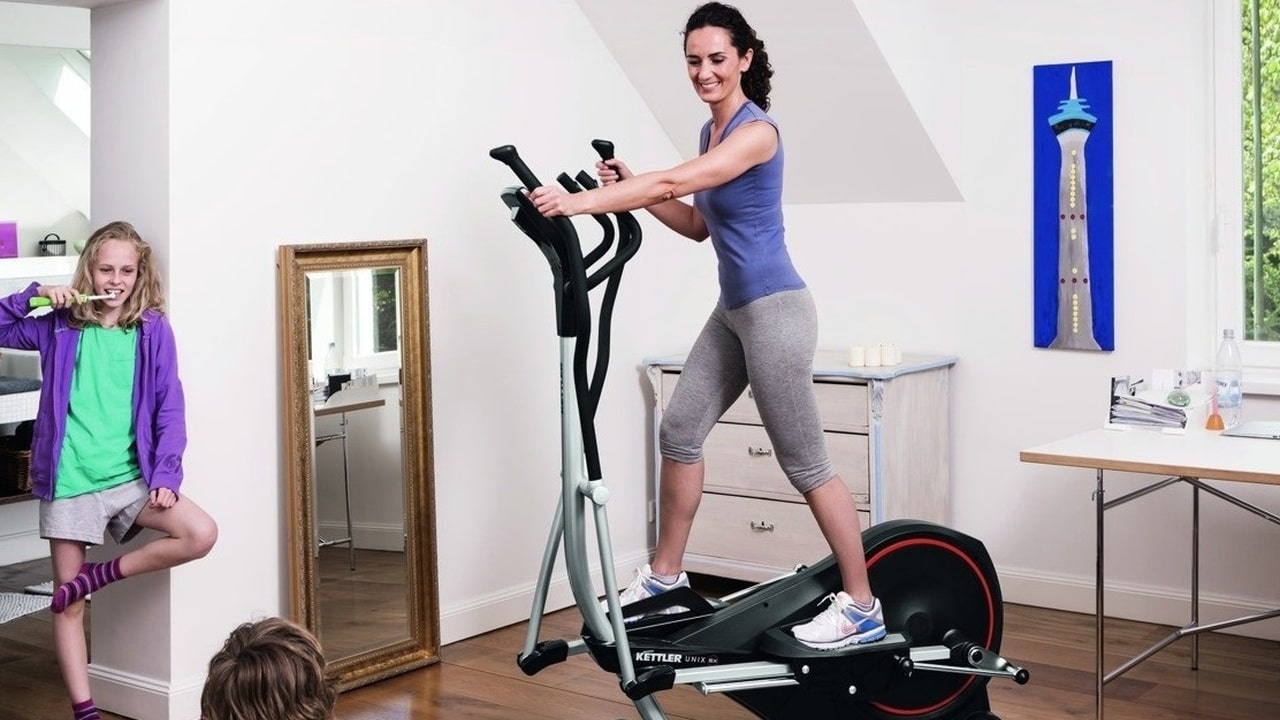
Imagine a child’s bicycle with an adult on it, trying to ride quickly. Knees splay out, 5-6 rotations, and legs tire from pedaling. Or put a child on an adult bicycle. They will also tire quickly from turning the pedals. The same applies to the orbitrek. Height is an important factor.
- Up to 160 cm – stride 25-35 cm;
- Up to 180 cm – stride 35-45 cm;
>180 cm – stride 45 cm or more.
In general, it is better to prefer trainers with adjustable stride length. Larger height individuals may have shorter legs, or vice versa, shorter individuals may have longer legs (more common among women). Plus, the trainer may be used by multiple family members. Versatility is always welcome, especially when comfort is involved.

Built-in computer and software
In the pursuit of numerous settings and features, buyers often overlook one subtle detail: the accuracy of sensor operation. Heart rate measurement, speed, and distance traveled depend on sensors. No matter how many features an orbitrek has, a single malfunctioning sensor can turn the trainer into a simple flywheel with pedals.
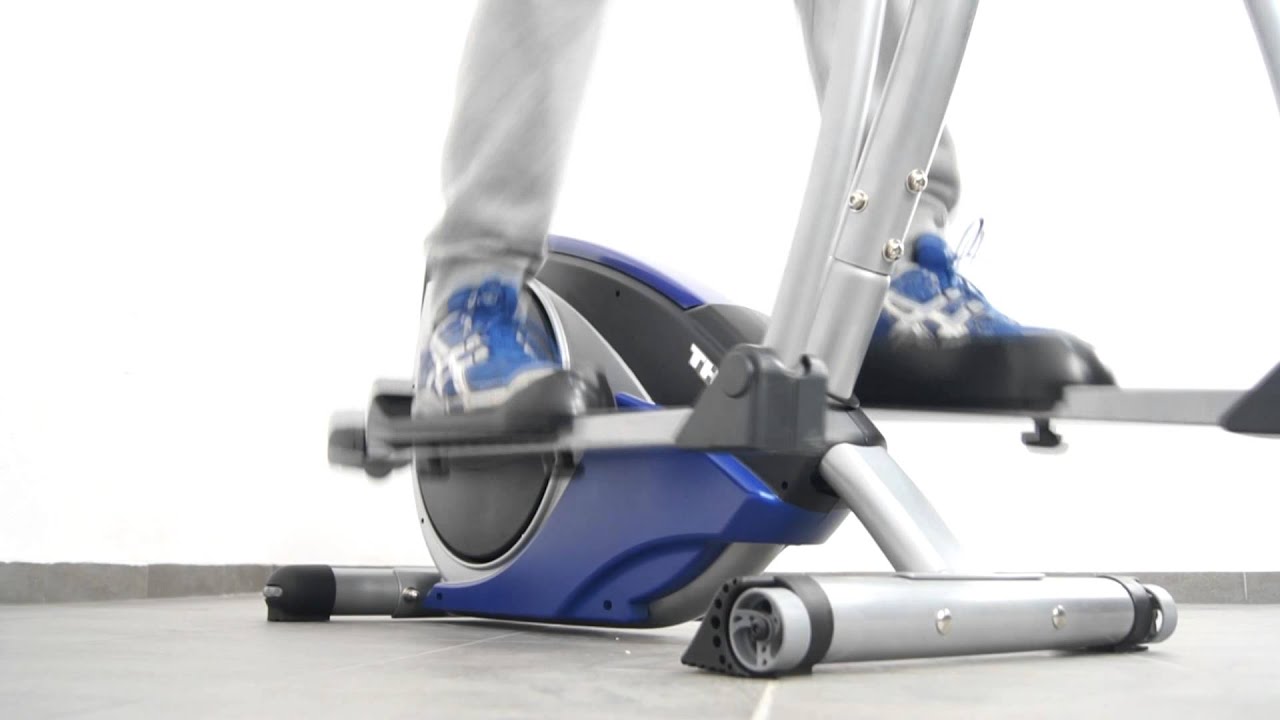
And brand does not matter here. In budget, mid-range, and premium classes, according to customer reviews, models with similar issues are found. When deciding which orbitrek to buy for home, and you have already selected a couple of models, do not rush to purchase. Use a good heart rate monitor or fitness bracelet to test. If the trainer correctly measures the pulse, then other sensors are likely in order. This is verified information.
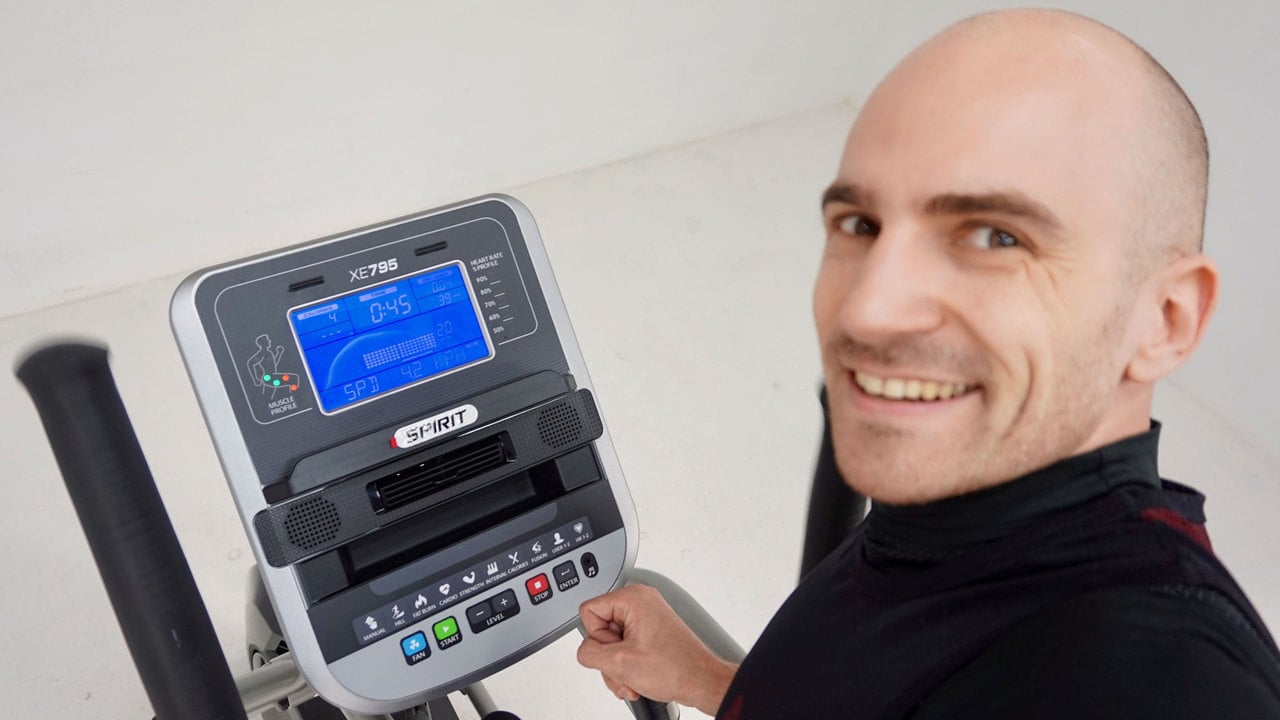
When sensors work incorrectly, all programmed features will be ineffective. Sensors on the handles measure pulse and transmit data to the computer. The program then adjusts the load. If data is inaccurate, the electronics may either slow down the workout or push the athlete to exhaustion. As for multimedia, there is no point in overspending on unnecessary electronics. A smartphone with headphones, mp3 player, or TV is cheaper and more convenient.