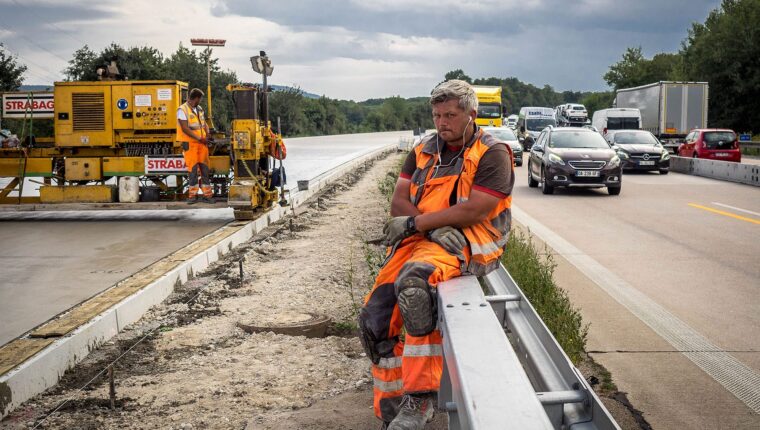
The era of high technology has touched the industrial sector as well. In the Netherlands, scientists have managed to create an asphalt coating with steel fibers. According to technologists, such a coating cannot be destroyed. Moreover, road paving works are minimized. Additionally, scientists are working on a system for charging electric vehicles, which will be able to “refuel” on the go.
Asphalt Coating with Steel Fibers

The essence of the technology is quite simple – using a powerful magnet and increasing the temperature from outside, steel fibers independently tighten the asphalt, eliminating the formation of cracks. The magnet itself is not located on the road surface but is installed on a special transport. The machine simply passes over the surface on certain days and repairs the asphalt coating on the move.

The project leader, Erik Schlangen, assures that the innovation will cost the state a quarter more than laying a regular road. However, the service life of the asphalt coating will increase 2-3 times. Notably, in the Netherlands, the development has been tested for 7 years on 12 roads. Only information classified as “Secret” has not been released to the media.

Erik Schlangen did not stop at research. The asphalt coating with steel fibers is one of the effective and economical projects. The scientist proposes using “living” concrete with increased strength for road surfaces. The idea is that certain bacteria are included in the construction mixture, which do not die in concrete. When cracks or fractures appear in the coating, and moisture gets in, the bacteria begin to multiply and produce calcium carbonate. This compound will fill the formed irregularities on the road.
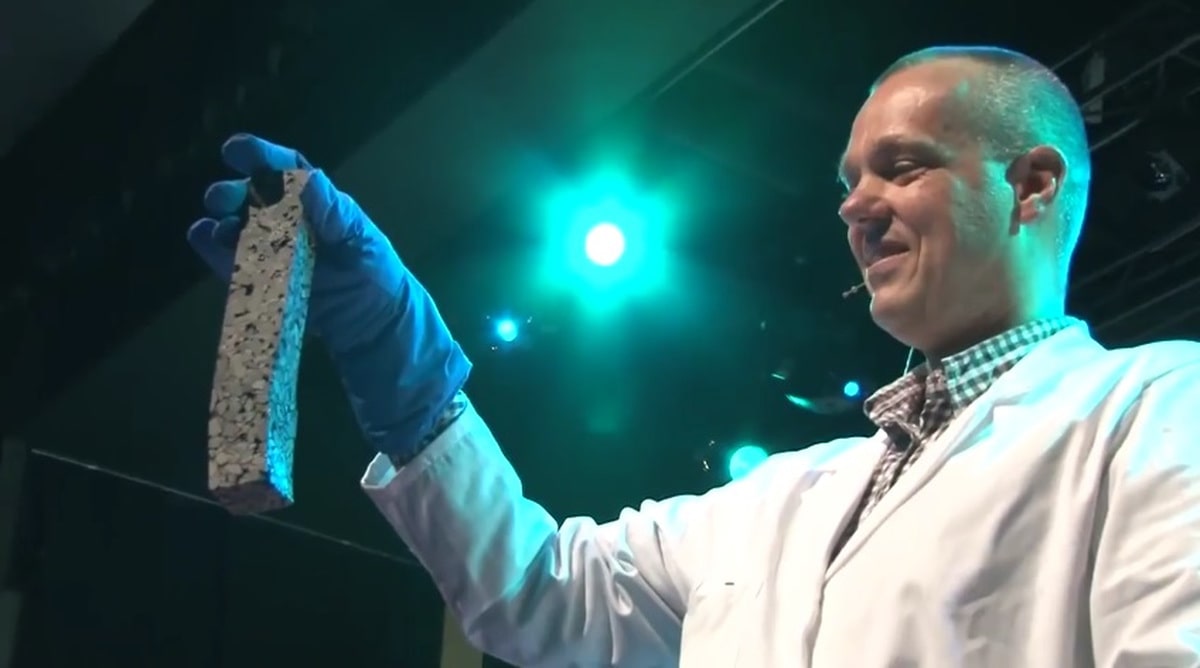
However, implementing a project with concrete coating in Europe will not be possible for Erik Schlangen. Strict European (and American) laws prohibit the use of concrete in highway and road construction. But the Chinese and Japanese immediately showed interest in the Dutch scientist’s development. Concrete is much cheaper than asphalt, and its service life is significantly longer. Why not save billions from the country’s budget on road construction?
![[Exclusive] Noise Master Series: Review of flagship headphones](https://teranews.net/wp-content/uploads/2025/09/frame_19522-360x220.webp "[Exclusive] Noise Master Series: Review of flagship headphones")