
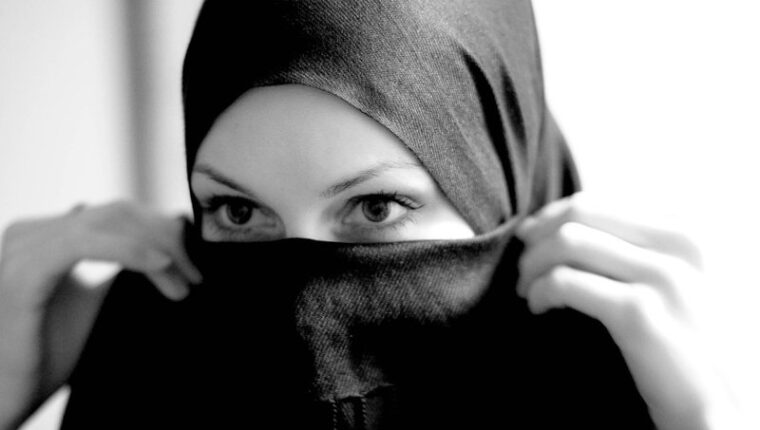
In Islam, the hijab is any women’s clothing that covers the body from head to toe. Literally, when translated from Arabic, hijab means a curtain or barrier. In the Orthodox world, hijab is considered only the traditional Arab scarf that covers the hair and face, leaving eye slits.
There is no specific law about wearing hijab in the Muslim world. However, the culture based on religion obliges women to cover alluring parts of the body, leaving only the eyes visible. In the holy scripture (Quran), wearing concealing clothing is mandated to observe the law for all women, regardless of faith.
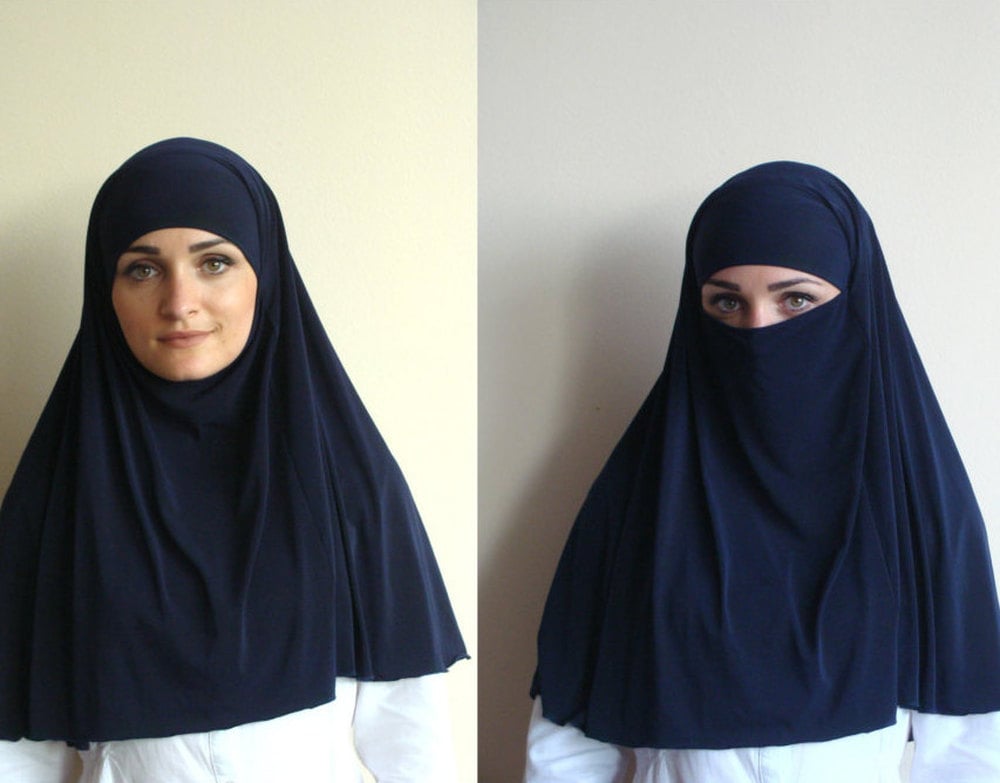
Hijab in Everyday Life
For Muslim girls living in Arab countries, wearing hijab is the norm, but in European countries, the situation is different. According to feedback from refugees who found refuge in Western Europe, wearing hijab causes many inconveniences.
- Most employers require Muslims not to hide their faces at work;
- The police are cautious towards women in hijab and often stop them for ID checks;
- Children in schools face serious communication problems with peers who do not accept foreign cultures;
- Local residents have a negative attitude towards Muslim women in hijab, seeing them as a threat to their safety.

The Other Side of the Coin
Understanding Europeans defending their own culture is possible. In any Arab country, laws require tourists to wear clothing that covers the body (hijab) when going out in the city. Visiting shops, historical sites, beaches, and other public places in open clothing is perceived as an insult to the culture.
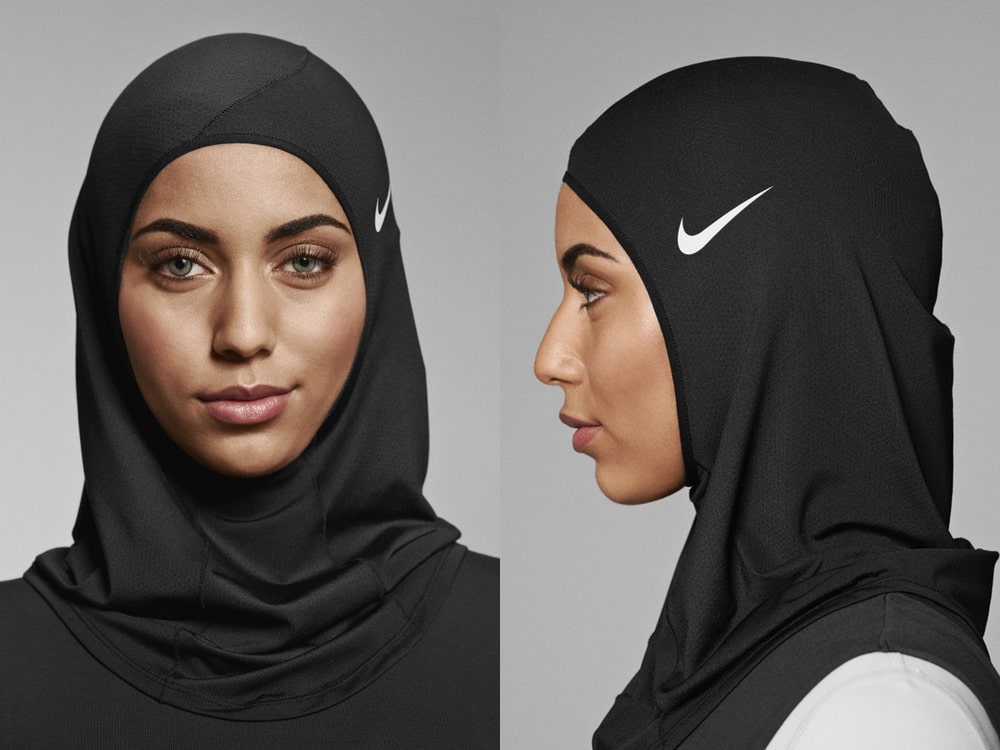
It turns out that Western Europeans have simply implemented mirror measures towards Muslims in their own territory. Additionally, Western Europe has always defended its own religion, not allowing individual countries to interfere with centuries-old traditions. Therefore, refugees and tourists must accept the culture of the country they are in.