
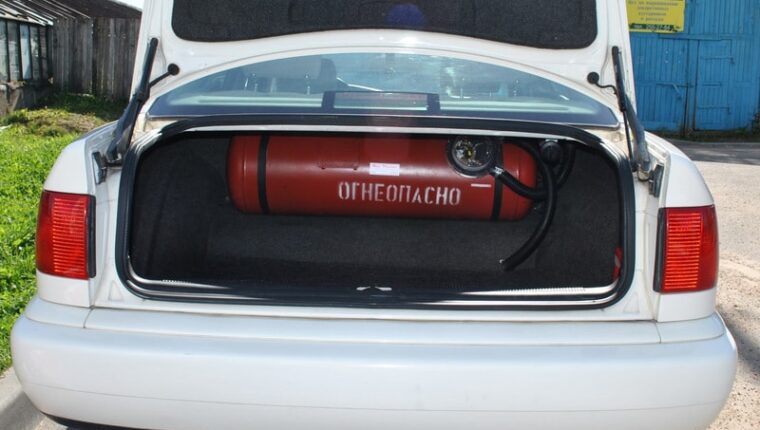
Alternative types of fuel for motorists are an economical solution. After all, the cost of gasoline increases monthly, while wages for most people remain unchanged. Compressed natural gas helps to save finances in the family budget.
 Due to motorists switching to blue fuel (methane or propane), sales have fallen for oil business owners. Therefore, it is not surprising that natural gas is surrounded by myths. A survey shows that 15% of car owners avoid alternative fuel types.
Compressed Natural Gas
- Driving a car on natural gas is difficult. Loss of power compared to gasoline is noticeable and amounts to about 10-20%. Overall, the car behaves on the road similarly. To eliminate the loss of power, which is crucial for overtaking, car manufacturers make adjustments to the onboard computer. For example, when engine revolutions exceed 5000, the engine automatically switches to gasoline.
- The gas cylinder is dangerous. In factory configuration, the compressed natural gas tank is safe. International standards require manufacturers to reinforce the body of the product. Therefore, even in hot weather, with 100% filling, the cylinder will not burst. The computer can release excess gas and alert in case of leaks. In terms of safety, in the event of an accident, the explosion probability is comparable to gasoline tanks.

- Blue fuel does not meet CO standards. Only in post-Soviet countries do people pay fines to environmental authorities. In Asia and Europe, it is easier to get fined for using a gasoline engine. Compressed natural gas is labeled as an “Environmentally Friendly Product”.
- The car will stop if the gas runs out. This is possible if there is no gasoline in the tank. When the blue fuel in the cylinder is exhausted, the smart computer switches the car to gasoline or diesel, depending on the engine type.
- You cannot drive solely on gas. You can. Moreover, the range on the gas cylinder is higher than on gasoline. Experts note that most cars start on gasoline, and after warming up, automatically switch to compressed natural gas. Therefore, if there is no gasoline in the tank, the car becomes immobile. But solutions have been found here too. The onboard computer allows some manipulations with ignition and button presses to start the engine on blue fuel.

Financial Aspects
- Compressed natural gas costs the same as gasoline. This is possible in some European countries where they produce their own oil and gas is delivered from Siberia. But, in terms of cost-effectiveness, for most consumers, using gas reduces fuel expenses by 30%. Gas installations pay for themselves within the first two years or earlier.
- Gas kills the engine. Environmentally friendly fuel by definition does not harm the car’s engine. However, gas stations that seek to profit from drivers sometimes dilute the gas with additives. These impurities can damage the engine. Spark plugs and filters, as with gasoline, are the first signs for the driver that it’s time to change the fueling station.